Let me explain to you how locals have improved their borrowing capacity and continued to push up housing prices.
01 How does someone else’s borrowing capacity increase?
Let’s first look at three simple formulas to understand how borrowing capacity is calculated:
Formula 1: Applicants whose monthly debt, divided by monthly income, is less than 44% can be approved for a mortgage loan. Those who are higher than this number cannot.
Formula 2: The amount of the mortgage, if there are no other consumer debts, can be borrowed up to 5 times the annual income.
Formula 3: Generally speaking, the amount of each investment mortgage is 5 times the family's annual income, minus the balance of the mortgage, and you can borrow up to 10 investment mortgages.
From the perspective of the loan capacity calculation formula, it is decided The three major factors of borrowing power are: income, monthly debt, and house price.
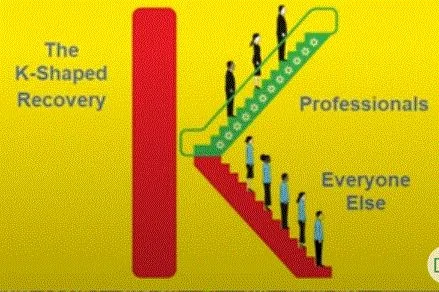
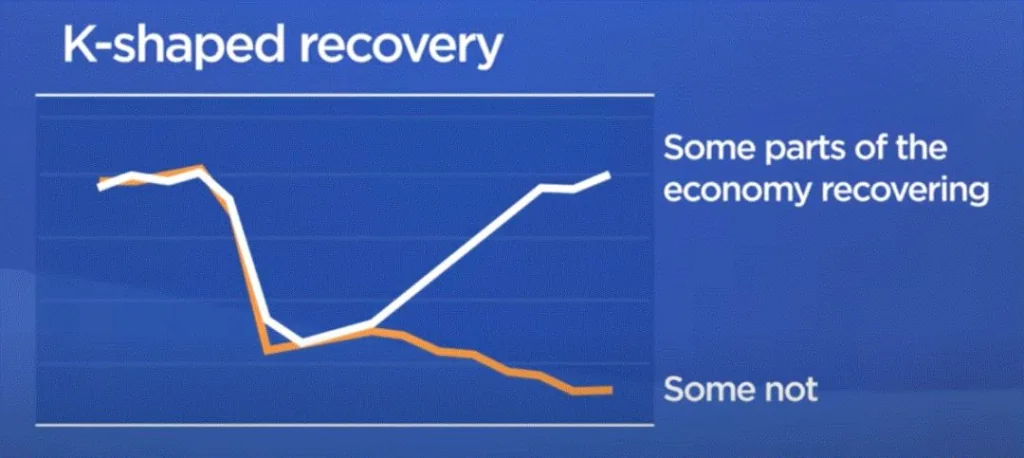
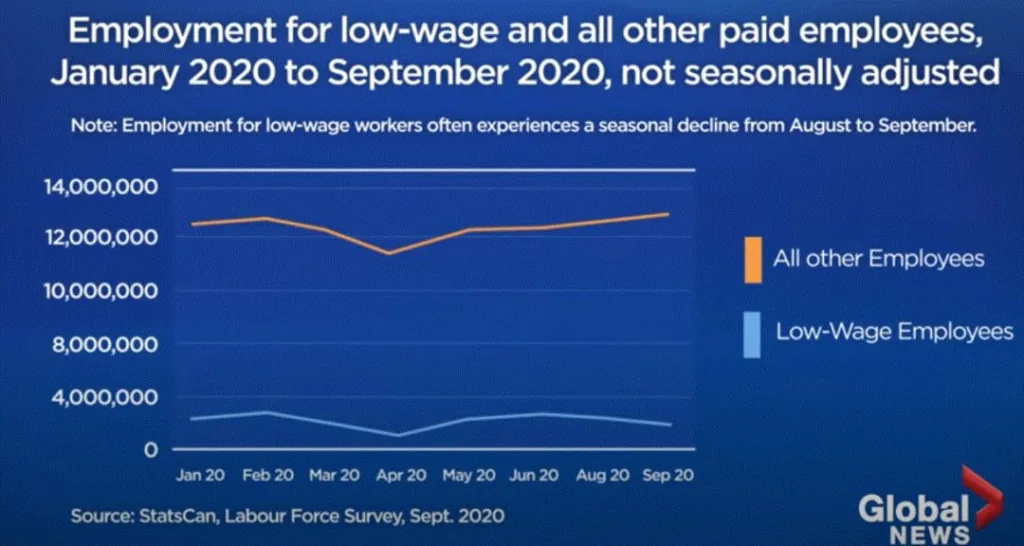
The income of people who are in the upper limb of the K-shaped economic recovery has not been affected by the epidemic, and is even higher than before.
Due to the inclusive nature of monetary and fiscal policies in the economic recovery package, everyone will benefit. Low-income groups benefit more from subsidies from fiscal policies, while people with high incomes and assets benefit more from monetary policies. The main content of monetary policy is to cut interest rates and over-issuance of money. An interest rate cut will result in lower monthly payments for those with mortgages, meaning their monthly debt will be reduced, thus increasing their borrowing capacity. Some argue that interest rates cannot come down until fixed-rate loans mature, so borrowing capacity will not increase so quickly. As far as I know, 90% of fixed-rate borrowers are likely to lower their interest rates before the loan contract expires. How to do this specifically, I wrote in "How many steps are needed to lower the high interest rates of mortgage loans?" 》It has been introduced in great detail, just follow it.
House prices, which have been rising, have supported those with borrowing capacity to access cash from their home equity and use it to invest in more properties, or to trade for their own home.
In short, Households whose income has not been affected by the epidemic have seen a significant reduction in interest rates, which has led to a reduction in monthly debt, thus enhancing their borrowing ability. At the same time, house prices have risen instead of falling, supporting their ability to cash out additional mortgages. Funds in the market have been supplemented by additional mortgages on existing properties. Among the loan business I completed and am currently processing in October and November this year, the proportion of mortgages was much higher than the same period last year. The new funds on the market are the old immigrants who took out mortgages from real estate.
Others' incomes have not been affected, others' monthly debts have been reduced, and others have taken out more cash from their existing houses, so house prices have been rising. And you?
02 Real estate’s top mysteries
The title of Chapter 10 of "Greenspan's Biography" is "The First Housing Conundrum", which tells about a discovery made by Greenspan in 1977. Greenspan left Washington in January 1977 when Democratic Carter was elected president and returned to New York to continue running his consulting services business. In the comparison and analysis of various data, he found that the rise in real estate prices not only has a wealth effect and stimulates consumer enthusiasm, but more importantly, the combination of rising house prices and banks' property equity loans has given rise to a very hidden source of money supply. He found that the cash obtained from real estate mortgages, whether used for investment or consumption, would greatly increase the money supply. Homeowners do not need to pay income tax when they receive cash from additional mortgages, so this part of the funds cannot be detected from tax data. At the same time, this recycled currency is not counted in M1, M2, or M3, because most beneficiaries of real estate investment will immediately use this money as a down payment to purchase more properties, and this cash will disappear in the huge real estate market in a short period of time. What’s even more amazing is that because the property has not been sold, although cash is created after the mortgage is added, this economic activity is not included in GDP. Therefore, he believes that from a macroeconomic perspective, this capital is almost invisible and cannot be counted. Therefore, Home Equity Loan in Real Estate, or Mortgage /refinance , is the biggest mystery in the entire real estate industry: except for the homeowners who benefited, no one in the economic field noticed this economic activity, but it brought huge benefits to the homeowners. Greenspan's discovery in 1977 showed that real estate is not only an asset, but also has capital attributes and is one of the important ways for money to make money.

This view confirms Adam Smith’s discovery in 1776. The impact of residents’ real estate on national wealth in “The Wealth of Nations” is excerpted from the original text as follows: “If the house is used for the owner's residence, then the house used for self-occupation no longer functions as capital from the moment it is occupied by the owner, and it no longer provides any income to its owner. A dwelling that is occupied by one's own owner does not contribute to the income of the occupant; although it is undoubtedly of great use to the inhabitant, as clothes and furniture are to him, it forms only a part of his expenditure and not of his income. If a house is rented out and rent is charged, since the house itself cannot produce anything, the tenant must always pay the rent from some kind of income from labor, capital, or land. Although a house (rental house) can provide income to its owner and thus function as capital for him, it cannot provide income to the public and cannot function as capital. The income of the entire people will never increase in the slightest because of it. .. Of all the goods that an individual or society can retain for immediate consumption, housing is consumed the slowest. "This passage has three clear meanings: 1. The house where the owner lives is the most durable consumer good; 2. The house is a consumer good when the owner lives in it, and renting it out is a capital good if the owner does not live in it; 3. The rental house is a capital good that only brings income to the landlord. It is not a capital good for the entire society, and it will not bring income to the society.

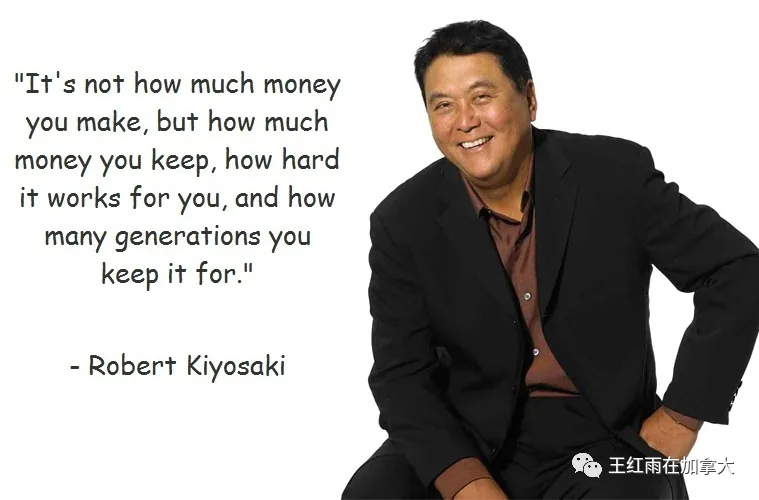
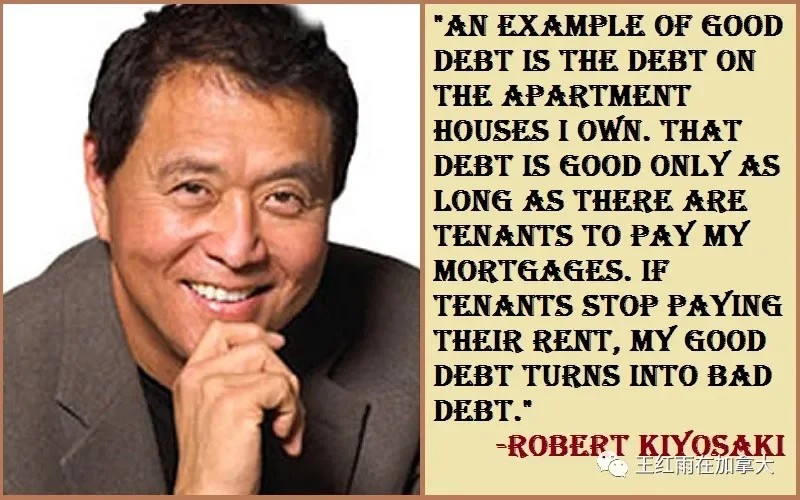
The "Rich Dad Poor Dad" series of books talks about Adam Smith's definition: a home is not an asset, because an asset should be a property that brings income to the owner, and a rental house is an asset. I admire Robert Kiyosaki for turning a sentence of Adam Smith into a best-selling book. A few words from Kiyosaki back then are particularly shocking today: If you can not think, I cold not help you. Why would we save money when they are printing money? When you are telling get out debts, I think it’s stupid, asmoney is debts, I use debt as money.
From Adam Smith's discovery in 1776, to Greenspan's epiphany in 1977, to the publication and best-selling of "Rich Dad, Poor Dad" in 1997, over the past 244 years, we have been constantly reminded that investment properties have capital attributes and are exclusive. Private real estate only benefits the owner, and no one else can benefit from it. Of course, those who have not personally joined the game can only make various conjectures full of suspicion: house prices are driven up by speculation; house prices are driven up by foreigners; all the hot money from new immigrants flows into real estate; others can buy houses because banks have relaxed their lending policies. . . None of these conjectures hold true in the face of the epidemic. There are no new immigrants and no hot money. Banks have not relaxed their lending policies. House prices are still rising. This can only explain one problem:People striving for the top are the mainstream. The capital attribute of real estate has the function of currency reconstruction. The world is rewarding people who have read "Rich Dad Poor Dad". Those who have read but not understood account for 10% of the total number of people who have read this series of books. 95% , only 5% of people can take and act on the common discoveries of Adam Smith, Alan Greenspan, and Robert Kiyosaki as effective methods for growing family wealth.
03 canadian economy K Real estate trends in recovery
While people with K-shaped lower limbs are still immersed in the joy of paid leave, those who are not afraid of the epidemic, stick to their posts, and strive to improve themselves and adapt to the new environment are climbing towards the K-shaped upper limbs. Looking at housing prices, we can prove that more people work hard. The epidemic is exacerbating the divisions among people, causing the already wide differences in political views to become even wider; causing the already wide wealth gap to become even wider. The government always hopes to solve problems through expedient measures, among which direct payment of money is the best way to win votes. The result of this will inevitably lead to people who have poor ability to postpone gratification to slide down the lower body slide set up by the government in excitement, and never want to come up again.
An important social responsibility of banks is to maintain continuous, uncompromising and unambiguous discrimination against groups with weak repayment ability. If you want to get a mortgage, you must prove that you are motivated, have the ability to repay, and have good credit. Otherwise, the bank's negligence will lead to a recurrence of the American-style subprime mortgage crisis. I would like to say to those who are looking forward to banks lowering their loan standards all day long: Your college entrance examination scores cannot be lowered to the point where you can go to college even if you hand in a blank paper, otherwise it will not be higher education. Improving your earning power and controlling your consumer debt will help you afford to buy a house sooner rather than staring at bank policies all day long. The bank's approach of treating everyone equally is selecting qualified borrowers. Where there is choice, there must be discrimination , only with the threshold of banks can the healthy development of the real estate market be ensured, people who can borrow money be guaranteed to get rich first, and people be encouraged to strive for the upper reaches instead of the lower reaches.
The vast majority of people have not found a way to lower the previously relatively high fixed interest rates. They are helpless with the current low interest rates, so their borrowing capacity has not been released. Last week's article "How many steps are needed to lower the high mortgage interest rates?" 》, at least it is worth a few hundred dollars, and at most it may be worth more than 10,000 dollars. If you don't go to the bank to find a way to lower the interest rate and monthly payment, I use my credibility to guarantee you that no bank employee will take the initiative to call you and ask you to lower the interest rate. Read this article carefully, follow my advice, buy a cup of coffee, go to the bank, and take the initiative to establish a mutually beneficial relationship with bank service personnel, and you will definitely gain something. Stop being a douchebag and expect to save hundreds or even thousands in interest just by making a phone call. Don’t even think about it. Bank staff are not disposable tableware. Without mutual trust and support, why should they help you? Most people who feel learned helplessness when it comes to interest rate reductions do so because they are unwilling to spend time and energy building and maintaining a relationship with bank staff. The reward or retribution is that the other party only gives you one option: pay a fine and then give you a new interest rate. In fact, there are second, third or even fourth options, but because I don’t know you, I don’t have time to talk to you, so I didn’t mention them.
The epidemic has not yet been brought under control, and the number of infections is still increasing every day. However, people's fear is gradually fading, and the desire for a better life and greater return on investment is defeating fear. So we have reason to believe that K's upper limbs will be stronger and the distance from his lower limbs will become wider and wider. Lincoln famously said, "You cannot make the weak stronger by weakening the strong." Mrs. Thatcher said bluntly, "Wealth creation is more important than wealth distribution. The pursuit of so-called fairness is the product of humble emotions: on one side is the jealousy of the lower class, on the other side is the guilt of the rich. Let our children grow up quickly, and if some of them are qualified, they should be allowed to grow taller than others."
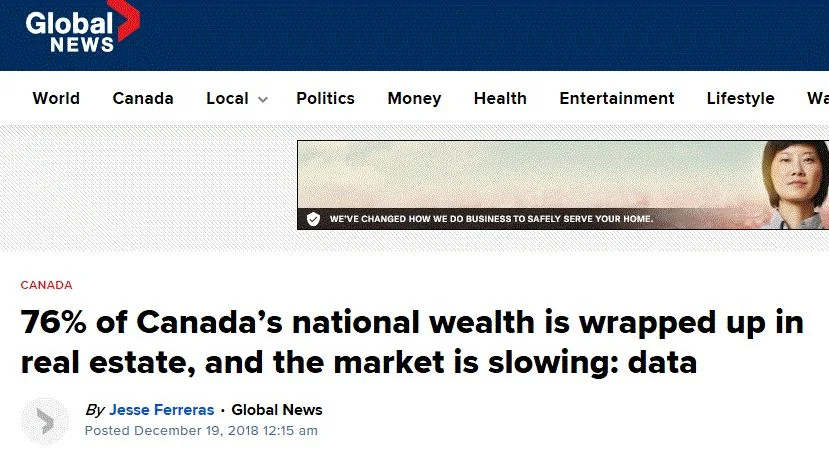
A Canadian consumer survey report shows that 80% of Canadians believe that buying a house is a good long-term investment. For the same question, only nearly 40% of Americans think that buying a house is a good long-term investment. The entire country of Canada is in the north of the United States. The most livable place is the border between the United States and Canada, and other places are colder. A friend from the financial business group summed it up well: Living in Canada is really a blessing. You can buy a Canadian house to preserve its value, and you can also invest in American stocks. When the vast majority of people, 80%, believe in one thing, it becomes widely known. Professor Robert Shiller's new book "Narrative Economics" explains this economic phenomenon: the things in the story are both true and false. The story of Canada is this: house prices will rise regardless of whether there are new immigrants; house prices will still rise whether there is an epidemic or not. Houses are used to preserve their value.
Income that has passed the test of the epidemic is real and sustainable income. This is the bank's view and fact. As more people's fixed-rate loan contracts expire, even if they do not take the initiative to lower interest rates and lower monthly payments as I suggested, more and more people will switch to low-interest loans after the original contracts expire, thereby greatly increasing their borrowing capacity. I don't think from 7 The month has come 10 The prosperity of the Toronto real estate market in September was short-lived and could not survive the winter. On the contrary, I believe that with the gradual release of borrowing capacity, housing prices and transaction volume will maintain a healthy and sustainable rise.
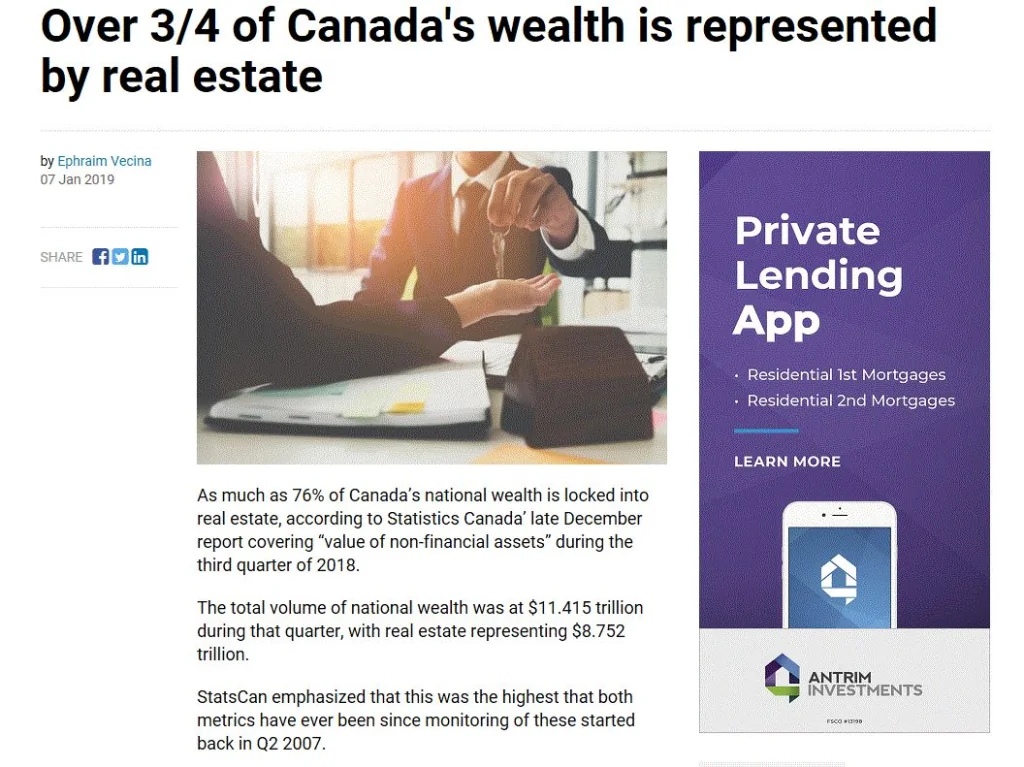
Conclusion: With the government's help and encouragement, low-income people are more likely to fall into the trap of relying on relief funds. K's lower limbs will become thicker and thicker, and more voters will support the rush of relief funds in the next election. On the contrary, striving for the top requires your own efforts, but once you develop a habit, you will gradually distance yourself from your peers. We have seen with our own eyes that in the past 10 years, under the low interest rate environment, the wealth of people who invested in real estate increased by at least 2 million Canadian dollars compared with families who did not invest in real estate under the same conditions. Those who strive for the upper reaches, have sufficient financial intelligence, and dare to join the game are working hard on the upper body of the letter K. In the next 10 years, low interest rates will remain the main theme, not only making those who can borrow money rich first, but also making those who have already borrowed money richer. The leverage effect of mortgages is the leverage effect of wealth. With the help of real estate, K's two legs will drift apart and never intersect again.