The epidemic has refreshed our awe for the unknowable, our thinking about the meaning of life, and our reflection on the path of human beings. For some people, the epidemic is not a transition from busy to suspended and back to busy, but from busy to stopped and then restarted.
People whose careers are interrupted will have a painful life, and they will be under a lot of pressure, both materially and mentally. Choosing an industry is very important, and being able to work deeply in a non-sunset industry is equally important. Changing careers is not easy, even changing companies in the same industry is not easy. Only in big cities where job opportunities are relatively concentrated can it be possible to find other opportunities to make a living in the short term.
In the past, people did not care much about which city they chose to live in. There was no big difference between first-tier and fifth-tier cities in the past, but now it is different. People living in first-tier cities usually do not move to fifth-tier cities for study, love or a special job opportunity. On the contrary, people in second-, third-, fourth- and fifth-tier cities spend their days thinking about how to get a foothold in first-tier cities. Good friends who went to the same middle school and university and chose the same major went to different cities to work in the same industry after graduation. In just five years, the person who lives in the big city will be much better than the classmate who lives in the small city in terms of income and assets. If real estate is purchased at the same time, the wealth gap will be even greater. Choosing a career and choosing a city are equally important in terms of wealth accumulation.
As human life expectancy continues to increase and life in old age becomes longer, the amount of pension needed will definitely be greater, not less. At present, even developed countries are not prepared for the increase in life expectancy when it comes to pension issues. On the contrary, the pension system in the industrial era is obviously lagging behind the development of the times. The most terrible thing is that many people think that relying on the state or enterprises for their retirement is enough, and they don’t need to work hard.
How can we choose a line of work to cultivate deeply, choose a city to grow old in, and enjoy prosperity for the rest of our lives?
01 It gets dark very slowly
In the past 200 years, due to the advancement of medicine and the improvement of material living standards, Human life expectancy per 10 annual growth 2 Years old. This steady and slow trend of change is unstoppable. Longevity should be a gift to mankind, but it is a curse to people with low pensions.
A person born in 1914 has a 1% chance of living to be 100 years old, and a person born in 2007 has a 50% chance of living to be 104 years old. This is the result of human life expectancy increasing by 2 years every 10 years. The life expectancy of people living on earth now is as follows:
A person born in 1997 has a 50% chance of living to be 100 years old;
A person born in 1987 has a 50% chance of living to 98;
A person born in 1977 has a 50% chance of living to 95;
A person born in 1967 has a 50% chance of living to age 92;
A person born in 1957 has a 50% chance of living to age 89
The above human life expectancy data are taken from "100-Year-Old Life".
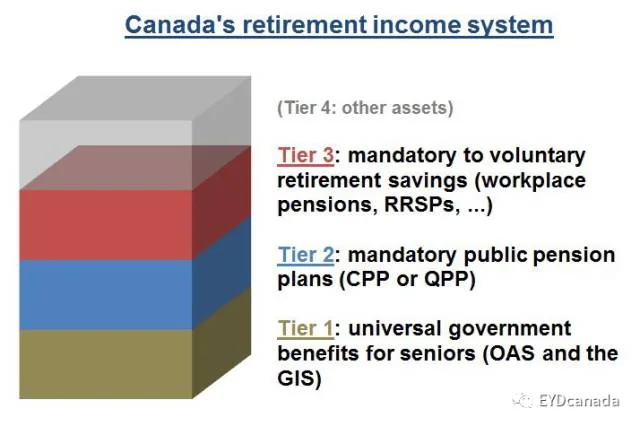
If everyone chooses to retire at the age of 65 and start to provide for the elderly, then we will find that the sky will darken very slowly, and the extended version of old age will face huge financial pressure. Where do pensions come from? There are three sources: the country, the enterprise, and oneself.
There is a conclusion in the economics textbook written by Mankiw: when the annual household income exceeds 21,000 US dollars, savings will occur. Well, currently, government pensions in almost all countries do not exceed US$21,000. The pension provided by the state is to prevent the elderly from starving to death, not to be large enough to save. Government pensions in all countries are pay-as-you-go. What does this mean? It's a Ponzi scheme, where new entrants pay money, and previous entrants receive the money. People who are currently paying pensions pay directly to those who are currently receiving pensions, rather than what the current pensioners paid when they were young. China is the best example. People who are receiving generous pensions never paid pensions when they were young. Fortunately, now 900 million people support 500 million people. In 20 years, 500 million people will support 900 million people. Those who are paying pensions now will encounter the curse of the family planning policy in 20 years.
Canada's national pension CPP system is like this: after retirement, if other income is less than 250 dollars per month, you can receive a full pension - 20,000 dollars per year. If other income is high, you cannot receive a full pension. The national pension we currently pay is CPP, Canada Pension Plan. Part of it is immediately distributed to the elderly who are receiving CPP, and the other part is kept in an investment company called CPPIB, Canada Pension Plan Investment Board, for value preservation and appreciation. There was a piece of news a while ago about CPPIB’s loss in investing in cruise ship stocks. The Chinese editor added some insults and said that Canadians’ pensions were no longer guaranteed. In fact, the pensions managed by CPPIB have not yet been used to pay out pensions. They are still in a situation where they can only go in but not go out. The government's pay-as-you-go can cover the current pensioners. The part managed by CPPIB is just a reserve fund pool. Fortunately The state’s pension is quite reliable, guaranteeing that you can eat a pineapple bun a day. Corporate annuities are not so accurate.。
Fewer and fewer people can receive enterprise annuities. I can’t find data from Canada. Judging from the situation in the United States, in 1983, 63% of people could receive enterprise annuities. By 2013, this number had dropped to 17%. I think the situation in Canada is similar, with less than 20% of people receiving corporate annuities after retirement. There are two reasons: 1. Only large companies have enterprise annuity plans; 2. Companies have shorter life spans than humans. There are two types of corporate annuities in Canada, DB and DC. DB means that companies have to pay pensions as long as their employees live. As a result, companies that are dragged to death by retired employees emerge one after another. Before the collapse of SEARS, there was a pension system like DB. DC means that pensions will be paid out according to the amount paid by employees at work. The pensions will be paid out as long as the pension is exhausted. You can live longer and solve the worries of longevity by yourself.
The last source of pension is your own investments. The state only guarantees that the elderly will not starve to death; companies do not guarantee that they will live longer than their employees. Without enterprise annuity, unexpected longevity will make life worse than death for those who have insufficient personal investment.
02 Choose a line to cultivate deeply
Personal investment, where does the money come from? Of course it comes from income. Mankiw said that you can save when your income is more than 21,000 dollars. The minimum wage in Ontario, Canada, is 14.25 dollars per hour, you work 40 hours a week, and you have an annual income of 29,400 dollars. If you find a job, you will have the opportunity to invest.
Investment is to balance your lifetime income . I had no income before I started working, so I would like to thank my parents for their upbringing. After retirement, my income is hard to come by, and my parents can't help me, so I have to rely on myself. Rely on the passive income generated by the assets you purchased when your income was high to cope with the extended version of old age.
The level of income depends entirely on the irreplaceability of labor in the information age.In the industrial age, the good days of relying on school education to last until retirement and receiving corporate pensions are gone forever. The information age is an era dominated by the service industry, not industry. People's demand for services is more unstable than the demand for industrial goods. The development of the service industry depends on the refinement of division of labor. The more irreplaceable the services you can provide, the higher your income will be. The syllogism of life in the industrial age: study, work, and retirement. The work stages in the process have become more variable and longer. People seem to have more leisure time now, but all of this leisure time is not allocated for leisure and entertainment, but at least 50% of their spare time must be devoted to investment. Invest in polishing your own irreplaceability and keeping pace with the times. I have seen loan application documents from thousands of families. Those with high incomes are usually those who are deeply involved in a certain field of expertise. There is no shortage of snake oil in this world. What we need are people who can stand alone and help others solve their problems.
Lifelong learning is the most important factor to ensure irreplaceability, and it is also the basic condition for deep cultivation in a certain industry. Charlie Munger told a joke several times in "Poor Charlie's Almanac": After the physicist Planck won the Nobel Prize, he was invited to give lectures everywhere. His driver learned the lesson after hearing it countless times, so he offered to give a lecture for Planck. The lecture turned out to be very successful. Unfortunately, an audience member asked a question, and the secret was revealed. There are two types of knowledge in the world: Planck's knowledge and the driver's knowledge. The driver's knowledge is just parroting. Those who also call themselves real estate investment consultants and talk about "valuation depressions" and "picking up leaks" are not experts, just drivers. "If you can't answer the next question reasonably, then you lack real skills and are probably outside your "circle of competence."" - Charlie Munger. Only by acquiring real skills in the field that you are good at can you cultivate deeply and gain high income. There is no shortcut. Only by deeply cultivating an industry for a long time and maintaining high income for at least 10 years can you lay a financial foundation for your investment. When your income is at its highest, you should continue to buy assets, buy, buy, buy, don't sell, until the passive income generated by the assets replaces the active income before you can retire.
03 Choose a city to grow old in
The driving force of economic development, even "economic development" itself, is city building, that is, urbanization. Build bigger cities, let more people live in them, and divide labor more and more finely, so that everyone in the city cannot grow vegetables and raise pigs to be self-sufficient. As Adam Smith said, use division of labor to create more wealth, use new wealth to further build cities, and continue to let more people live in the city. This cycle is promoting the progress of the times and the accumulation of wealth. The more people who come to the city, the greater their contribution to the city, and the greater the wealth in the city. Houses are the city's stocks. The stock price reflects the ingenuity and sweat of all city residents who contribute to the city as managers and employees. The larger the city you choose, the higher the cost of establishing a foothold, and you need to overcome difficulties such as high rents, high housing prices, and long commuting times. What supports new immigrants in the city is "hope", so they can overcome initial difficulties such as living in basements and doing manual labor.
The impact of urbanization on everyone is particularly prominent in China. The income gap between dentists in Beijing and those in fifth-tier cities is far greater than the cost of living gap. For those who fled Beijing, Shanghai and Guangzhou, it will be at least 10 times more difficult for the next generation to come back. Therefore, in the choice of city, it can be best reflected - if the front wave does not work hard, the back wave will be sad.
There are only a handful of first-tier cities in a country. The signs of first-tier cities are: the city chosen by the company headquarters of the country's pillar enterprises, the city where colleges and universities are concentrated, the city where emerging industries have settled, the city preferred by new urban immigrants, and the city preferred by foreign technicians and foreign students. Only one place in Canada meets the criteria: Toronto, Canada's economic capital.
There is a picture on page 123 of Internet celebrity writer Xiang Shuai's new work "Where Does the Money Come From", "Average house price growth in developed countries from 1946 to 2012 after World War II", which compares the growth of house prices in various countries. Canadian house prices perfectly reflect: house price growth = CPI growth + GDP growth. The growth rate of housing prices in the United States and Germany is lower than the CPI growth rate + GDP growth rate; the growth rate of housing prices in Japan and France is higher than the CPI growth rate + GDP growth rate. As one of the Commonwealth countries, Canada's land supply system is similar to that of London and Hong Kong. The government controls the speed of land supply to be slower than the population growth rate, allowing the stock of real estate to continue to appreciate, at least to keep the housing price growth rate not lower than the CPI growth rate + the GDP growth rate. It is increasingly difficult for latecomers in the city to buy houses, and objectively it has become a means of screening high-quality immigrants. As the city that attracts the most new immigrants, Toronto’s housing prices must rise faster than the Canadian average. The growth in real estate wealth of Toronto's "old" immigrants not only outperforms inflation, but also outperforms inflation + GDP, because there is another factor of population agglomeration. The endogenous factor formula for Toronto housing price growth is CPI growth + GDP growth + 1%, because Toronto’s urban population increases by at least 1% every year. Judging from the past 20 years, Toronto's real estate value growth has remained above 6%, and house prices have doubled every 12 years, which perfectly confirms this endogenous formula. Newly arrived immigrants should not only choose Toronto to live their whole lives, but also seize the time to buy a house and share the dividends of urban development.
There is a group of people who want to buy a house in Toronto but are blocked by banks: they have Canadian immigration or citizenship, but they voluntarily gave up and did not declare their income tax in Canada. Why do these people live overseas but want to buy a house in Canada? The reason is very simple. They think that it is slow to make money in Canada and they cannot use their talents. They go to the United States and China to hunt for gold. Only to find that the growth rate of real estate prices in the United States is much lower than that in Canada. The habitable area in the United States is too large, much larger than that in Canada. However, China has sales restrictions, loan restrictions, and purchase restrictions, making it impossible to buy. In fact, the problem is easy to solve: declare your overseas income again in Canada, and the problem will be solved. But these people who were determined to leave Canada were unwilling to bear the difference in tax. I couldn't bear to part with it, and I couldn't blame the bank. I have several Canadian clients who work in China. They file their taxes truthfully in China and file them again in Canada. They only pay a few thousand dollars more in taxes a year. However, when they buy investment properties in Canada and add mortgages, banks support them. The road is barren, but the people like it. If you are too smart, you will be misled by your cleverness. Banks will not treat those who are clumsy.
Xiangshuai's husband is Xu dollars, who specializes in urban real estate. They both graduated from McGill University. They bought a house immediately after returning to China and benefited a lot from real estate. Half of Xiangshuai's new book "Where the Money Comes from" is about real estate wealth. People who discuss financial topics usually avoid discussing real estate investment. Xiang Shuai’s new book breaks this chain of contempt and is worth reading.
04 Render unto Caesar what is Caesar's, and to God what is God's
There are two things that people cannot escape in life: taxes and death. If you escape, it is incomplete.
Give taxes to Caesar; give souls to God.
Material wealth nourishes oneself; spiritual wealth nourishes poetry and distant places.
Tangible assets support our consumption; intangible assets enrich our lives.
My articles are never shy about talking about money. Who can escape from the world and live by dreams and slogans? Charlie Munger said "Acquiring wisdom is a moral responsibility."; I said: Accumulating wealth is a virtue. At least do not reach out to others for financial help. It is best not to cause trouble to the government and support yourself. The source of happiness in spiritual life is wisdom and aesthetic ability. The accumulation of intangible assets requires accumulation over time and is no easier than acquiring material wealth. From a lifespan perspective, people with high net worth live longer, have a happier retirement life, and are healthier. One of the two authors of "A Hundred Years of Life" is a female author who has considerable insights into the accumulation of intangible assets in life. I recommend this book full of wisdom for the second time.
Intangible assets are not simply how many friends you have, how many people like it every day, or how many people subscribe to your article. These external recognitions need to be carefully maintained, which is very tiring. The largest intangible asset is contented . People who are dissatisfied inside always seek outside, and can only feel at ease with feedback from the outside world. Friends who are restless and always find it difficult to calm down can read "Status Anxiety" and "Poor Charlie's Almanac". The idea that intangible assets can be separated from tangible assets is naive. People who regard money as dirt will also be treated as dirt by money. After achieving financial freedom, or at least achieving consumption freedom, 90% of worldly worries will disappear. If you don’t believe me, try it.
In the pyramid of needs, Maslow placed the need for food and clothing on the negative level. When we were young, we lived in Maslow's basement. However, spending our old age in Maslow's basement is not a life we should choose.
Conclusion: After immigrating, I discovered an important freedom - wealth for the people. Although China's private capital has occupied half of the country from scratch, the amount of public capital is still huge and controls the banking system. However, this control of public resources has not eliminated wealth inequality. All capital in North America is private capital. There is no public capital, and the distribution of wealth is inevitably polarized. However, the state still does not impose administrative interference on the development of private capital. When China's middle class discovered the charm of real estate assets, they were immediately shackled by administrative orders with loan restrictions, purchase restrictions, and sales restrictions. This kind of wealth was not available to the people, which greatly slowed down the process of the middle class becoming millionaires next door. Since 2016, housing price controls in first-tier cities have never been relaxed. Even if you choose the right city, you cannot use real estate as a wealth warehouse to improve your wealth class. Canada, Toronto, does not have this restriction, Let those who can borrow money get rich first, which is justifiable. If you want to get a loan, work hard in the field you are good at, cure your myopia in tax filing, build real estate wealth in the 10 years when you have the highest income, welcome the new life after the epidemic, and enjoy prosperity for the rest of your life.