The 6-episode TV series "We Are Forced to Invest in order to Balance Our Lifetime Income", which I starred in on YouTube, was recently turned into written material by netizens using high technology. Thank you to all the enthusiastic friends for liking and supporting this short film. Due to everyone's love, I will start to refine the script of this drama and dedicate it to readers.
The first episode of the six-episode TV series has been viewed by 17,000 people on YouTube. The script is as follows
01 Canadians’ income is hard landing after retirement
In Canada, almost everyone is facing a hard landing after retirement.
How hard can a hard landing be? If you are earning 100,000 dollars now, you will lose nearly 80% of your income after retirement. I have nothing to do, I feel very lonely, and then I have less money. Do you think it is hard or not? So, what can you do to avoid a hard landing after retirement? You can only balance your current income until retirement. As a means of balance, and probably the only means, is to invest when income is high, with the purpose of investing to enjoy passive income after there is no active income. This is the only way to balance your lifetime income. Different countries have different stages of development. If you want to turn your income into assets, the methods of doing so are different in different countries. How should you do it in Canada?
Let me first tell you how I discovered the hard landing.
For a loan I made in 2017, the applicants were two elderly people, one was 71 years old and the other was 70 years old. They only applied for a mortgage of RMB 200,000. Because they have a large deposit and the ratio of borrowing to house price is relatively low, we approved them for RMB 200,000. Through the application, I know what the income of Canadians is like after retirement: a 71-year-old man has an annual income of 14,000; a 70-year-old man has an annual income of 13,700. The two people add up to about 28,000.
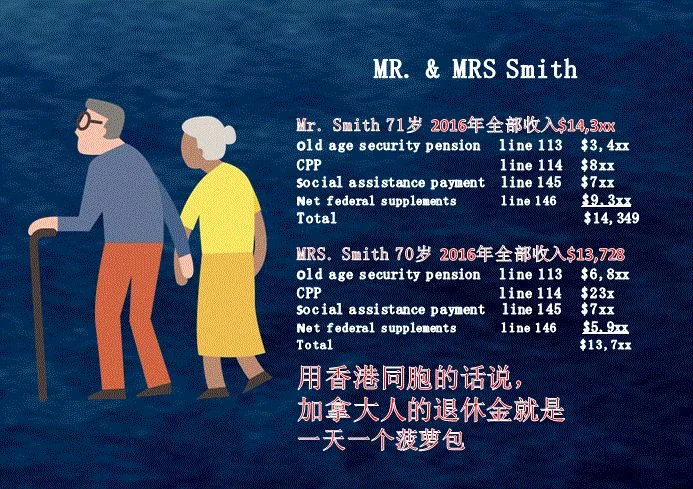
If both people are alive, the annual income is 28,000. This one is a very hard hard landing. Let’s do the math, if you live at this income level, how will you live? Very tough. It may depend on the children. The pension that the government can provide basically guarantees a state of one pineapple bun a day, as long as you don't starve to death.
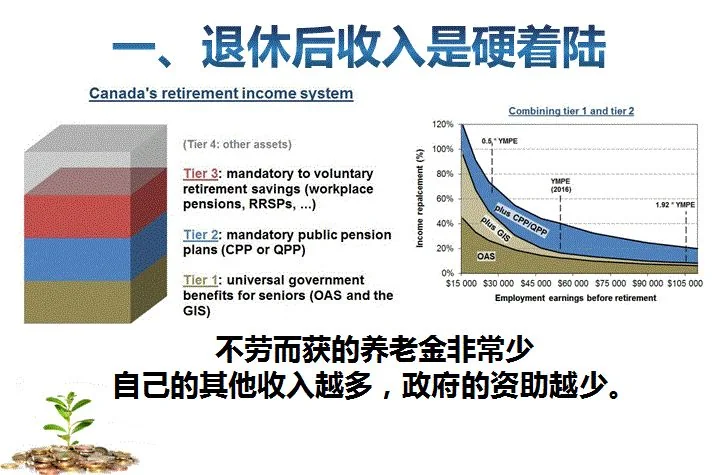
Let’s take a look at the entire post-retirement income structure. The first layer is called OAS, which is pension. This is a security guarantee. You can receive this OSA regardless of whether you have paid taxes in Canada or not. Then people who have paid taxes and CPP still have CPP income, which is the second level. The third level is basically the part of the enterprise annuity paid by you and your company that year. Many people have not participated in the enterprise annuity plan. Of course, it is not because they are unwilling to participate, but because the company does not have an enterprise annuity plan. For example, all self-employed people do not have corporate annuities. If self-employed people take the initiative to pay CPP, they need to pay two copies; those who work have to pay one part themselves and the employer pays another part. The government pension received after retirement has nothing to do with the amount of taxes paid in the past. If your annual income before retirement is 15,000, after retirement, you can get 120% of your pre-retirement income. In other words, extremely low-income people will be better off after retirement. If your annual income is 100,000 before retirement, you will basically only get 20% after retirement.
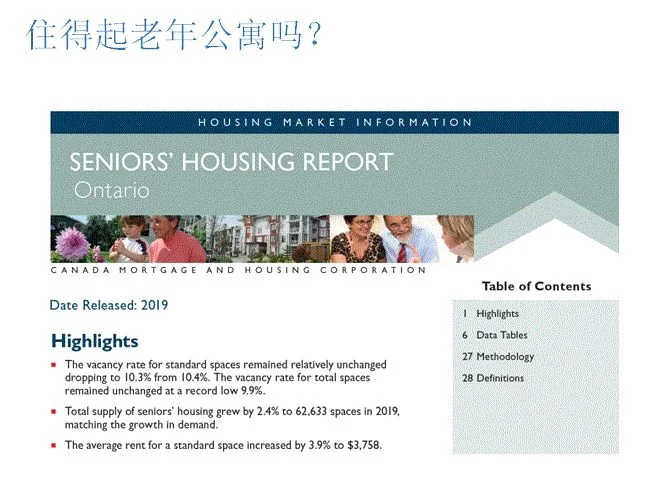
If we don’t discover this until we are 65, is it too late? Many people say that Canada’s welfare is very good, and how about the apartments for the elderly. Take a look at the average rent for seniors apartments in Ontario released by CMHC, which is $3,758 per month. The rent for elderly apartments that provide Chinese services, such as Yikang Mengchang, is as high as more than 6,000 dollars per month. Can you afford senior housing? Let’s compare the pensions provided by the government. Are you desperate or not?
02 What is investment?
For families, the word investment has only one definition and no other definition. This definition was given by Irving Fisher in the early years. The English saying is: Investment is the balancing of consumption over time. Investment is to balance consumption throughout your life. Life is endless and consumption continues. What should we do with consumption after retirement? Many people say that I will not go anywhere after retirement. I will cook at home and I will not go to restaurants. Then why don't you go to the hospital? Going to the hospital is also your consumption, right? Canadian hospitals only treat you, but you still have to pay for nursing care and medicine. So what is the income? Income is a series of events that satisfy consumption, so what do we get when we put these two sentences together? Investing is all about balancing your lifetime income.

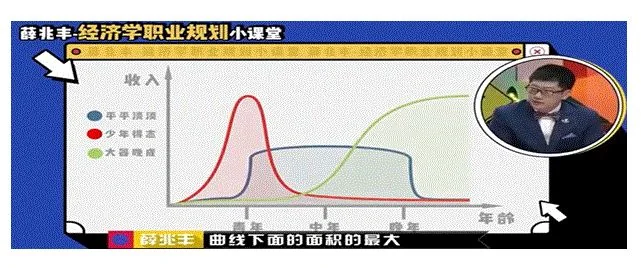
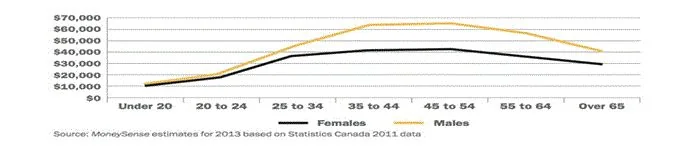
Professor Xue Zhaofeng gave three curves. The first line is that of young success, that is, he reaches the peak of income very early in life, and then it is low and flat for a long time. This line can also be understood as an unexpected longevity situation. After living for such a long time, the income has been close to the ground. Japan now has 60,000 people whose life span exceeds 100 years. Since 1840, human lifespan has increased by two years every decade, and the average human lifespan is getting longer and longer. If you have a high income when you are young and do not turn it into assets or passive income, you will continue to run out of your savings after retirement. The second line is relatively plain. This ordinary curve shows that the income is low at the beginning, mainly because it is in the learning stage. When you are in your mid-twenties, your income begins to increase. Until you are sixty-four or sixty-five, you suddenly have no income, that is, it is a hard landing. This is an ordinary life. Let’s take a look at Canada’s real income data. Yellow is for men and black is for women. Basically, income starts around the age of 25. The income rises to the highest level at the age of 36, then becomes relatively stable. It starts to decline around the age of 54, and the decline becomes even more severe after the age of 65. Judging from the income of Canadians, most people live such a mediocre life. The third line is that these people are late bloomers. After 35 or 40 years of study, you can get a doctorate, get a doctor or dentist license, or become a lawyer. Although it is hard in the early stage, your income will increase sharply. In recent years, it has not been so easy. The above-mentioned people who have studied for a long time may not necessarily have a high income after completing their studies. Let’s look at the dentists in the Chinese community. Since Canada has relaxed its policy since 2010, immigrants with dental background in other countries can obtain medical qualifications in Canada by passing the exam. After the switch to examination, the number of dentists increased sharply. Due to competition, the annual income level of Mandarin-speaking dentists has been significantly reduced. The income of many new dentists is less than 50% of the average income of dentists. The modern example of grand achievement should be people like Jack Ma who have succeeded in starting a business. Once their income has increased, they will never stop it. The standard for high income is getting higher and higher, but the number of people is getting smaller and smaller, because the difficulty of making money is getting higher year by year.
Everyone comes here to listen to the lecture, hoping to balance their lifetime income, right? If you decide you want to balance your income throughout your life, you need to accumulate assets now, rather than waiting until after age 65. Wilde said, "When I was young I thought money was the most important thing in the world, and now that I am old I know it is."
03 National conditions are different, and the methods of balancing lifetime income are different.
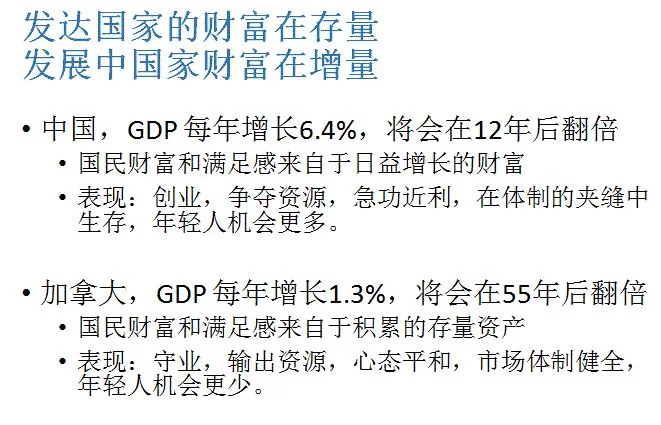
If you want to save today’s income, how do you save it? Different countries have different asset warehouses at different stages of development. If you put it in the wrong place, it may be completely destroyed, because the warehouse may collapse or explode. In addition, different countries have different economic systems, especially property rights systems, which determine whether your assets are safe. I have listened to some lectures on financial management, and financial consultants often show everyone comparative charts of the GDP of various countries. What does the growth of a country's GDP have to do with us? GDP can reflect a country's wealth growth and development speed. In the first quarter of 2019, China's GDP grew by 6.4% compared with the same period last year. According to the rule of 72, 72 divided by 6.4 equals 12 years. That is, if compound interest grows by 6.4% every year, China's wealth will double in 12 years. Today's child is likely to be richer than his father in 12 years' time, if his father's wealth remains the same. China’s incremental wealth dominates. Then look at Canada, with annual GDP growth of 1.3%. Divide 72 by 1.3 to get 55 years. Today's children will need 55 years to surpass their parents' wealth, which will last a lifetime.
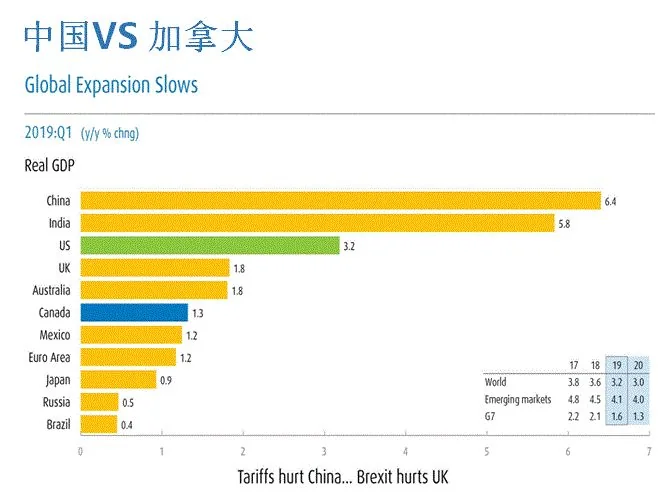
Please examine your own situation: Who are you selling your time to? Which company was sold to? Is this company doing business in the field of incremental wealth or in the field of existing wealth? For example, if you want to open a restaurant, do you think you want to gain incremental wealth or existing wealth? It's incremental wealth. The hotel does not exist, it is your business. If it can survive, the average annual growth will be 1.3%, right? Do you want to start a business in Canada?
Why has everyone become more and more envious of people in China in the past 20 years? Because her incremental wealth is so huge, growing at 6.4% every year, and the average over the past 10 years should be higher than 6.4%. If your family's wealth in China has not doubled in the past 10 years, you are already falling behind. But if you want to double your wealth in Canada in 10 years, you have to choose a good track. Starting a business is definitely not an option. In China, there are many opportunities for young people, and the possibility of catching up on wealth through entrepreneurship is high. However, it is extremely difficult to chase incremental wealth through entrepreneurship in Canada because the incremental wealth is too small and the competition is too fierce.
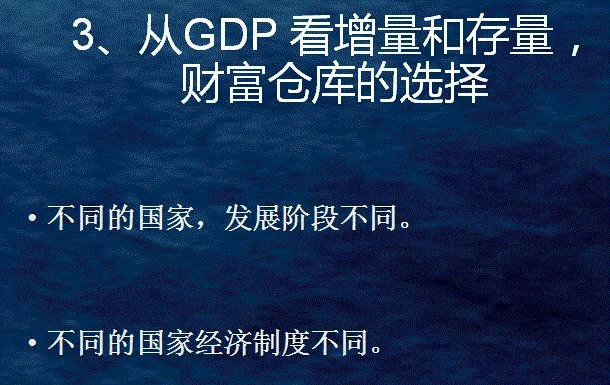
Although Canada's incremental wealth is small, its existing wealth is huge. This is the difference between developed and developing countries. "Developed country" is translated as developed country, and "developing country" is called developing company. Developed countries are very clean and orderly, with fair transactions and honesty, which in itself is a stock of wealth. Canadians' life satisfaction comes from living in Canada. In the most popular words, as long as you can rely on Canada, your life may be better than working hard in China. This is caused by the different development stages of the two countries. If your satisfaction comes from the growth of your wealth, you may have immigrated to the wrong country. You must learn to enjoy staying in Canada. Entrepreneurship success is basically a rare thing in Canada. If you want to reach the level of entrepreneurship in China, there are too few opportunities. Therefore, most people in Canada focus on keeping their own businesses. Their mentality is relatively peaceful, the market mechanism is relatively sound, property rights are relatively complete, and there are relatively fewer opportunities for young people.
After we come to Canada, we must first do as the locals do and follow their market rules. Many people don't realize it. For example, self-employed people rarely file taxes. This is incomprehensible to local people, really. I work as a mortgage lender, so I can see how Chinese and local self-employed people file their taxes. If local second- or third-generation immigrants are self-employed and open a small business, they must declare the tax amount truthfully. For example, if the company's income is 100,000 dollars and he thinks that my annual work in this company is worth 60,000 dollars, he will give himself a salary of 60,000 dollars. What do the Chinese think? The company's income is 100,000. If I prescribe 60,000 to myself, the tax rate on 60,000 is higher than the tax rate on 100,000, so I prescribe 20,000 to myself. So when you get to the bank, what does the bank think of you? Oh, you think you are worth 20,000 dollars a year. I don’t believe you can repay me if I lend you money, so I won’t lend it. This is the difference between mainstream values and the values of the Chinese community. Therefore, many of us Chinese feel that what we are doing is right and there is nothing wrong with it, but if you look at it in a larger environment, you are destroying some of the existing public order and good customs in society.
The values of Chinese immigrants are different from those of locals, but together we Chinese feel that you are like this and so am I, and we feel quite balanced. Is that so? Don’t feel that the locals look down on you, or resist or discriminate against you. Think about yourself, are you really doing that well? How much have you contributed to this country? There are a large number of state-owned enterprises in China. The profits of state-owned enterprises are turned over to the treasury, and then the taxes collected by the tax bureau are also turned over to the treasury to support the operation of the country. There are few state-owned enterprises in Canada, almost all of them are private enterprises. If taxes cannot be collected, how will the country run? Regarding social order and good customs, banks have scales. If you don’t pay enough taxes, I won’t lend you money. That’s fair.
Let’s talk a little more about incremental wealth. What has China done right? Why has China’s wealth grown so much from 1978 to now after reform and opening up? This way we can compare and understand why Canada is developing so slowly. Only by comparison can everyone know how different your situation is compared with China at this moment today.
The wealth of Chinese people has grown tremendously in the past 20 years, first of all due to the demographic dividend. At this moment, there are 900 million people in China paying taxes, five social insurances and one housing fund, and 500 million minors plus retired seniors. A total of 1.4 billion people, that is, 900 million people support 500 million people. When I returned to China in the past two years, my parents stopped telling me that things were expensive. Because urban residents have really achieved Jack Ma's status - their income has reached the peak of their lives after retirement. Why? There are 900 million people supporting these 500 million people. My parents’ income is much higher than their salary before retirement. But can this state of affairs last? In 20 years, China's family planning policy will show its power. In 20 years, the conservative calculation is that 500 million people will support 900 million people. Will the pension at that time be higher than when working? It's impossible. In 20 years, China’s demographic dividend will be gone forever. Therefore, people my age, and even some younger than me, still want to return to China to start a business. I don’t know what these people want to do when they go back. It would be exciting if you only looked at the past 20 years, but it is unsustainable. The demographic dividend has exploded in China in the past 20 years. When was the family planning policy implemented? From 1978 to around 1980, let’s take a look at how old the people born in 1978 are now. They are working hard to pay taxes to support our parents’ generation, right? Their income is even lower than that of pensioners. This is an upside-down state that is absolutely unsustainable.
The second one is called institutional dividend. In the past 30 years, China has transformed directly from a shortage economy. Now in China, no matter what you produce or what you want to sell, you must advertise it. Right, what is a shortage economy? As long as you can get unplanned resources and produce something, grab them and queue up. The dual price system has caused political problems in the past. The dual-track price system was the result of failure to overcome the price barrier in 1988, which ultimately led to the stagnation of reform. It was not until the Southern Tour in 1992 that reform was determined again. Only then did privately owned enterprises appear. Before that, they were all collectively owned enterprises such as township enterprises. The first batch of entrepreneurs in China were all farmers, while the second batch of entrepreneurs were almost all unemployed vagrants in the cities. The speculators in rural areas were actually the first batch of peasant entrepreneurs. Changing to the city means young people returning to the city, that is, the blind flow of people from the city who have not been absorbed by state-owned enterprises. This crude system reform turned out to be surprisingly good. China's reform is relatively smooth, mainly because it has always adopted a dual-track system, while Eastern Europe is explosive. Prices suddenly reformed in one day, and the inflation rate was as high as 3,000%. China's price reform is very careful. The price of matches was raised from two cents to three cents. The Politburo held three meetings before making the decision, because it increased by 50%. If you want to understand this period of history, go read the book on market economy written by Professor Zhang Weiying. It is very well written. China's reform and opening up is actually very difficult. It was achieved step by step. No one can learn from it. When the private economy came out, the state was actually half-promoting and half-rescuing it. The ones who understood the policy best at that time were the blind migrants, who had nothing to lose. If you asked employees of state-owned enterprises to run small businesses, they would not do it because the opportunity cost was too high. It turns out that in China, there are pits everywhere on the wall. As long as you sit in them, you will become a Buddha. Get some resources, engage in some production, and whatever you produce can be sold. Cao Dewang said in his memoirs that individuals were not allowed to run businesses at that time. What should we do? Enterprises were run in the name of townships. After 1992, as a township entrepreneur, he spent his own money to buy out the shares of township enterprises, and private ownership emerged. Therefore, from 1978 to 1992, non-state-owned enterprises had appeared, but private enterprises had not yet appeared. This was the period of the dual-track system. What now? We can go back to China and see that there is no shortage of any supplies. On the contrary, things cannot be sold. If you want to do something now, you will find that there are no ready-made holes in the wall. If you want to become a Buddha, you have to drill a hole in the wall to get in and become a Buddha. The biggest problem in China is that the wall is shaking and always moving.You may not be able to sit in the hole after you dig it, and if you sit in it, it may shake you out. If you are not born and raised in China and suddenly come back from overseas to start a business, the success rate will be difficult to say.
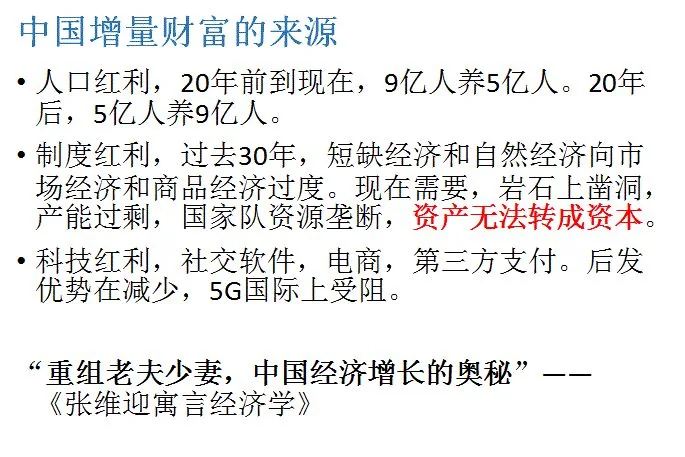
The third one is the technological dividend. China has the advantage of being a latecomer in science and technology. Whatever technology the United States has, China will soon have it. Regardless of where it came from, it will be there very soon. This is the characteristic of the latecomer advantage. Research and development is slow, but copy and paste is fast. If you want to take the lead, you have no choice but to create something original and develop it yourself. Why is the 5G developed by China blocked internationally? Because China is indeed ahead in this regard. Huawei has undergone a big change in Canada. The sales team has basically been laid off, and the new recruits are all technology R&D personnel with unique skills. Because it is no longer possible to promote 5G in Canada, we will simply engage in R&D. What is 5G? The Internet of Everything. To give a very popular example, after 5G connects everything, if you go to the toilet in the morning, your excrement will be tested immediately to know your physical condition today. If you are found to be protein deficient, this message will be sent directly from the toilet to the refrigerator. The refrigerator will check whether your egg inventory is sufficient. If there are not enough eggs, the refrigerator will directly go to Amazon to place an order for eggs, and then you will receive express delivery. After the implementation of 5G, all hardware will have to be replaced. In other words, whoever occupies the high ground of 5G will control the manufacturing industry. So as you have seen, Soros wrote an article suggesting that the United States legislate to restrict the President of the United States from surrendering to China, especially on the issue of 5G. Once he surrenders, the United States will have no future. The technological dividend will cease to exist after the latecomer advantage is exhausted.
Demographic dividend advantages, institutional advantages, and technological advantages occur simultaneously in a country, resulting in explosive wealth growth. Zhang Weiying's students compiled his economic thoughts and wrote a book, "Zhang Weiying's Fable Economics", in which there is a fable that explains the secret of China's explosive economic growth, "Reorganization of old men and young men." What does it mean to reorganize old husband and young wife? Before 1978, it was stipulated that a 20-year-old boy must marry an old lady over 80 years old; a 20-year-old girl must marry an old man over 80 years old. Obviously, it is difficult for both families to have children. In 1978, this rule was abolished. A 20-year-old boy married a 20-year-old girl and had a child. This is the institutional dividend of free love. An 80-year-old man and an 80-year-old woman also got married. At this time, technology has advanced, and they also gave birth to a child. This is the fruit of technological dividends. With more people, productivity increases, which is the demographic dividend. Reorganization of old husbands and young wives is the secret of China's economic growth, which refers to demographic dividend, technological dividend, and institutional dividend.
To be continued, please read "In order to balance our lifetime income, we are forced to invest 2/6".