On June 28, 2022, another boot regarding mortgage policies fell. OSFI announced the latest regulations on Combined Loan Plans (CLPs), a hybrid product of mortgages and credit lines. According to the annual deadlines of each bank, the new regulations will take effect as early as October 31, 2023. The regulatory authorities’ concerns about such products of financial institutions were first reported in the annual financial industry risk analysis report on April 21 this year. The news that the regulatory authorities may change the mortgage policy has caused a lot of speculation. "The financial regulatory authorities are going to take action." Some people speculated that withdrawals from the credit line are not allowed to be used as down payments for buying houses. Some people speculated that the down payment ratio for investment properties will increase to 35%. Some people even cheered on the day the policy was introduced that "Canada is tightening lending, these people will be forced to pay back large sums of money," etc. People who are happy have a lot of fun; people who are more literate turn around and prepare the down payment. In fact, as early as March this year, some good people went crazy and spread the word that the HELOC policy for mortgage credit lines would be changed. I was also included in the story. Someone forwarded me an article titled "Is the HELOC Mortgage Loan Doll Coming to an End?" Teacher Wang fainted in the toilet because of crying..." The author may also feel burdened, and now this article has been revised to the point where there is no longer any plot.
During the epidemic, many people missed the opportunity to buy a house and buy a car out of fear. The cash they held in their hands was either invested in stocks or digital currencies. After the epidemic, they found that except for real estate, the profits from other investments were all in vain. The floating profits during the epidemic turned into real losses after the epidemic. Not only did the assets depreciate, but they also had to endure inflation. There are also people who have invested in pre-construction properties and are still paying the down payment, but they feel increasingly uneasy. When builders made their budgets, they probably did not expect that interest rates would rise so much. They might lose everything when they start construction, and the delivery of the pre-construction properties is far away. The down payment is properly locked for 6 or 7 years to no time, and inflation is allowed to eat up the purchasing power of the deposit. On the contrary, real estate investors who bought second-hand houses not only enjoyed the real benefits of rising house prices, but also locked in the super-low monthly payments during the epidemic. They are also using devalued currencies to repay their mortgages. Many people hope that the financial regulatory authorities will take action to reduce the income of real estate investors and give themselves a better balance of mind. They completely ignore the fact that the financial regulatory authorities have repeatedly reiterated that real estate investors are harmless to the real estate market and have no intention of tightening mortgage policies for real estate investment.
The name of OSFI's announcement released on June 28 is "OSFI takes focused action to reduce systemic banking system risk." It clearly and clearly states that it is targeted at banks, not the real estate market. Judging from the content of the announcement and the attached new regulations, there is nothing that will have an impact on the real estate market. Below, I will do my best to interpret the announcement, new regulations, current situation and new policies, as well as FAQs.
01 Brief introduction to the announcement
The announcement gives seven facts:
1. The new regulations will not increase borrowers’ monthly loan payments
2. New regulations do not affect new home buyers
3. Mortgage loans that do not require loan default insurance refer to mortgages with a down payment ratio of not less than 20%.
4. Mixed products of mortgages and credit lines refer to mixed products that include both principal and interest repayment mortgages and revolving credit lines.
5. As of March 2022, the balance of this hybrid loan is 1.8 trillion, and the balance of the loan balance exceeding 65% of house prices is 204 billion (accounting for 11.33% of the total balance).
6. If the loan balance exceeds 65% of the house price, you will be required to repay principal and interest, and continuously reduce the principal to less than 65% of the house price.
7. For banks whose fiscal year ends on October 31, the latest deadline to implement the new regulations is October 31, 2023. The latest deadline for banks with a fiscal year end of December 31 to implement the new regulations is December 31, 2023. For consumers, i.e., existing hybrid loan borrowers, the loan structure remains unchanged even after the above-mentioned cut-off date until the contract is renewed upon expiry and a new hybrid loan structure is implemented in accordance with the new regulations.
The most important key information in the announcement is point 7. The original text is as follows: Consumers with CLPs will not see a change to their product structure until their next renewal after these dates. The key word in this sentence is product structure.
There is nothing in the announcement that requires interpretation. It is very clear and concise. Everyone should be able to understand it if it is translated literally. If you are slow to respond or lack imagination, you can look at the examples below.
2. Brief introduction to the latest regulations
Embedded in the announcement is a "guidance" for lending institutions, called an "Advisory". You need to click on the hyperlink in the announcement to read it. This new regulation is for lending banks, not for the public. There are three main contents:
The first, the most important one, original text: OSFI expects that any and all lending above the 65 percent LTV limit, which cannot exceed 80 percent LTV, will be both amortizing and non-readvanceable. Principal payments applied to the portion above 65 percent should be matched by a reduction in the overall authorized limit until this overall CLP authorized limit reduces to 65 percent LTV for all segments, on a combined basis. Translation: For a hybrid loan in which the maximum mortgage ratio is 80% of the house price, and there is also a revolving credit limit of 65% of the house price, the regulatory authorities hope that the portion exceeding 65% of the house price will be a loan with a certain amortization period, repayment of principal and interest, and cannot be reused. Before the loan balance drops to 65% of the house price, the loan principal should be included in the payment, and the loan balance continues to decrease as the amortization period shortens until the loan balance of the hybrid loan is less than 65% of the house price.
Article 2, original text: FRFIs may supply financing for uninsured mortgages with shared equity features, as long as the mortgage provided by the FRFI is in the first lien position and the equity investment provider’s contribution is a bona fide equity investment (i.e., not a loan, and on terms that are pari passu with the borrower’s equity). For properties with shared ownership, lending institutions can undertake mortgage loans with a down payment of no less than 20%, and the mortgage order of the lending institution should be the first mortgage (the mortgage rights of institutions that share ownership in good faith are ranked after the lending institution).
Article 3, original text: Given the unique risks inherent to reverse mortgages, OSFI expects FRFIs to demonstrate heightened due diligence in respect of collateral management, property appraisal and longevity risk. Financial institutions that underwrite reverse mortgages need to establish a risk management mechanism that highlights collateral management, property appraisal and longevity risk.
The second and third items rarely happen in daily life, or I am very unfamiliar with them, so I cannot interpret them in detail. I can only interpret them roughly literally.
The second article refers to relatively rare situations. For example, the municipal government, provincial government, and federal government have some policies to help buy a house. For example, the provincial government contributes 5% as a down payment to participate in the purchase of a house. When the house is sold, the provincial government must take back 5% of the sale price as repayment. In this case, if the subsidized buyer makes a 15% down payment himself, the banking regulatory authorities confirm that the lending institution can provide a loan of up to 80% of the house price, and the lending institution's mortgage rights have priority over the provincial government. Shared ownership projects are not popular. Participants are well-intentioned to help buyers buy a house as soon as possible, but they have to share the benefits of rising house prices, so consumers do not appreciate it or do not take advantage of it. In the 13 years I have been in business, I have never made a loan for buyers participating in these projects. I guess the Chinese do not like this kind of help.
Article 3 refers to a reverse mortgage. The borrower does not need to have income, but the age must reach a certain age. The older the age, the higher the loan proportion. This kind of loan does not require repayment of principal and interest, and can be issued in one time or monthly. Loans are mainly based on the age of the homeowner and the property's valuation. Regulatory authorities hope that the undertaking agency will re-examine the current home valuation system and pay more attention to the unexpected longevity of the homeowner. For example, for a house worth RMB 1 million, if the owner is 80 years old, the loan ratio will be 65%. If the owner of the same house is 70 years old, the loan ratio will be 55%. After the loan is disbursed, the reverse mortgage will be calculated based on the interest rate. The 80-year-old homeowner will owe the loan bank 700,000 in 10 years. If he dies at this time, the house will be sold for 1.1 million, the loan of 700,000 will be paid off, and 400,000 will be left to the beneficiary of the will. If the homeowner lives to be 120 years old and owes the lender 1.8 million, but the house is sold for only 1.6 million, the lender may suffer a loss. That’s why regulators are now reminding loan valuations to pay attention to valuation and unexpected longevity reasons.
The first provision is the main purpose of this policy adjustment. The interpretation of the first provision requires a contextual environment to explain clearly. It is necessary to compare before and after the implementation of the policy to know what the policy says. The key is to clarify the specific characteristics of the current products of this type.
03 Brief introduction to the current situation of hybrid loans
Let’s focus on the current situation of hybrid loans. Hybrid loans are common and not as niche as the two programs above. Therefore, the first item is the focus of this new policy. Although loan + credit line combinations are very common, each bank has very different loan structure settings, different pricing strategies, and different regulations on whether withdrawals from the credit line can be converted into amortizable installments. The new regulations are not only a way to reduce risks for lending institutions, but also a means to unify the different practices of various banks.
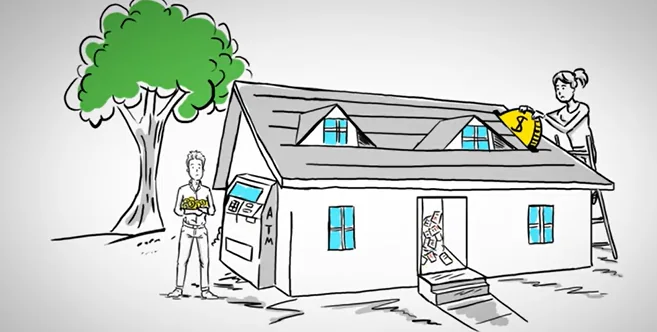
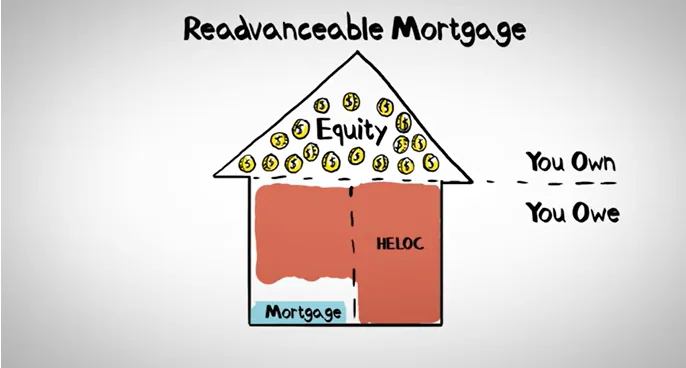
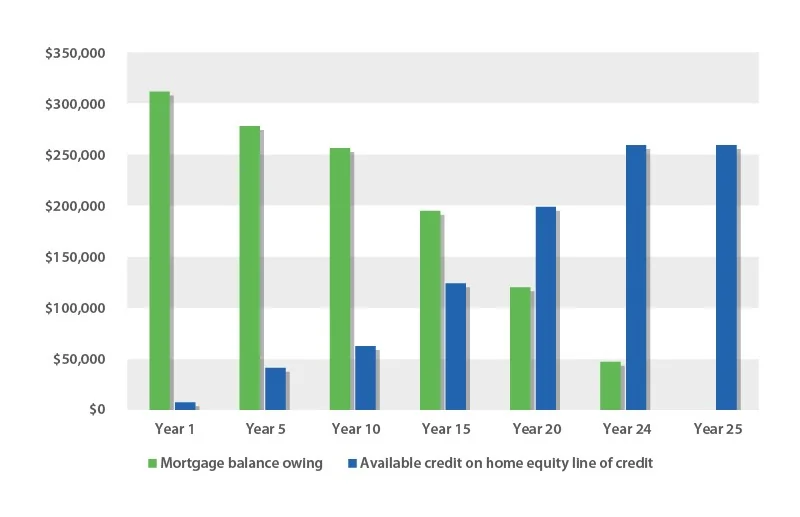
The most common type of loan + line loan combination is that the entire combination is the first mortgage, that is, first charge. When registering a mortgage, some banks make one mortgage, and some banks make two mortgages, but they all belong to the first mortgage. For consumers, the biggest feature of this type of mortgage is that when repayments begin, every month Available credit limitThe available line of credit increases as the principal decreases. For example, for a property worth RMB 1 million, the loan amount is RMB 800,000, and the credit limit is RMB 650,000. The credit limit that can be used on the first day of the loan is 0. After completing the first total principal and interest repayment, the principal dropped by 1,600 dollars, and the available limit became 1,600 dollars. After the second repayment, the principal dropped by another 1,620 dollars, and the available limit became 1,600+1,620=3,220 dollars. By analogy, when the principal decreases by 650,000, the available credit limit reaches the maximum of 650,000. After that, repayments continue. Although the principal decreases, the available credit limit does not increase. During this process, consumers can withdraw money from their available balance. The money withdrawn can be converted into a loan that amortizes the principal in installments, or it can only pay interest, or even only the minimum repayment amount calculated using an annual interest rate of 2%. The current situation in various banks is very confusing. First of all, starting in 2014, regulatory authorities required that the recyclable credit limit cannot exceed 65% of the house price. To this day, some banks still grant their customers a recyclable credit limit of up to 80% of the house price. Secondly, although All banks allow borrowers to withdraw money as long as they have available credit , but some banks allow no limit on the number of loans that can be converted into installment loans. For example, if you withdraw 50,000, the 50,000 can be converted into an installment loan, and if you withdraw 80,000, the 80,000 can also be converted into an installment loan. Each loan exists independently, with different interest rates and different maturity dates. There is no limit on the number of small installment loans that can be converted into installment loans within the credit limit; some banks allow A maximum of 3 conversions can be made; some banks only allow conversion to one installment loan. For example, if you take out 50,000 dollars and want to convert it to an installment loan, you must make an installment loan with the original loan balance plus 50,000 dollars. The mixed interest rate will be implemented, and the maturity date will also be readjusted. After taking another 80,000 dollars, it will be mixed with the previous loan. In short, you will always be a neat family, with one interest rate and one maturity date. Thirdly, the products of a few banks and insurance companies are all-in-one. The balance under the credit limit is netted with the deposit in the consumer's account and interest is calculated. There is no limit on the amount that must be repaid. The core of the difference between the current practice and the new regulations is how the available credit is used. Currently, as long as the principal is repaid, the available credit limit for hybrid loans will increase. As long as there is available credit, consumers can withdraw money from the available credit limit. New regulations limit this practice, requiring 2023 year 11 For hybrid loans newly approved after 2 months, only the principal will be reduced to the house price. 65% Only then will the available credit appear. For existing hybrid loans, even after the new regulations are implemented, the original practices can still be used. However, when the loan balance is higher than65%In this case, the withdrawal amount must be converted into an installment loan with an amortization period and the principal and interest are paid together. When the original contract expires and is renewed, the original loan structure needs to be adjusted to a hybrid loan institution under the new regulations. This paragraph was explained verbally by Peter, the head of OSFI, in an interview with BNN TV on June 28. He gave an example. After the new regulations are implemented in November 2023, a house with an original purchase price of 1 million originally borrowed 800,000 and had a credit limit of 650,000. After the loan principal has dropped to 700,000, there is an available credit limit of 100,000. After the new regulations are implemented, consumers can use 100,000 can be withdrawn from the credit line, but the withdrawn money must be converted into an installment loan with principal and interest repayment. This loan will be changed to a loan structure subject to new regulations when it expires and is renewed. The new loan structure is: if the principal exceeds 65%, no withdrawals can be made from the credit line.
There is another form of loan + line combination loan. The loan is the first charge of the first mortgage, and the credit line is the second charge of the second mortgage. In a hybrid loan with this structure, the credit line is a fixed amount and does not decrease with the decrease of the loan principal of the first mortgage. Withdrawal from the second mortgage credit line, some banks allow the withdrawal to be converted into a principal and interest loan with an amortization period, but some banks do not allow the transfer. The interest rate for withdrawals under the second mortgage line of credit is relatively high. If it cannot be converted into a loan, it is only suitable for short-term emergencies.
04 FAQ
Frequently asked questions are as follows:
Q: After the new policy is implemented, will I be required to accelerate the repayment of loan principal?
Answer: No. Don't listen to rumors and don't bother yourself.
Question: Is this the banking regulatory authorities trying to suppress housing prices?
Answer: Which eye sees these connotations?
Q: Will the existing quota be restricted or withdrawn?
Answer: No. Use it as usual until the loan is due for renewal. After November 2023, when the amount withdrawn and the loan balance exceed 65% of the house price, the amount withdrawn needs to be converted into an installment loan that requires repayment of the principal, and cannot only pay interest. When the loan is due for renewal, the structure will change. After the structure change, the credit line can only be used when the loan balance is less than 65%.
Question: The policy mentions "65% of house price" many times. Is the house price mentioned here the latest market price of the house or the house price when the hybrid loan was approved?
Answer: Literally, it is the house price when the loan was approved, not the current market price of the house.
Q: What is the difference between the hybrid loans obtained after the implementation of the new regulations and the hybrid loans obtained now?
Answer: For hybrid loans obtained after the implementation of the new regulations, there will be no available credit limit until the principal drops to 65% of the house price, which is approximately four and a half years. If the hybrid loan obtained now is the first mortgage, as the loan principal decreases, the available limit will increase. With the available limit, you can withdraw money from the limit without waiting until the loan principal is lower than 65% of the house price.
Q: What impact will it have on real estate investors?
Answer: No impact. After the new policy is implemented, you will have to wait a long time to withdraw money from your credit limit, about 4-5 years. Therefore, consumers who are anxious for money only need to refinance more frequently.
Question: In order to prevent unexpected changes, do I need to withdraw all the money in my credit limit now?
Answer: Absolutely not necessary. The bank will calculate interest as soon as you take it out. If there is no investment purpose, there is no need to bother with it.
Q: Is it better to apply for a pure mortgage loan without a credit limit in the future, or to apply for this hybrid mortgage loan?
Answer: For real estate investors, if they are on the way to adding more properties and the number of investment houses has not reached 6, there is no need to apply for a mixed mortgage loan because the credit limit will not be used in a short period of time.
Q: Under what circumstances is priority given to applying for a hybrid loan?
Answer: I’m pretty sure that I won’t change my home. It is recommended that I apply for a hybrid loan for my home. If it is certain that the investment property will not be refinanced within 4-5 years, it is recommended that the investment property apply for a hybrid loan.
Q: The new regulations consolidate banks’ risk control. What impact will they have on consumers?
Answer: The time when consumers can withdraw money from their credit lines is delayed, and the credit line's ability to adjust debt is weakened. During the epidemic, many people withdrew money from their credit lines to accelerate the repayment of high-interest loans, and then converted the withdrawals into low-interest loans, thus lowering the overall interest rate level. When withdrawal conditions are raised and withdrawal times are postponed, this flexibility and convenience is reduced. Consumers with strong borrowing ability can continue to withdraw home equity from their home equity through refinancing for reinvestment; households with weak borrowing ability, if they cannot refinance, the time when they can withdraw cash from their home equity through credit lines is delayed.
Q: Do consumers need to make any preparations before the new policy is implemented?
Answer: Nothing needs to be done. Just wait for notification from the bank. Banks need to modify program settings in response to the new requirements and prepare a new version of the renewal contract in advance. Consumers will only know the details of the credit limit of their lending bank after the new contract is renewed at the moment of renewal.
Q: The minimum down payment for an investment property is still 20%, and the down payment can be withdrawn from the credit limit, right?
Answer: Of course. The minimum down payment for an investment property is 20%, and the down payment can come from withdrawals from a HELOC. The sound of waves remains.
Q: Is it possible for banks to implement the new regulations earlier?
Answer: According to OSFI's requirements, each bank needs to complete the implementation of the new regulations before the deadline. Each bank should start implementing the new regulations earlier than the deadline, which should be earlier than November 2023.
Conclusion:
The New Deal can make banks more risk-resistant. The New Deal can encourage real estate investors to increase mortgages more frequently, allow banks to continuously evaluate borrowers' abilities, and allow families with strong tolerance for risks and negative cash flow to continue to hold more investment properties. Families that cannot afford to increase mortgages indicate that they have insufficient risk-bearing ability and need to wait more time to withdraw net value from the property. Families that lack the ability to borrow money stay away from real estate investment, or postpone real estate investment indefinitely. Overall, the New Deal is conducive to the steady development of the real estate market.
The introduction of the New Deal effectively dealt a blow to the idle speculations of busybodies. I think that even if it is to enrich one's own social media content, people will not start and spread rumors. People respect professionals who have a bottom line, have integrity, and can resist the temptation of sensationalism.
This is a policy that makes the strong stronger and prevents the weak from increasing bank risks. Families with strong borrowing capacity can continuously refinance loans at market prices and realize their property rights through continuous mortgage increases. Families whose borrowing capacity has weakened, or who have lost the ability to apply for additional mortgages, cannot apply for additional mortgages and can only use the credit line based on the house price when the loan was approved, and the period of use has been postponed. This is an effort by the Canadian financial regulatory authorities to guide banks to establish a merit system. The merit system is a social Darwinian survival-of-the-fittest mechanism that promotes winner-take-all and the strong to be stronger. It is just like the mechanism for college entrance examinations, which stratifies people according to their grades. Households with strong borrowing capacity will hold more properties, while households with weak borrowing capacity are limited in their ability to use debt to purchase assets.
There are various scenery on the road of real estate investment. Just like Tang Monk's journey to learn the scriptures, you can encounter all kinds of demons and monsters, including those who spread rumors, those who bluff, those who are jealous, those who want to do your business, those who tell fortunes, and those who sensationalize. As long as the original intention of obtaining the true scriptures remains unchanged, all these noises are just clouds. There are not many things that real estate investors need to pay attention to. People who care about world affairs all day long cannot invest in real estate at all. To invest in real estate, you need to do your best to speed up the repayment of your mortgage, and at the same time continuously improve your irreplaceable role in the social division of labor. These two points are all the skills of real estate investment. Canada's financial regulatory authorities and commercial banks all protect real estate investment. It is the Monkey King, not the White Bone Demon. Whether he can obtain the scripture depends on Tang Monk's determination and determination.