

02 Information sawdust on social media
Social media is the hardest hit area for negative news, negative interpretations, negative emotions, and online personal attacks. Whenever there are major social changes, this undercurrent is particularly strong. In the first half of last year, there were rumors that Trudeau was going to crack down on real estate; in the second half of the year, there were rumors that the banking regulatory authorities were going to crack down on real estate. Teacher Wang fainted in the toilet crying; in the first half of this year, the excitement reached its peak. House prices were going to fall by 30%, and if they didn't escape the top, they would have to run for their lives; The interest rate increase will trigger investors in multiple properties to sell their properties frantically; banks will auction a large number of properties, and housing prices can drop to pre-epidemic levels; buying a house 6 months late will require a down payment; everyone who is sincere, digs deep into the house, and does not hold back any private goods, do not increase the leverage... These comic performances need to be viewed as negative teaching materials. Social media is a mirror that reflects a culture of vulnerability. Liu Bing, Ye Xiaoming, and Feng Shijie in the TV series "Tiandao" are representatives of weak culture. They hope to climb out of the well with the help of some external force, but when they reach the edge of the well, they find that there are risks outside, so they retreat to the same place and sit in the well and say that the sky is brighter. The characters who are strong in culture are Ding Yuanying and Rui Xiaodan, and the only person who achieves the commoner's counterattack through his own efforts is Xiao Yawen.
A large number of recipients of the weak culture are actively and tirelessly spreading the conscientious works of waiting, relying, wanting, hiding, etc. created by the weak culture to pursue common prosperity. They hope that the unsteady middle-class families will stop their upward climb, and even want the house prices to reverse and come back to pick them up. The actual effect has been seen by everyone. Those who should not be able to get on the bus still cannot get on. Some anonymous creators of disadvantaged cultural works are still working tirelessly to collect and organize evidence of the plummeting housing prices, but the audience has already left the show early. If you want to see more such works, you can go to the York Forum and read the discussions in 2018, because the works that appeared on Little Red Book this year are basically pirated reprints of the remarks on the York Forum in 2018. The content of these works is nothing more than: house prices have fallen, and the era of getting rich through real estate investment is over; buying a house at this time is just a buyer; people who persuade people to buy a house at this time have no conscience; wouldn't it be better to wait a little longer? House prices have been pushed up by real estate speculators. I am so happy to see these people dying. Don't buy a house and let house prices drop another 30%. Obviously, the opinions created by these faceless anonymous people are very popular with their peers. Although they only account for 15% of Chinese Canadians, these works are widely disseminated because of mutual encouragement. In fact, they are just the repeated self-talk of a very small number of people. The latest Canadian census figures show that the average home ownership rate among Canadians is 66.5%, with Chinese Americans having the highest home ownership rate of 85%, and only 15% of households renting.
Most of the signed disadvantaged cultural works are from the hands of half-experienced or new practitioners. These people only know information that is as fragmented and illogical as sawdust. Due to lack of common sense in life and practical experience, they can only write works of conscience that have no logical relationship but are full of confidence. The biggest problem with the sawdust work is that on an important topic like investment, ignorant and conscientious advice has the same effect as a well-planned trap, which will make investors lose their principal. Those authors who tried to pile sawdust into a tree, in order to show that they were conscientious and sincere, vomited blood on social media and suggested, "I sold the house and bought another 1 million life insurance policy." When I saw such soft article promotion, my first reaction was that the scene of the author "vomiting blood" vividly appeared on the page, but the word "brainless" also penetrated the back of the paper. "In the era of high interest rates, buying pre-construction properties is the safest, and I bought one." In the same location, the price of pre-construction properties is 50% higher than the price of second-hand houses. The most likely result of the driving effect of this demonstration is that before the enemy is killed, the self-loss is 800.
For onlookers, I summarized several characteristics of weak cultural works: 1. When strong culture prevails, for example, when everyone is rushing to buy a house, the authors of these works are very depressed and cannot perform to their level. By 2018, 2022 is a good year when housing prices will decline, and weak cultural works are widely popular; 2. Conscience is weak literature. Because there is really nothing else valuable to offer, I repeatedly emphasize that this is written by a conscientious author, not mentioning that it is also written by a brainless author, avoiding the important and trivial; 3. The author of the signed sawdust article has an obvious purpose, which is to attract opportunists, or people who are more ignorant and have less life experience than themselves, to become their customers.
Wood chips have no value. No matter how many you collect, they will never be used as a piece of wood. Wood chips became popular because they were easy to spread and looked like dregs accidentally shaken from the beams. There is a big gap between opinions and knowledge. Middle-class families whose investment direction is influenced by opinions, especially opinions that are like sawdust, must be separated from wealth. One of the worries of modern people is that they may not be able to get rid of financial anxiety even if they struggle throughout their lives. Ancient people could support themselves through labor and still have time to participate in public life. However, most modern people stay away from public life because family financial security is always an unsolvable problem. The value created by modern people through labor will soon be consumed or swallowed up by currency depreciation, so Modern people are still one step away from financial security by accumulating wealth. . This is why we say that investing is the last job in life. The sawdust advice and opinions on social media are of no use to investment and can only be used as negative teaching materials. Middle-class families need to conduct more in-depth study and practice in creating value and accumulating wealth.

4 Value creation and wealth accumulation
Humanity's desire for wealth has existed since ancient times, but no quick fix has been found yet, which shows that it is not easy to obtain wealth and family financial security. Every family must first create value for the entire society and find its irreplaceable role in the social division of labor. Otherwise, even basic survival will not be guaranteed. To obtain long-term security, in addition to continuously contributing to society and continuously exchanging property with others, you also need to accumulate wealth to prepare for unemployment and retirement. Creating value and accumulating wealth require different work and different skills. When we go to school and work, we are cultivating our ability to create value. To accumulate wealth, we need to be self-taught. If we are lucky, we can also learn from the people around us.
When a construction worker contributes to the construction of a building, he realizes his own value creation and receives due remuneration. If the income is only enough for his own consumption, he cannot accumulate wealth. If there is still a surplus, he can buy the developer's stock and share the returns from the capital, because the value of this building is jointly created by the capital of the construction workers, designers, and developers. In capitalist countries, the proportion of labor value is getting smaller and smaller, and the benefits brought by capital are getting bigger and bigger. If most of the workers in an enterprise have been replaced by robots, the proportion of labor value in the value created by the enterprise will be pitifully small, because robots are representatives of capital. If construction workers want to make their value contribution sustainable, they must not only continue to learn skills and keep themselves healthy, but also need to continue to invest their labor income as capital. It doesn't matter whether you invest in stocks or take out a loan to buy an investment property. The key is to accumulate the income from labor and invest it to buy assets that can generate cash flow in the future. Among my customers, there are many IT workers. In fact, they are construction workers in the code world in modern society. If the code is written beautifully, they can get a beautiful income from their labor. The part of this income that is used for consumption is to maintain the ability to continue writing, but if you want to make a living even when you can’t write or can’t write, you need to invest the balance of labor income. Buy assets that have future cash flows. Note that there is cash flow in the future, not necessarily now.
You need to learn what assets to buy that can balance a lifetime of creativity, balance a lifetime of income, and balance a lifetime of consumption. The content of learning must have nothing to do with how to write code. The learning process is a field investigation process, and the purpose of learning is to practice investment. If a family prefers highly liquid assets, it needs to understand the nature of bonds and stocks, as well as the laws of the bond and stock markets, and examine the sustainable profitability of bond and stock issuers. If you prefer assets with high return on investment and limited liquidity, you may pay more attention to real estate and examine the development status and population inflow of different cities, mortgage policies, rental levels, and real estate market dynamics, etc. When people are too lazy to learn or unable to learn, some people will hope to entrust professionals to represent them in investing for the rest of their lives. However, you also need to learn to identify a good investment advisor. It is worth noting that the cost of learning and practicing by yourself is relatively low, but the learning curve is relatively long. Entrusting others to invest may seem fast, but if you encounter someone who is not kind, you may lose your principal or even destroy your financial security for the rest of your life.

Many middle-class families hope to entrust financial industry practitioners to act as agents for their wealth accumulation. This idea is due to the financial industry's long-term and unremitting self-promotion. The contribution of the financial industry has always been a highly controversial topic. Many countries only included the financial industry into productive industries after the 1990s. It was previously considered a non-productive intermediary industry. Through their own publicity efforts, financial industry players have finally built themselves into an industry that can create value. The self-justifying reason is that the financial industry can help the public extract and accumulate wealth. For example, it helps construction workers convert labor surplus income into capital and assets, thereby sharing the profits that capital can share. Judging from the history of the development of the financial industry, the ability of the financial industry to extract wealth cannot be underestimated. "Den of Thieves" describes how Michael Milken, the king of junk bonds, helped Company A issue junk bonds, acquire Company B, and then merge the AB Company into C, D, E, and F for sale, pay off the junk bonds, and make a profit. But the ending of the story is very intriguing. Almost all the people involved became criminals, so the name of this reportage is "Den of Thieves". Some talented financial workers are extremely capable of extracting wealth through financial means, but they take 95% of the profits themselves. Milken is a representative. No one knows how much money he made. After he committed the crime, he was fined 600 million and sentenced to 10 years in prison. Not only did he pay the full amount, he also established the Milken Institute after he was released from prison, which shows his strong ability. Of course, financial institutions engaged in wealth extraction are now subject to strict supervision, so the extraction work is not easy. In Canada, large financial institutions have been targeted by the tax bureau. The Trudeau government began levying additional income taxes on these large financial institutions last year and openly competed with the shareholders of these institutions for profits. The effect of financial institutions on extracting wealth is like a blind man feeling an elephant. Different investors have different experiences, and both losers and gainers have them. On the contrary, for investors who are self-taught and invest in real estate, the probability of success is far greater than the probability of failure.
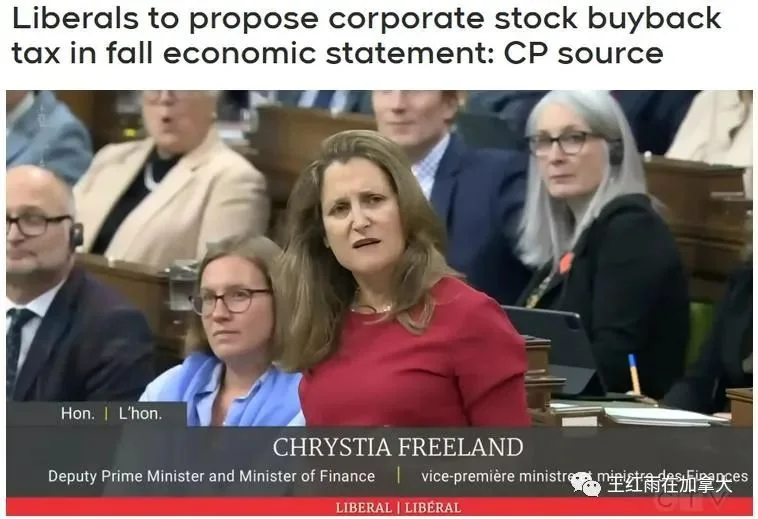
The ability of capital to extract wealth is obvious to all the Chinese in Canada. Visible hands were also keeping an eye on the fat sheep, plucking the wool at every opportunity. In the autumn budget, another attack was made. Trudeau announced a tax on stock buybacks, once again competing for profits with shareholders on a large scale. When a company has abundant cash on its books but cannot distribute it to shareholders through dividends, the management will choose stock buybacks and buy out a group of shareholders. That is, they use the cash on their books to buy back shares on the market, thereby increasing the dividend payout ratio per share. Buybacks usually occur when a company is currently operating well and has a lot of cash on the books, but when an economic recession is expected to erode the interests of shareholders, in order to protect the interests of shareholders, the company maximizes the interests of shareholders by returning cash on the books to shareholders. In 1932, Graham advocated that companies should repurchase stocks for the benefit of shareholders when they face uncertain business prospects but current profits are good. This proposition has always been supported by Buffett. Biden and Trudeau don't think so. They want to plunder the wool of these companies and subsidize the lean sheep so that people who cannot extract wealth can also benefit. The whole world is working hard for common prosperity, and middle-class families cannot rest on their laurels. The work of extracting wealth cannot stop. Even visible hands are competing for profits. It is a competition to see who has faster hands and who can collect more.
Conclusion:
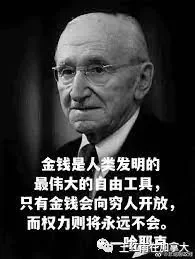
Money has become more expensive, visible hands have been competing with investors for profits, financial companies are not as able to extract wealth on our behalf as they claim to be, and weak cultural works are rampant, so what? There are still people who are walking firmly up the mountain along the upper body of the letter K. The wealth of middle-class families is not accumulated by chance. It is accumulated by paying heavy taxes and purchasing high-quality assets. High-quality assets are assets that can generate cash flow in the future 。 "Money is the greatest self-improvement tool invented by mankind. Only money will be open to the poor, and power will never be." - Hayek. Accumulate wealth, other roads to self-oil are harder to follow.
Leo Strauss once criticized people in modern society for reducing human nature, lowering their vision, and dwarfing their life goals. His accusation is correct, because we spend so much of our lives trying to achieve financial security that we have no time to look higher and further. In a world of credit money, where currency values are so manipulated and fluctuate wildly, how can we not make people worry about their financial security? Maybe with financial security, you can see poetry and the distance? Who knows. Another of Strauss' criticisms of modern people is also very sharp. He believes that although people's goals have been lowered, their attitude towards achieving their goals has become more and more impatient and impatient. He is right, modern people need a chance to slowly accumulate and gradually become rich. Buffett also said that people are unwilling to get rich slowly, do not have the patience to accumulate, and do not even have the patience to discover the changes that are taking place and what new opportunities they have brought to us.
The price difference between second-hand houses and new houses is 50%. The market has pointed out the direction for investors to buy second-hand houses. Visible hands in the real estate market are picking up new houses, so as long as they don't touch new houses, investors can get a huge safety margin. The labor market is still hot in an environment of desperate interest rate hikes. On the one hand, it shows that new immigrants have not been able to fully fill the job vacancies created by the retirement of the baby boomers. On the other hand, it shows that the cost of living is too high and fewer and fewer people can afford it. Inflation will slowly subside, but rising housing costs and a continued hot job market will slow down the process. As long as inflation does not recede, interest rates will remain high. The idea of waiting for interest rates to drop before reinvesting is not reliable. If you are not over 70 years old, you will end up paying a huge price by using fixed deposits to avoid investment. GIC is just a high-end investment and does not have the basic function of balancing your lifetime income.
In addition to housing prices being reset in a high interest rate environment, the pricing of many financial assets is also being reset. Because I know very little about financial assets, I hope readers will meet a good person early in life and make achievements in financial asset investment. In short, high interest rates are not only a challenge, but also an opportunity.
People with a strong culture, in one sentence, do not believe in a savior, but only believe in self-realization through their own efforts. Self-realization, simply put, means realizing your own non-mediocrity and not accepting equality. The pursuit of inequality is a culture of the strong; people who believe that through their own efforts can surpass their peers earlier and more significantly and achieve financial security have the attributes of a culture of the strong. 2,600 years ago, Plato envisioned an utopia of common prosperity. An important reason why it has not yet been built is the pursuit and desire for inequality in human nature. Humans are social animals, and social gravity is a kind of inner motivation to stand out from the crowd. The vitality and vitality of capitalism comes from creating enough space for those who pursue inequality, allowing those who pursue it and those who make good use of capital to become more and more unequal to others, and there is no upper limit. In a capitalist country, commoners have opportunities to counterattack every day. Xiao Yawen's contempt for Liu Bing, his following of Ding Yuanying, and his courage to take responsibility at critical moments perfectly realized the counterattack of the common people. This is not an accident, but the way of heaven, but the most important thing is to have a heart that never gives up and make progress. By creating strong cultural works and spreading strong culture, you can meet strong people. This is my biggest experience and gain since immigrating to Canada.