There are some people who, no matter what investment they decide to participate in, will be trapped as soon as they enter the market. These people are actually numerous, and they are all around us. I once chatted for a few minutes with a person who was trapped in a real estate deal. I felt that the other person was full of the righteousness of "die early and be born early", but it seemed that he had just been born in the stock market. For people who fall into this kind of "prodigal" investment and fail repeatedly, I give them the name "top pickers". They always enter at the top of the market and escape at the bottom. They earn money by luck and lose it through hard work. Not only do they grasp the timing very accurately, but they also operate repeatedly in different investment markets. I am not writing this article for these people, because they have never learned any investment knowledge, but these people are too important for serious investors. As long as we find them and follow their reverse operations, we will definitely gain something.
In order to help you identify this group of people, let me describe their physical characteristics in detail: they never learn investment knowledge and rely on inquiring when they want to invest; they care about the news but not the fundamentals; they only want to make quick money and are not willing to invest in the long term; they chase popular investments as if they are following the fashion, and are afraid of falling behind; they see their peers investing When they make money, they feel offended; when they make small gains, they immediately complain, thinking that their IQ has risen with the market; finally, and most importantly, their emotions fluctuate with the market, sometimes ecstatic, sometimes sad and angry. Therefore, it is very easy to identify them. As long as they take one more look at you in the crowd, they will never forget your face again.

Market cycles are like waves, rising and falling; human emotions are like pendulums, swinging left and right. When the market peak reaches an emotional high point, this specific group of people will definitely rush into the investment market. They are " A prodigal who steals the top and flees the bottom "You see, they are marching towards the stock markets of China and the United States with neat steps.
Howard Marks of Oaktree Capital summarized 50 years of stock market investment experience and wrote a book - "Cycles", which analyzed the relationship between fundamental cycles, psychological cycles and market cycles in detail from the inside out. He used secular wisdom and economics and psychology principles to explain the inevitability of the existence of "spend-hunters". Based on what I see in the real estate market, I will help you analyze how to make the right choice when emotional waves encounter market cycles.
01 An unforgettable real estate prodigal style of buying the top and escaping the bottom
In Toronto, by 2020, the people who are still stuck in real estate should be those who bought houses at the high point in March and April 2017. We must not forget this lesson. Just as the world must remember the U.S. subprime mortgage crisis, Torontonians must not forget the suffering caused to the real estate market by the Ontario government’s Fair Housing Plan.
On August 2, 2016, Vancouver announced that it would impose an additional 15% land transfer tax on non-residents; in September 2016, the Globe and Mail wrote an article questioning the bias of commercial banks in favor of new immigrants and non-residents, allowing people to buy a house without proof of income and a 35% down payment. One week after the article was published, all banks named tightened their loan policies for non-residents and new immigrants. The clouds of tightened lending policies and the non-resident buyer tax immediately loomed over Toronto. Before this, new immigrant non-residents had a sense of superiority. When applying for a loan, they had to compare interest rates between different banks and spend every penny. They never worried that this special treatment would be cancelled. In October 2016, the mortgage asset securitization policy suddenly changed, and investment mortgages could no longer be securitized. Many non-bank financial institutions relied on this cash-out method to obtain mortgage funds. This was no longer possible from November 2016, and the source of mortgage funds dried up. Ordinary people do not feel these sudden policy changes, but they have greatly shocked non-residents and new immigrants, and their mortgage loans have been affected. In the winter of 2016, many new immigrants and non-residents in Toronto rushed to buy houses. House prices soared and the supply of second-hand houses was tight. This situation reached its extreme in March 2017. Many local residents in Toronto did not know the reason for the increase. They only saw the skyrocketing house prices. They were afraid that house prices would continue to rise and joined the rush to buy. "Land is scarce, and house prices are skyrocketing." Speeches such as "It will keep rising" and "If you don't buy it, you will never be able to afford it" are rampant. A scene going crazy happened in the off-plan and house-building markets. Some high-priced houses require black gold of 200,000 to get them. Toronto is like the Netherlands during the tulip bubble. The last straw that broke the camel's back finally came when the then-ruling Liberal Party of Ontario announced a tax on non-resident buyers, commonly known as the 420 policy, for the sake of political correctness. Families that are in the process of changing their homes or have bought new homes but have not yet sold their existing properties have suffered heavy losses. People who bought independent houses at high prices are still holding dumbbells and can't put them down; real estate speculators are unwilling to lose a huge sum of 6 figures just because their heads are hot and sign a few pieces of paper, and refuse to deliver the purchased futures. In a place called King City, there are many properties with a price of more than 3 meters, and the buyers have refused to hand over the houses to this day, and they are still arguing.
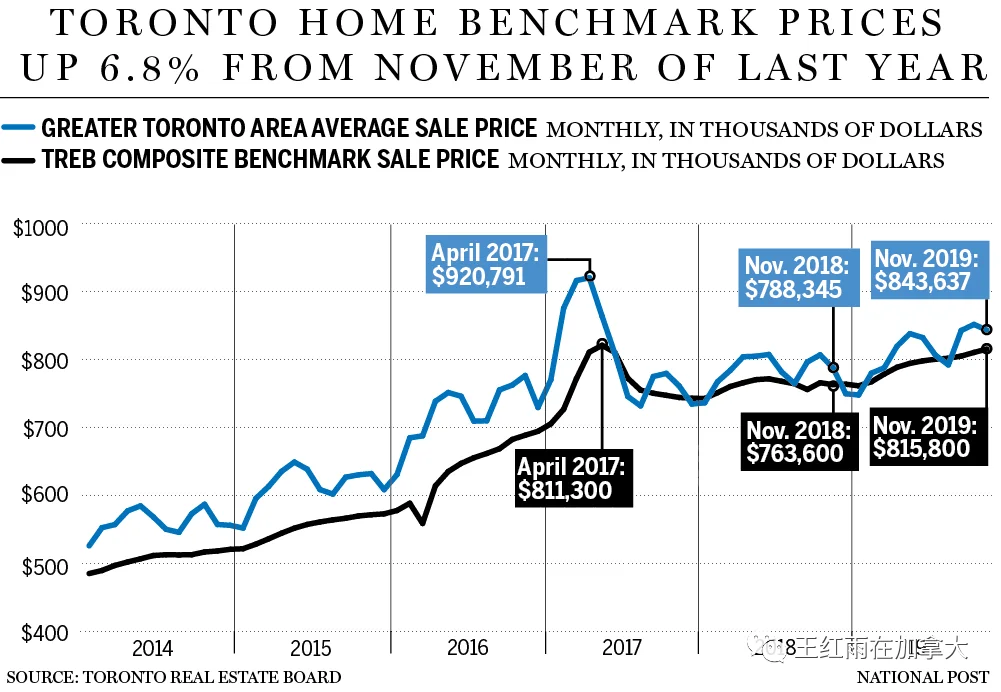
This market frenzy caused by the fear of a few people has led us to see the following problems:As long as a few people venture into the market and let most people see the benefits of the risk, the mob will follow; when the market is boiling, people will forget common sense. , believe that "this time is different", "trees can grow to the sky"; the reasons for supporting irrational rises can be seen everywhere, "land is limited, if you don't buy it, you will never be able to afford it", everywhere; politicians only have votes in their eyes, and cannot see other things. A donkey will go straight to one of the two haystacks to eat grass, but A special donkey will starve to death because it wanders between two haystacks. This special donkey is the one elected by the voters and understands political correctness. If there was no electoral system, there would be no donkeys in the world who starve to death between two haystacks. If such a donkey causes any disaster, the voters must bear the consequences and bear the responsibility.
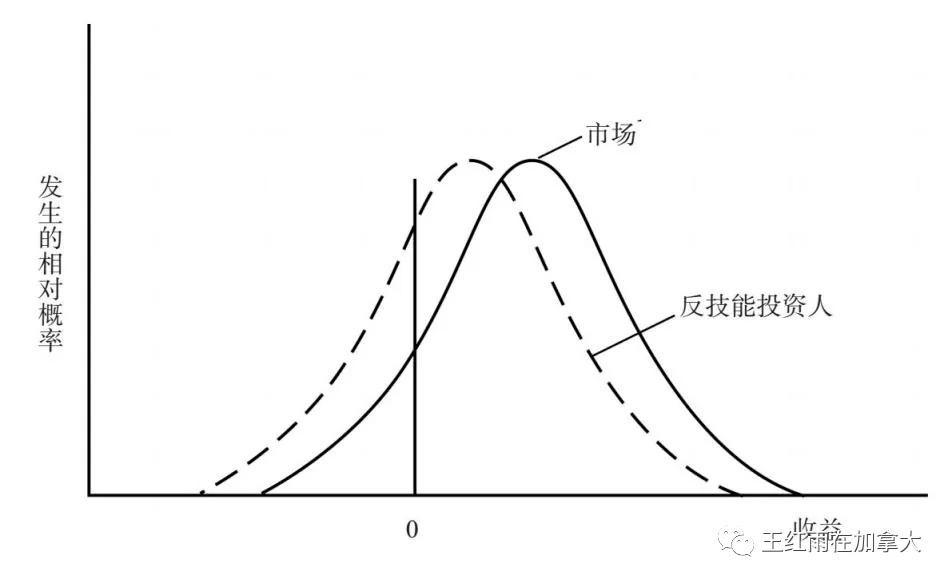
I discouraged many people who wanted to sell their houses in 2018 and 2019, and I also encountered people who couldn't help but had to sell their houses. Those who fled will never return to this sad place. If you copy the top, you don't have to rush to escape from the bottom unless you really don't have the ability to hold it. Are you going to cash out your losses just out of fear, and take the money from selling your house to copy the tops of other investment markets?
Howard Marks' book explains how the pendulum of people's emotions swings from fear to enthusiasm and back to fear; during this period, how the fundamentals and market conditions match people's emotions.
02 Economic and house price fundamentals
There is an Internet buzzword that goes like this: "After a bull market, others gain wealth and success, and we gain fundamentals and knowledge." No matter how fanatical or pessimistic the market is, it must return to fundamentals; no matter how greedy or fearful people are, their final destination should be contented . What exactly are the fundamentals? After a bull market, it would be great if we really understood what fundamentals are. I saw that after the Toronto real estate market experienced the bull market in 2017, most people still don’t understand what fundamentals are.
The fundamentals of the economy are birth rate and labor productivity. Fundamental cycles include: economic cycle, corporate profit cycle, and government regulation counter-cyclical.The fluctuations in fundamentals are much smaller than the fluctuations in corporate profits, mainly because the operating leverage and financial leverage used by different companies are quite different. The economic fundamentals of a country are measured by GDP, while the fundamentals of the stock market are the operating results of all listed companies. The sharp reversals in the U.S. and Chinese stock markets during the epidemic were completely divorced from the fundamentals of economic development and corporate profits. The rise in stock prices depends entirely on the psychological expectations and optimism of investors. What investors earn is money from false valuations, not dividends from listed companies. Everyone involved knows this, but they all have a fluke mentality. They hope to escape from the top and be safe before the valuation returns to fundamentals through fast in and fast out.
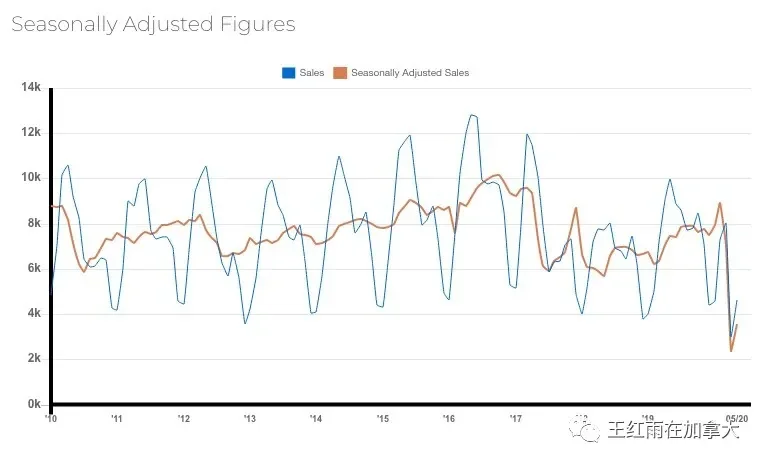
The fundamentals of the real estate market are based on three factors: economic fundamentals, new population and land supply. Economic fundamentals are the GDP of Canada and Ontario. The new population includes farmers moving into cities due to urbanization, new international immigrants attracted by first-tier cities to settle, and cities with many job opportunities attracting people from other cities to move in. Land supply is the biggest negative factor in rising housing prices. The greater the supply of land and housing, the slower housing prices will rise.
Let’s analyze the fundamentals of the Toronto real estate market: The land approval procedures in Commonwealth countries are very similar. London, Hong Kong, and Toronto are the most representative. The government’s land approval speed is always half a beat slower than the population increase. The body develops quickly, and the clothes have not been changed. In general It's tight; Ontario's unemployment rate and GDP are both at the average level in Canada, with annual GDP growth of about 1.5% to 2%. Canada's annual net international immigration is 1% of the population, that is, 300,000, and almost half of the people who have settled in Ontario account for it. In the past 10 years, housing prices in Greater Toronto have increased by an average of 100%, that is, the annual increase is 7.2%, of which GDP contributes 2%, the consumer price index contributes 2%, and the contribution of population inflow should be 3.2%. There are no major revisions to the immigration policy, no major changes to the land approval process, and if the housing construction speed remains unchanged, the fundamentals of housing prices in most areas are GDP growth + CPI growth + population growth, which is roughly 7% per year.

Deviation from fundamentals means that asset prices are either overvalued or undervalued. In the second half of 2016 and the first half of 2017, Toronto's housing prices increased by far more than 7%. This is a phenomenon that is divorced from fundamentals and overvalued. Asset bubbles are partly about people's emotions. If you want to know whether the price is fair, you first need to look at people's emotions in the market:If you are emotionally high, you are not afraid to buy at a high point, you believe that market momentum can push the price further up, you are overly risk-tolerant, and you are afraid of missing out on opportunities to make a fortune. At this time, there is optimism in the price, and you should take defensive measures instead of offense; if you are depressed, you are afraid of catching a falling knife, and you think that market momentum will further lower the price, and you will depreciate if you buy it. In 2018 and 2019, Toronto housing prices were deviated from fundamentals and undervalued. In 2020, affected by the epidemic, people became more pessimistic and housing prices further deviated from fundamentals. When they should have bought, most people, 90% of them, adopted the attitude of preferring to wait and see rather than get involved. Why are there always a few rich people? Because most people can't escape their own human weaknesses: when they should stay away from frothy assets, they are jealous of those who profit from their boldness. They feel uneasy and rush into the market to get chestnuts from the fire; they know clearly that no one dares to buy. When the market is full of pessimism, the price is not only dehydrated but also seriously dehydrated. You should buy, but when you see most other people not taking action, you don't dare either. Only by knowing what fundamentals are can you figure out whether the price deviates upward or downward from the fundamentals at a certain point in time, and whether you should attack or defend. from Judging from the situation in July 2020, most people still don’t know what the fundamentals of real estate are, and of course they don’t know their own situation. Their mobility is still firmly trapped in place by fear.
03 In a market with people participating, the cycle is eternal
Economic development is never a straight line, because the operation of enterprises cannot be smooth sailing, technological progress is sometimes fast and sometimes slow, credit policies are sometimes loose and sometimes tight, and the government's visible hand is always restless, so economic fluctuations should be a normal phenomenon. The corporate profit cycle, the credit cycle, the government's countercyclical regulation, and the real estate cycle all converge into a long economic cycle. The most basic economic cycle is still determined by fundamentals. What are fundamentals? It is the basic driving force for economic development determined by population birth rate and productivity. A book recommended by Bill Gates, "Fact Ful Ness" reveals, Humanity has developed to 70 After a population of 100 million, the birth rate stopped rising, the development of human economy currently mainly relies on technological progress. In addition, the uneven development of various cities around the world has also brought different dynamics to economic fundamentals. Various cities in China have begun a war to grab people. Canada's immigration policy is to approve 1% of the population's new international immigrants every year, and it has been robbing people. Cities with a net population inflow will have stronger economic development momentum, while cities with a net population outflow will become dead cities or ghost towns with houses but no people. I'm not a pessimist, but from a fundamental perspective, global economic growth has stalled as population growth has stalled, and some cities with net population inflow can grow slightly faster than other regions. Therefore, our expectations for the return on investment should be more objective. If there is too much deviation from the fundamentals, the mean will eventually return to the fundamentals. The fundamentals of each country will not change much. For example, after the two-child policy was allowed, we did not see Chinese people trying hard to have children. Except for the years when technological progress caused the bubble and attracted attention, it is a slow variable at other times, and its impact on fundamentals is long-term and slow. So why do we see that the stock market and property market often fluctuate much more than the fundamentals? The reason is that people's emotions are mixed into asset prices, making the market more volatile, and market fluctuations intensify people's emotional changes.

When business performance is good and the economy is growing, people are more optimistic. When new good news comes out, they will associate it with each other. This is how the Internet bubble was blown up, and then great joy led to sorrow. The U.S. stock market fell for three consecutive years from 2000 to 2002, which was a return. Kindleberger has a famous saying, "The most annoying and troublesome thing is to see a friend get rich." Standing with most people will reduce this pain, so most people will really suffer together. Judging from the market situation, the last group of people who turned from waiters to buyers are the last group of people in the market to send funds to the market. At this time, asset prices contain a large amount of optimism. To measure the temperature of the market, estimate the optimistic component of prices, because every time prices go too far, it is human emotions that drive them. According to Howard Marks' observation, the market behaves normally only once every 16 years. The other years are either overly optimistic or overly pessimistic. Emotional swings refer to swings between the two extremes of pessimism and optimism. It can also be said to be swings between greed and fear. Emotions rarely calm down. When obtaining returns that are in line with fundamentals, one should be rational and objective. This point is called "contentment", and people cannot be satisfied.When you are optimistic, you are extremely tolerant of risks and think of the best in everything. People who remind you of risks are considered to be old-fashioned and ignorant of current affairs; when you are pessimistic, you think of the worst in everything, and piles of good news cannot boost your mood. I gave an example above of overwhelming optimism during the 420 policy period in 2017. There is no need to look for examples of pessimism. Just look at the Toronto real estate market in 2020. The central bank's interest rates have dropped to historical lows, and QE has been restarted to release cash on a large scale. Mortgage interest rates have dropped to unprecedented lows. The stress test interest rate has dropped from a high of 5.34% to 4.94%. However, pessimistic people still turn a blind eye. What they can't forget is the unemployment rate. The second epidemic may break out, blah blah blah. Others asked me how the results of this year’s U.S. election will affect Toronto real estate. Can I be any more pessimistic? The U.S. election is none of your business. Extreme risk aversion leads to missed opportunities to purchase assets at low or fair prices. When people are extremely pessimistic, they only have one sentence in their mind: "As long as there are no more losses." They forget everything else. This is human nature, and it is difficult to surpass it.
04 risk attitude cycle
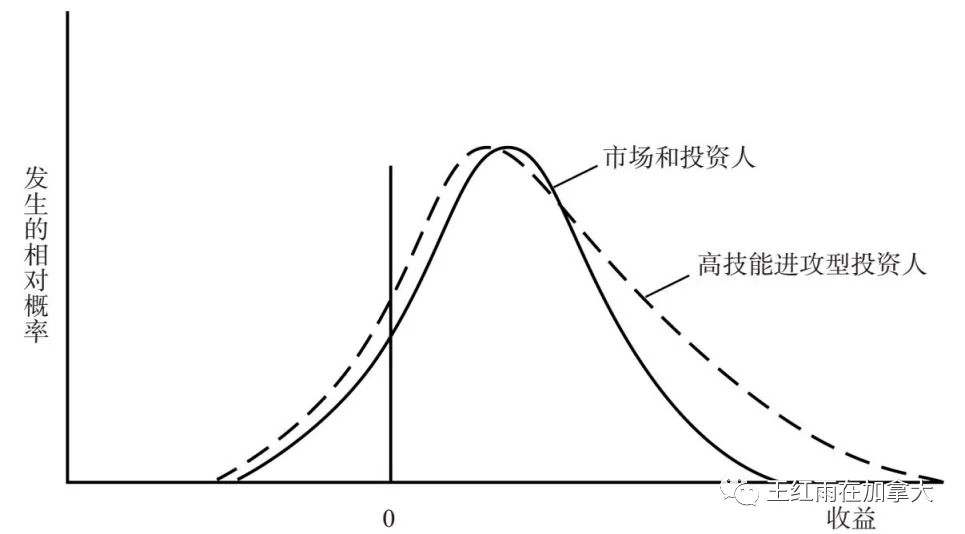
Investing is about taking risks in pursuit of profits. When market cycles encounter sentiment cycles, we can clearly discover people's risk preference cycles. When asset prices rise and emotions are high, risk tolerance reaches the highest level; when asset prices fall and emotions are low, risk tolerance becomes extremely conservative.
We must admit, As long as there is investment, there is risk, because investment is future-oriented , no one has a crystal ball, and the future is likely to be very different from what we expected. However, after we understand the economic fundamentals, market cycles and sentiment cycles, we know our risk position: If there is a bubble in the asset, or if you are trying an investment for the first time, that is, when the risk is high, you should invest less and adopt a defensive strategy; if the asset is lower than fair value, you should invest in an area with rich experience, that is, when the risk is low, you should bet larger and adopt an offensive strategy.
One way to offset risk is that the higher the risk, the higher the return investors require. Howard Marks gave a classic "risk-return relationship and the capital market line" in his book. It lists the risk premiums corresponding to different asset risks. The greater the risk, the higher the return required by investors. If you don’t have a 25% return, don’t participate in corporate mergers and acquisitions; if you don’t have a 15% comprehensive return, don’t participate in real estate investment…
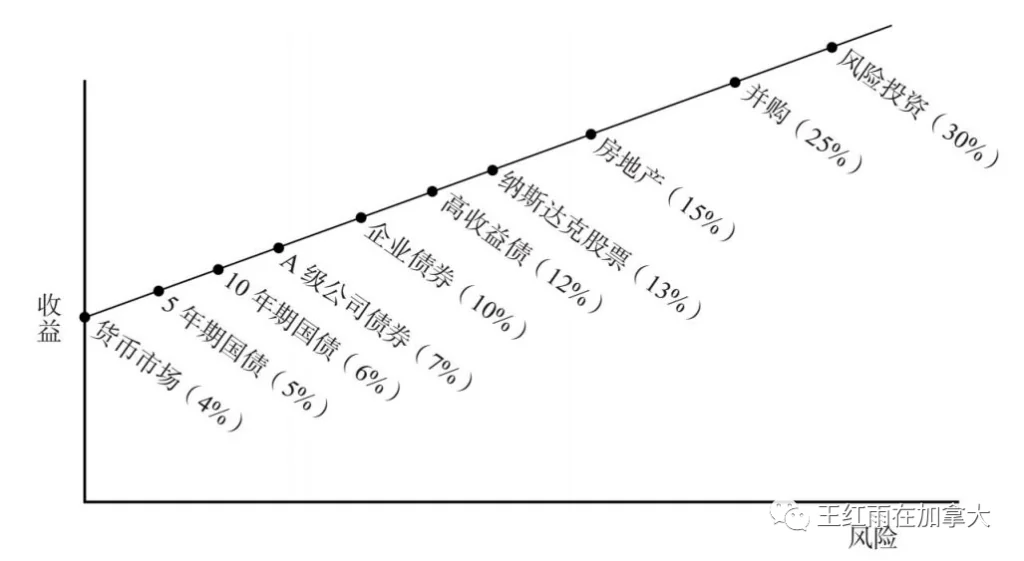
People's tolerance and aversion to risk also swing between two extremes. Either extremely tolerant or extremely conservative, rarely stopping in between. These characteristics are also manifestations of human nature, either greed, fear, or insatiability. Risk itself exists objectively, because investment faces the future, and the future is uncertain. All certain things are the past, and the past cannot be changed. In recent years, the Nobel Prize in Economics has been frequently awarded to behavioral economists, confirming their views from one aspect: People are not rational, at best they have limited rationality. Therefore, irrational exuberance often occurs, and it is not surprising that bubbles burst.
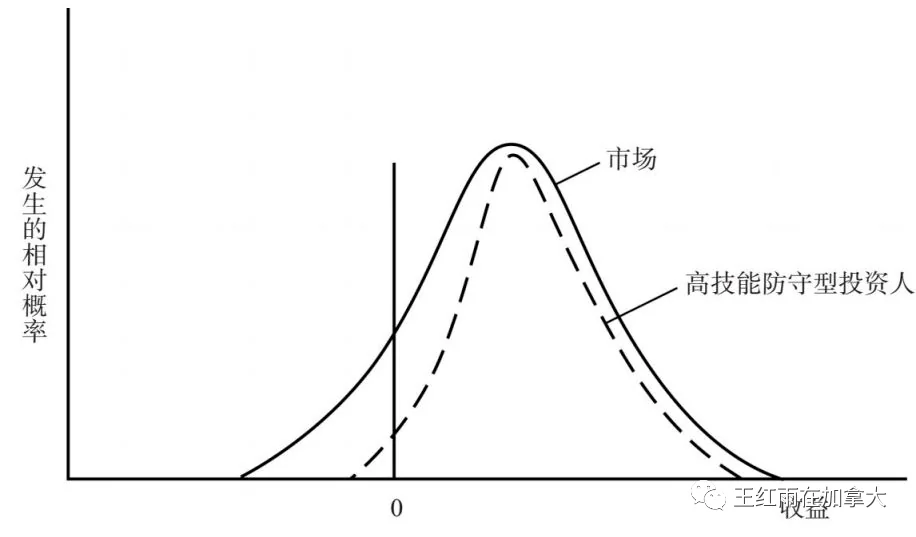
Conclusion: Watching people rush into the U.S. and Chinese stock markets during the epidemic, repeating the scene 5 years ago; watching the best time to enter the market, few people dare to buy a house in Toronto. The inherent greed and fear of human nature show deep-rooted characteristics in different places at the same time. As long as human nature does not change, cycles will always exist. We know where we are in the cycle by observing the behavior of others, and use this to estimate the risk of investment behavior. We defend when the risk is high and attack when the risk is low. No one is always victorious in the investment market. Successful investors make bigger bets when the risk is small and the chance of winning is high. For 99% of people on the planet, they need to keep buying and buying more assets, use the passive income generated by the assets to support their retirement life, and pass the legacy to the next generation. When defending, instead of selling assets, you need to hoard cash; when attacking, use cash to buy assets below fair value. At the beginning of 2017, I suggested to a colleague of mine that he immediately increase the mortgage on his home in the new market. The market price at that time was 1 million, and he could cash out the property. He did not listen. When he went to increase the mortgage in 2018, the market price of the property returned to 800,000. He could have used the mortgage to get cash and buy another home instead of selling the original home. Because he missed the craziest time of the market, he could only buy one home and then another, losing one property in vain. If you can't clearly see your position in the cycle, you won't be able to judge whether to defend or attack. If you don't defend in time, you won't be able to launch an attack at the right time. I don’t predict, but I know exactly where I am in the cycle every day, and I hope my readers do too.