Recently, the keyword "affordable housing" has appeared repeatedly, so the specific meaning of this word is very important. What kind of housing is "affordable housing"? According to the current City of Toronto Average Market Rents & Utility Allowances website, the annual income calculated by multiplying the monthly rent of a certain type of housing by 4 and then by 12 is the upper limit of income that can apply for government housing subsidies. In other words, families below this income standard can apply for subsidies or "affordable housing." According to the Toronto city standards published on this website, the rent for a one-bedroom apartment is 1538, multiplied by 4 and then multiplied by 12 equals 73824. If the annual household income is less than 73,800, you can be eligible to apply. I don’t know what the conditions are other than income, because I have never applied for government-subsidized rental housing, but the most important condition for applying for affordable housing is that the income must be below a certain standard, and then people will be screened and queued according to the degree of urgent need, I think it should be age, disability, etc. I checked the queue waiting for government-subsidized housing in Toronto. The queue length in 2022 was 84,000 families. The number of families receiving subsidized housing this year was 3,269 families. The current length in 2023 is about 86,000 families. The last person waiting for affordable housing will be roughly 12 years later.
I looked for the entry Canada Affordable Housing on Wikipedia and looked at it. It is quite long. I will help you organize and summarize it. Although it is still very lengthy, it will be helpful to everyone in understanding the housing affordability problem in Canada. I also hope that this introduction can serve as a reference for everyone when making decisions.

Canada's total housing stock is approximately 14 million units. Among them, government-subsidized, affordable, and social housing accounted for 3%, approximately 425,000 units. This compares with 30% of social housing units in Germany and 20% in Sweden. In terms of average housing supply per capita, Canada has 424 housing units per 1,000 people, ranking lowest among G7 countries. France, which ranks sixth, has 540 housing units per 1,000 people. In other words, the number of properties per 1,000 people in Canada is very low, and at the same time, the number of government-subsidized affordable housing is even less. Canada’s housing crisis is already 30 feet deep and is not a problem that can be solved in a short time.
Beginning in the early 1970s, approximately 16,000 social housing units were built or acquired each year for nearly 20 years. Over the next decade, the number of social housing units fell to about 1,500 units per year, a drop of more than 90%. The late 1980s saw a major shift in housing policy, including revisions to taxes that benefited those who could afford to buy homes. At the same time, the federal government stopped funding social and affordable housing projects, leading to a sharp decline in the social housing stock. Significant investment has been made in the construction of independent houses and apartments, while the number of purpose-built rental apartment units has fallen sharply. Investors purchased some of the apartments as rental units, but the rents were priced at the "high end of the market" and only households with higher incomes could afford them.
In the 1990s, new responsibilities, including affordable housing, were devolved from provincial governments to local governments, but municipal governments were not given adequate financial support. In the 1990s, while home prices remained "fairly stable", income inequality increased and housing affordability issues became more widespread and severe. Throughout the decade, the federal government focused on reducing the federal deficit and began shifting responsibility for providing housing assistance to provincial and municipal governments, including providing low-income subsidized housing for those in need. Provincial governments delegated some of these responsibilities to municipal governments but did not provide corresponding financial support. In 1996, the federal government transferred responsibility for most existing federal housing programs to the provinces. Between 1993 and 2003, federal government revenue grew by 12%, provincial and territorial revenue by 13%, and municipal and local government revenue by only 8%. From 1993 to 2004, the proportion of fiscal transfers from the federal and provincial governments to municipal governments dropped from 1/25 of each municipality's revenue to 1/16, a decrease of 37%, while the responsibilities of municipal governments have increased, leading to fiscal imbalances. From 1989 to 2014, Canada's population grew by 30%, but per capita spending on affordable housing fell from 115 Canadian dollars in 1989 to 60 Canadian dollars in 2014. In 1982, the federal government built 20,450 affordable housing units; by 2006, only 4,393 units were built.
From 2001 to 2011, the Affordable Housing Initiative (AHI) was Canada's cross-governmental, multilateral initiative for affordable housing. The federal government, through CMHC, provides funding for the construction of new affordable rental housing through the Affordable Housing Program, providing $1 billion in funding from 2001 to 2011.
In November 2017, the federal government expanded its role in housing with the launch of the National Housing Strategy (NHS). The goal of the strategy is to “ensure that everyone in Canada has access to affordable housing that meets their needs.” Prior to 2017, Canada was the only G7 country to lack a national housing strategy. Through the NHS, the Canadian federal government has committed to investing $40 billion in housing over the next decade to build 100,000 new affordable housing units, repair 300,000 affordable housing units, and reduce the homeless population by 50%. In April 2019, the National Housing Strategy Bill was passed in Parliament, recognizing the right to housing as a fundamental human right. At the 2018 National Housing Conference, hosted by CMHC, concerns were raised about the dramatic increase in financialization of the housing sector, with issues including an increase in “amateur landlords”, apartments, Airbnbs, short-term rentals, rent increases and evictions. Multifamily buildings are purchased as housing assets to gain wealth at a time when low-rent units are in short supply.
From the early 1990s to 2020, the 25 largest financial real estate developers, including real estate investment trusts REITs, integrated approximately 330,000 rental suites, accounting for 20% of Canada's "private purpose-built rental apartment stock." Insightful people called on CMHC to stop providing "preferential loan rates" to financial real estate developers, and scholars called on the federal government to ban financial real estate developers from obtaining loans and grants from the National Housing Strategy because these companies "eliminate affordable housing as a business strategy."
In the process of providing affordable housing, the National Housing Strategy unexpectedly supported private developers in building market rental housing and turned Canada's housing into financial assets by generously providing low-interest loans. In 2023, the Canadian government's spending on housing will be minimal, accounting for only 0.1% to 0.2% of gross domestic product (GDP). It is expected to account for an even smaller share of GDP in the future. Critics also point out that although the National Housing Strategy was established many years ago, there was no comprehensive strategy or significant implementation plan for the creation of purpose-built non-market housing.
Under the current government-funded housing policy framework, provincial and municipal regional governments provide the majority of funding in the housing sector and set limits for municipal governments. Provinces and territories set their own regulatory frameworks for housing and enact their own laws that may limit the actions of municipal governments. The role of municipal governments in housing policy is important, particularly in developing policies related to zoning, land use, and the prevention of homelessness. However, the city government is financially constrained.
Since the late 1990s, Canadian policymakers have focused almost exclusively on promoting home ownership, resulting in a model of building housing to attract investors rather than renters. This has led to a situation where the supply of purpose-built rental apartments has been declining for decades, as developers prefer to build apartments, especially where favorable tax policies and incentives exist.
The above information is taken from the Wikipedia entry on Affordable housing in Canada. I think the above content reflects the current status of Canada’s housing crisis relatively objectively and accurately, as well as its historical origins. Long story short: Canada is a real estate market with the free market as the absolute main body. More than 95% of households rely on the market to buy or rent a house, and less than 5% of households rely on the mayor. Compared with Germany, Germany’s housing is a planned economy system, while Canadian housing is a market economy system; 19 Since 1989, government-funded housing projects in Canada have basically stopped. Even if the right to housing was included as a basic human right in 2019, the actual situation has not changed at all. The rich federal and provincial governments do not build affordable housing, and the poor municipal governments are responsible for cooking without rice. More than 95% of property prices and rents are determined by the market, not by the mayor.
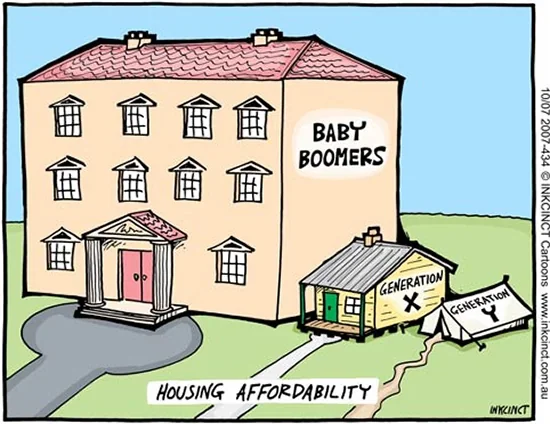
From Wikipedia we see a stark reality of housing. Relying on the market to solve problems can only solve problems for families who can save themselves. However, there are more and more families whose income cannot keep up with the increase in housing prices and rents. Families that cannot help themselves are placing their hope in a super mayor, a savior who dares to promise. Addressing housing affordability costs money, and the purse strings are in the hands of federal and provincial governments. Raising taxes will only further push up housing prices and rents. All current research results have confirmed one conclusion: In any country, in any era, no government can reduce housing prices and rents by raising taxes, because raising taxes is increasing housing costs, which is the opposite policy. The excess taxes a homeowner pays each year will be recovered from the buyer in a lump sum when the property is sold.
The effect of raising taxes on reducing housing costs is equivalent to putting out fires with wages. So can raising interest rates solve the problem of high housing prices and high rents? Haha, the answer is almost the same, adding fuel to the fire. The current extent and speed of interest rate hikes are a furious one, and every household with debt is suffocating. In the storm of furious interest rate hikes, real estate developers are not only suffocated but also dying. Among the comments on the backend of my public account, the most pessimistic ones are the economic forecasts made by white-collar workers working for developers. I am so desperate that I can’t even bear to post the comments for everyone to see. From the outbreak of the epidemic to the end of 2021, developers miscalculated the pre-sale properties and lost money when they started construction. Therefore, the supply of new homes will drop sharply in five years. Recently, the most enthusiastic pre-construction property salesmen in my circle of friends have all stopped. Occasionally, they shake the little white chess piece for pre-construction property transfers to increase their sense of presence. In an environment of violent interest rate hikes, the worst-hit companies are real estate developers. The stalling of new home engines will directly lead to a decline in the supply of real estate. 5 There will be a cliff-like gap after the year, and second-hand houses will be even more "really expensive" by then.
Since the central bank raised interest rates on June 7, everyone has begun to hesitate again, thinking silently, "Wait a little longer and see if housing prices can drop." In fact, The starting gun for buying a house is rising housing prices , rather than house prices falling, because once house prices fall, they will wait again. No matter what psychological counseling you do, as long as housing prices don’t rise, people won’t buy a house. Okay, then let’s all wait and see together and wait for house prices to rise. While waiting, there are more and more new immigrants, and rents are getting higher and higher. Over the past 15 years, as long as house prices have not risen, rents have accelerated without exception, because tenants on the sidelines need to compete with each other.
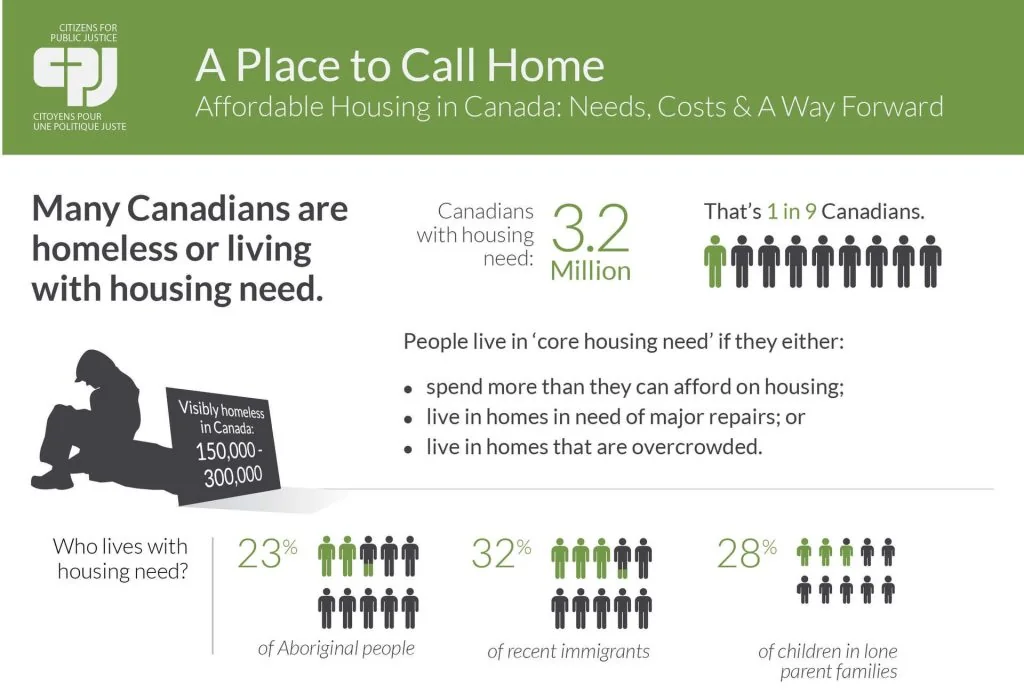
Tax hikes and interest rate increases are all economic factors that push up housing prices and housing costs. Not only do they not help improve housing affordability, they are also catalysts that worsen affordability. People's irrational decisions can only push up the cost of housing, because if house prices don't rise, no one will buy them. People only buy up prices and not down prices. This mentality determines that house prices can only develop in a rising direction in the long run. Families that make the right decisions and are not disturbed by the shadow of interest rate hikes are those that can overcome instinctive fears. This confrontation between reason and instinct is painful. The best way to escape this pain is to "wait a little longer". Specifically, wait until housing prices rise before buying. Cowardly people will think that buying a house when interest rates are high but house prices are not rising will be more painful than buying a house after interest rates have dropped but house prices have risen. In order to avoid pain, the decision must be postponed, postponed, and postponed again. Under the above objective conditions and subjective choices, it is impossible to reduce housing affordability. Housing prices will not fall all the way, but rents will continue to rise, and housing affordability can only worsen.
The landlords are not capitalists, but the middle-class families who have the least say. It is very normal for landlords to find no political spokesperson, because landlords are self-reliant and do not need the endorsement of tribal leaders. The hardships faced by landlords at the moment are huge, with high interest rates and no political protection, but looking at the housing crisis and thinking about the potential of second-hand housing prices in 5 years, today's efforts and patience are worth it. There are four protagonists in "The Big Short". They were not the creators of the U.S. subprime mortgage crisis, but they made good use of this crisis and increased their wealth tremendously. The housing crisis is not caused by middle-class landlords, but I have no doubt that landlords who can make wise investments will reap the rewards of Canada’s housing crisis.
Henry Wang July 5, 2023