

Within the normal living radius of the urban middle class, people will be exposed to the loan business; the more loans people have, the larger their living circle will be. After you have accumulated some wealth, you will try to understand stock, bond and fund investments. This understanding process varies in depth. Most people have only a little understanding and leave it to financial consultants to take care of it. The results are usually not ideal. How much knowledge you need to know about financial investment is a very subjective and difficult to answer question. Regarding financial asset investment, I personally believe that one should understand the extent to which the financial advisor's analysis is correct, and then conduct experiments with small amounts, and experience the alternation of bulls and bears in the economic cycle before getting deeply involved. However, for the loan business, there is very little we can do. The bank will decide whether to borrow or not, and how much can be borrowed. The reason why the bank refuses the loan is the direction of efforts, for example, insufficient income, too many bad debts, etc. Interestingly, those who try to bypass banks to get loans with fake documents and take out private loans are precisely the ones who suffer the most when the real estate market encounters turmoil. People often overestimate their capabilities, so it is better to let the bank check whether you are a qualified borrower. If you fail, make up for it instead of cheating. The loan business is controlled by the bank, while the investment business needs to be controlled by yourself. The poor investment performance of the financial advisor you hired must be determined by your own understanding of financial products.
If you want to invest well, there is no shortcut. You can only become familiar with financial vocabulary over time, learn the basic definitions of accounting, master every bit of tax knowledge, let the language related to finance and business become your daily life, and make daily financial products and services as close to you as possible. Subscribe to a financial public account, join a financial and business discussion group, take an online investment class, fragment your learning into daily life, and let financial and accounting words come into your life. At least don't let your financial and accounting knowledge become the shortcoming of your wealth bucket. Eric, one of the IT elites who shared his experience at the financial business group breakfast meeting, bought 7 investment houses in 2 years. The first question he asked me back then was "Does income still depend on the mortgage renewal period?". Now, his understanding of mortgage policies and the characteristics of each loan exceeds most people's understanding and familiarity with credit cards. Is it difficult? It’s not difficult to identify the person who is familiar with and understands it. The cook can handle the cow only if his hands are familiar with it.
03 The essence of finance is intertemporal value exchange
Modern finance is marked by the birth of the stock market. China has had banknotes, banks and pawnshops for a long time, but it did not have stocks or stock markets. I visited the Rishengchang Bank. The secret deposit system of the Shanxi people is quite advanced and the internal control process is also very complete. Therefore, it is no problem to achieve the goal of "connecting the world" and the lending business is also a matter of course. However, these do not realize the most essential work of finance: intertemporal value exchange.
The Needham Mystery refers to a question that troubled Joseph Needham: China already had the conditions for industrial development in Europe in the 18th century in the 14th century. How did China fall behind the West and finally be opened to industrialization by guns? Some people believe that the emergence of the stock market in Amsterdam, the Netherlands, in 1653 marked the starting point of modern finance and was also an important watershed for China to be separated from Europe.
Stocks were born in ancient Rome, but the stock market did not appear until the 17th century. The reasons are worth understanding and pondering by each of us. The Netherlands has a small land area and lacks natural resources. They want to get rich, so they choose to plunder overseas. They issue stocks and set up joint-stock companies. Everyone pools money to build ships and buy weapons. They go to sea to rob and explore if they can. A trip to sea for these joint-stock companies is not only risky, but also takes a long time. Those who bought the stocks of these pirate companies have not received any dividends for 4 years. What should they do if they want to cash in? So a market for trading stocks was invented, commonly known as the stock market.
Think about it, why is there a stock market? Why invest in stocks? Isn't it just that you want to support a certain company's adventure, that you can tolerate losses, and that you can just trade the stock when you need to cash in? It is taken for granted that stocks do not pay dividends, and the rising stock prices are exactly what stock investors expect. Do people who invest in Tesla do it because this company pays more dividends than other companies? When I invested in Buffett's Berkshire Hathaway, I knew in advance that there would be no dividends, but Berkshire Hathaway's stock price was already out of reach, at $310,000 per share.
Modern finance, represented by stocks and the stock market, embodies the characteristics of intertemporal value exchange. "Exchange" requires a market, so intertemporal value exchange occurs in a certain market. The reason why banks, bank accounts, and pawnshops in ancient and modern China cannot be regarded as finance is because there is no market. Modern finance is purely imported to the Chinese, just like the difference between an abacus and a keyboard. The Chinese know very little about modern finance. They need to learn and be exposed to it over time before they can get started. There is still a long way to go before they can profit from it.
To answer a question that often appears in the comment area of my public account articles, "Toronto's current housing prices are too high, real estate investment has no positive cash flow, and investment losses are large, indicating that housing prices are going to fall." Brother, do you invest in stocks? Do the stocks you invest in have positive cash flow? Why is it important to have positive cash flow when investing in real estate? Positive cash flow is determined by the down payment ratio. If you buy a house with 100% cash and rent it out, you will definitely have positive cash flow. But if you buy stocks with cash, you may not get dividends. Your double standard means that you have never invested in anything. Whether real estate investment is profitable or not, I have to fill out the T776 form and report it to the tax bureau. I really want to tell the tax bureau that I am not profitable investing in real estate, but that is not the case after filling out the form. Some people may misread a simple book like "Rich Dad Poor Dad". Kiyosaki invested in an entire apartment, which is a commercial property. Whether a commercial loan can be approved depends on the cash flow of the property. Kiyosaki said that if you need cash flow, you need to apply for a commercial loan. For civil properties, we need to look at your ability to make money off-site, not just the cash flow of the property itself. If you turn civilian properties into rooming houses, group rentals, and illegal sub-leasing, the cash flow will be good. Banks will not lend a penny to such civilian properties. It's really annoying to be able to hold down a book while reading it.
04 Finance is an abstraction and derivative of the real economy
Financial products are traded in the financial market, and financial products all originate from the real economy. Let me take real estate as an example to introduce how financial products are generated.
Developers discovered that building houses was a profitable business, so they established joint-stock companies, issued stocks and bonds to raise funds, purchased land, and used the land as collateral to apply for construction loans. If it is civilian housing, the house is sold to residents after it is built. The residents apply for a mortgage loan and add their own down payment to transfer the property to their name. The builder completes the process of cashing out, repaying the loan and making a profit, and continues the development of the next project. The next project is a commercial property. After it is built, it is sold to real estate trust funds REITs. The builder completes the process of cashing out, repaying the loan and making a profit, and continues the development of the next project. Small developers who are unable to go public for financing can issue bonds, initiate private equity, or even initiate syndication mortgages, or borrow money from MIC (mortgage investment corporation) for development. The above are real estate development, that is, the most important financial products involved in the primary real estate market. Some of the above-mentioned financial products have trading markets, and some do not. You can invest in whatever you are familiar with. If you are not familiar with anything, stay away.
The transaction of second-hand residential houses is very simple. The buyer applies for a mortgage loan and adds a down payment to take over the property from the seller. mortgages can be securitized by banks, packaged and sold to CMHC. The loans are removed from the bank's balance sheet, and the bank continues to provide services to the borrower without the borrower's knowledge. CMHC turns the acquired mortgages into mortgage backed security mortgage asset-backed bonds (MBS) and sells them to bond investors. The interest expenses of the mortgage borrowers are the interest income of the bond investors. People who cannot borrow loans from banks can seek loans from MIC. Most Chinese loan companies are not legally registered MICs and are copycat private loan companies. Financing for second-hand transactions of commercial properties is relatively complex, and most involve the participation of pension funds and private equity funds, or with the financial support of REITs. The secondary market related to real estate, mainly mortgage loans, is the secondary market, that is, the market for buying and selling mortgage loans. Take a look at which financial product are you familiar with during this process? What I am most familiar with and most comfortable with is getting a mortgage loan, buying a second-hand house, and holding it for a long time. I basically don’t touch anything else.
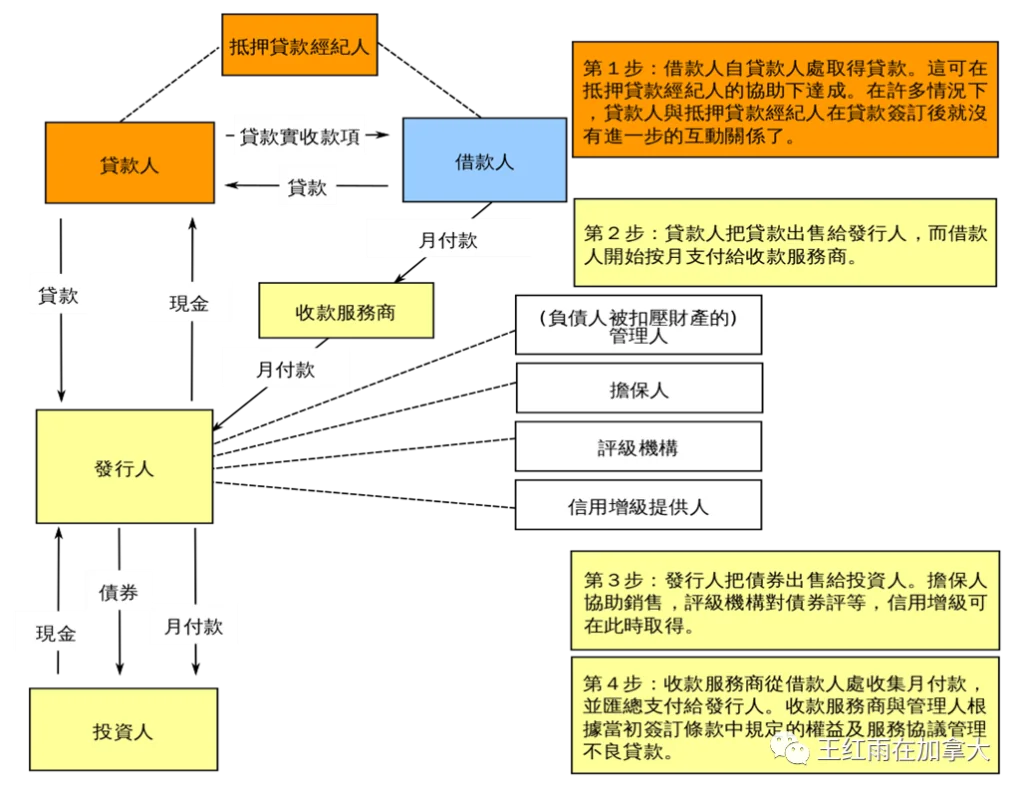
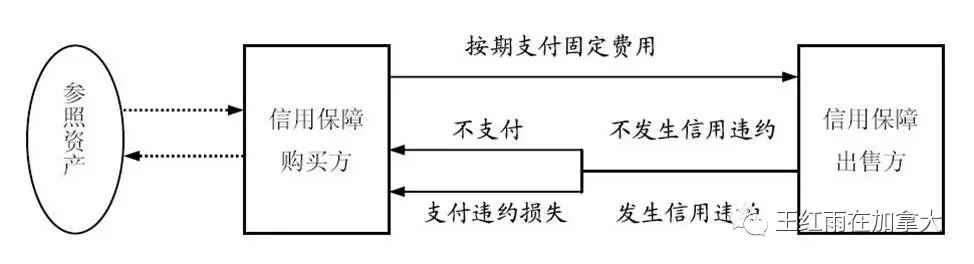
Real estate-related financial products and derivatives can be regarded as the third-level market. Let’s briefly introduce it. MBS/Mortgage Asset-Backed Bonds are bonds after all, and bonds carry default risk. Wall Street invented a type of insurance, namely credit default insurance CDS (Credit Default Swap), to hedge the risk of bond defaults. This thing called insurance is a pure derivative instrument that is traded in a small trading market with only a few people participating and little market liquidity. I have introduced CDS before in the article "Two Investment Rules Found in the Ruins of "The Big Short"". This insurance has a special feature. If you buy MBS, you need to buy insurance to hedge the risk. This is a normal idea, but you can also buy CDS without buying MBS and bet on the bond default. Just like you find that your neighbor's child is always trying to die, so you buy an insurance policy for this naughty child. If this child really dies, you will have to pay a large premium. In normal insurance business, this is not allowed. You can only buy insurance for your own children, not other people's children. But in the financial market, when you buy CDS, the insurance seller does not ask you whether you have already bought MBS. Only buying MBS is taking a risk, and only buying CDS is speculating. In "The Big Short", the speculators finally won a big victory because they saw that the house was going to catch fire and instead of saving it, they bought an insurance policy. After the house caught fire, they bought a policy at the scene of the fire for 1,000 times the price. In this third-level market, you can make huge profits or lose your life. This is a paradise for financial market players, not a project that ordinary people can invest in.
From the above process we can see that Economic affairs can be abstracted into financial products, and products with many transactions have their own markets. Whether you want to participate or not, and how deeply you want to participate, all depends on your level of understanding. After I studied the stock market for a while and tried my best, I gave up and only invested in a small part of the assets that I was most familiar with. The unfamiliar areas were like leek fields. If you don’t believe it, just observe for yourself. The places where you lose money are familiar to the winners, and the places where the losers are newbies.
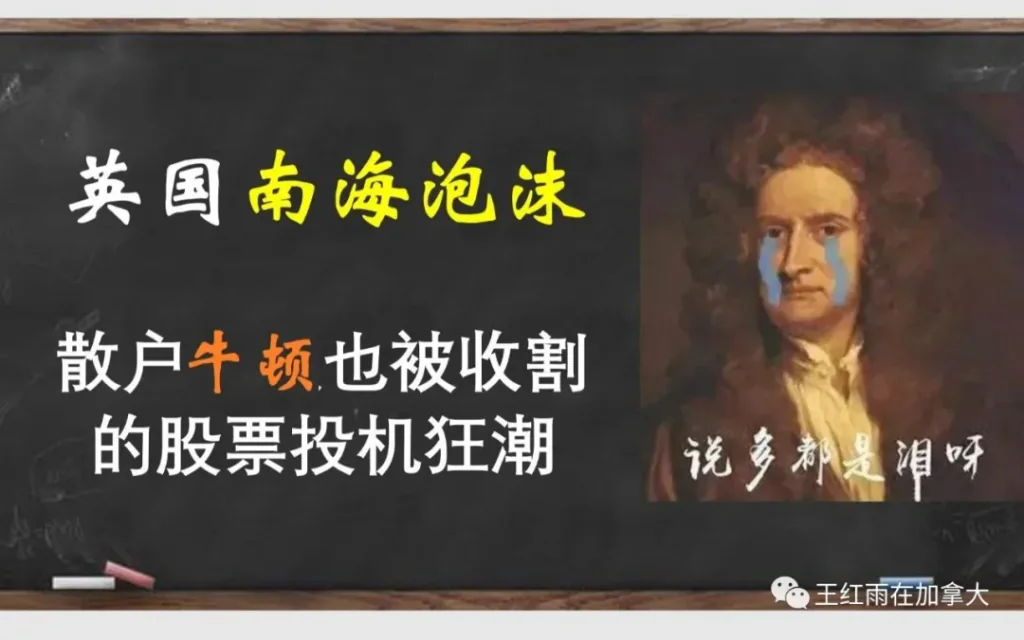
Conclusion: Leave the stock market to those who think they are better than Newton to study. IT elites who are aware of current affairs no longer deceive themselves and others and ride the waves in real estate investment. Don’t invest in unfamiliar financial products. There is a book called "Winning the Loser's Game" that makes a point. There are too many professional players in the financial market. The assets under Blackstone's custody have exceeded 5 trillion US dollars. No commercial bank has a larger scale of assets under their custody. With such professional institutional investors in the market, you, a small retail investor, running to compete with each other in a battle of wits and courage, are like moths throwing themselves into fire. To win the loser's game, you can only invest in index funds and obtain the market average. Markets that large institutions cannot enter because of their size, such as residential real estate, are niche markets where ordinary people like us can earn above-average returns. Only by identifying a pinhead-sized market and the investment type with the simplest structure, learning the language of this market, and integrating this investment into your life will you be able to control and profit.
Many IT guys who gamble in the stock market always feel that they can calculate the rise and fall of stock prices. To this day, no one can calculate the closing price of the U.S. stock market next Monday. However, the IT guys who invest in real estate have invested in 7 Toronto properties in the past two years. What would have happened if Newton had not been obsessed with the stock market but invested in real estate?