While the epidemic is under control in Canada, people at the bottom have received large amounts of cash assistance from the government. Some people are too lazy to find jobs when they have the opportunity and ability to do so. The government's assistance to the elderly who have long since stopped working is also quite generous. On July 6, single elderly people who are receiving OAS and GIS received a tax-free subsidy of 500 dollars, and elderly couples received 1,500 dollars, benefiting 4 million of the poorest elderly people, accounting for 60% of the 6.7 million elderly people receiving social security. There is no need to apply, it is paid directly, and the fiscal expenditure is 1.3 billion. Whether they are capitalist or socialist countries in the world, they are definitely the most generous.
People say Canada is a paradise for the elderly and children. According to legend, the old man's life is rich and worry-free, and it is not said that his pension is not enough. Since the outbreak of the epidemic, the situation of the elderly has actually been very worrying. The hardest-hit areas where the military has been mobilized to rescue are only nursing homes and no other communities or groups of people. After the army completed its mission, it reported the situation to governments at all levels. Because the situation was so tragic, the report has not yet been disclosed to the public. It is said that federal and provincial leaders were very shocked after reading it. Hence the subsidies mentioned above.
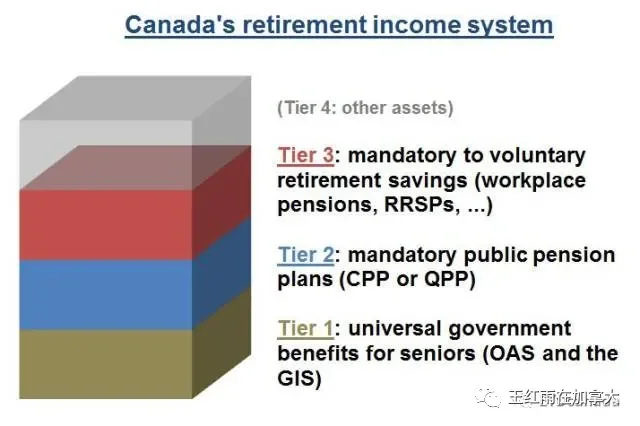
There are three sources of funding for Canadians’ retirement: 1. Public pension, including CPP, OAS, and GIS; 2. Corporate annuity, DB or DC, 3. Personal investment. Among them, public pensions are the most reliable; corporate annuities are the least reliable, depending on whether the company lives longer or the elderly live longer; personal investment depends entirely on personal circumstances.
Like all countries, Canada's national pension CCP, Canada Pension Plan, is also a pay-as-you-go system, commonly known as a Ponzi scheme. New entrants pay dividends to early entrants. A large part of the contributions of pensioners this month are directly transferred to those who receive pensions that month, and the other part is given to the CCPIB company for investment. Pensioners do not receive the money they paid when they were young. The same is true in China. Currently, everyone working in Harbin, including non-locals, must pay social security contributions, and the companies where they work must also pay to support retired Harbin employees who have retired and are receiving pensions. Many of these employees have never paid pensions. When non-locals get old, they return to their place of origin to collect pensions. The pensions paid in Harbin will not be refunded.
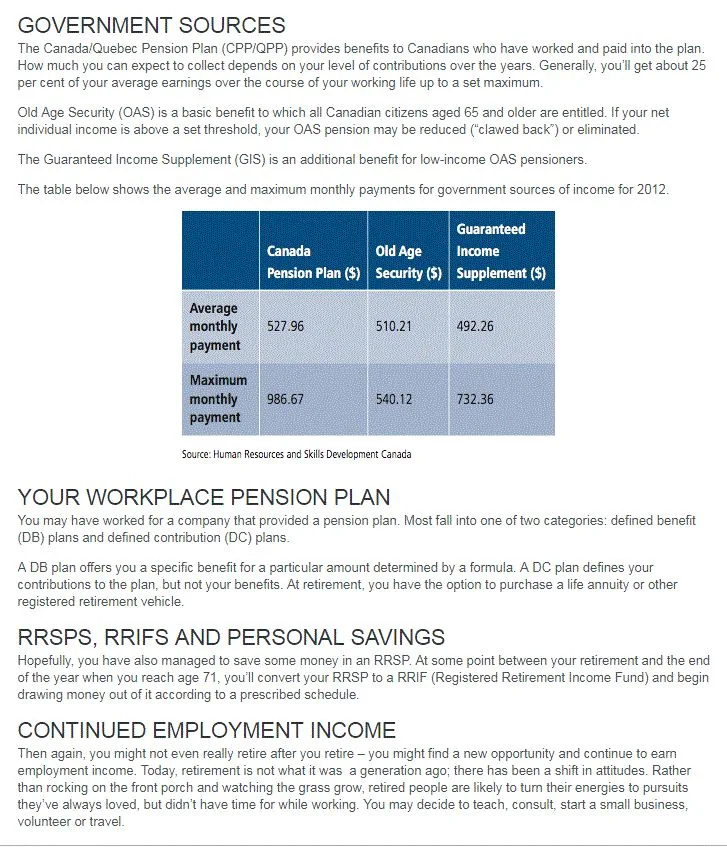
OAS and GIS are pure old-age pensions, which you can receive when you are old enough. Currently every month,
The highest CPP receipt amount is 986.67, and the average is 527.96;
The highest OAS amount is 540.12, and the average is 510.21;
The highest GIS amount is 732.36, and the average amount is 492.26.
The elderly who can receive the highest amount are extremely poor and have neither corporate annuities nor other personal investment income. They can receive a maximum of 2259.15 per month, that is, an annual income of 27,100; the average monthly amount received by all elderly people is 1530.43, that is, an annual income of 18,400. These public pension income are taxable income and are subject to income tax. The companies that currently have corporate annuities in Canada are all large companies. Once these companies with annuity plans go bankrupt, the corporate annuities of retired employees will be gone. Employees of small businesses without enterprise annuity plans and self-employed people have no enterprise annuity support and rely entirely on public pensions and personal investment income after retirement. Seeing this level of retirement income, do you still think Canada is a paradise for seniors?
My 6-episode video investment lectures on YouTube "We are forced to invest in order to balance our lifetime income" In the book, the Canadian pension system was introduced at the beginning, and based on this, I elaborated on my basic views on investment and financial management in Canada: In Canada, you have to rely on your own investment for retirement, and the government only guarantees that the elderly will not starve to death.

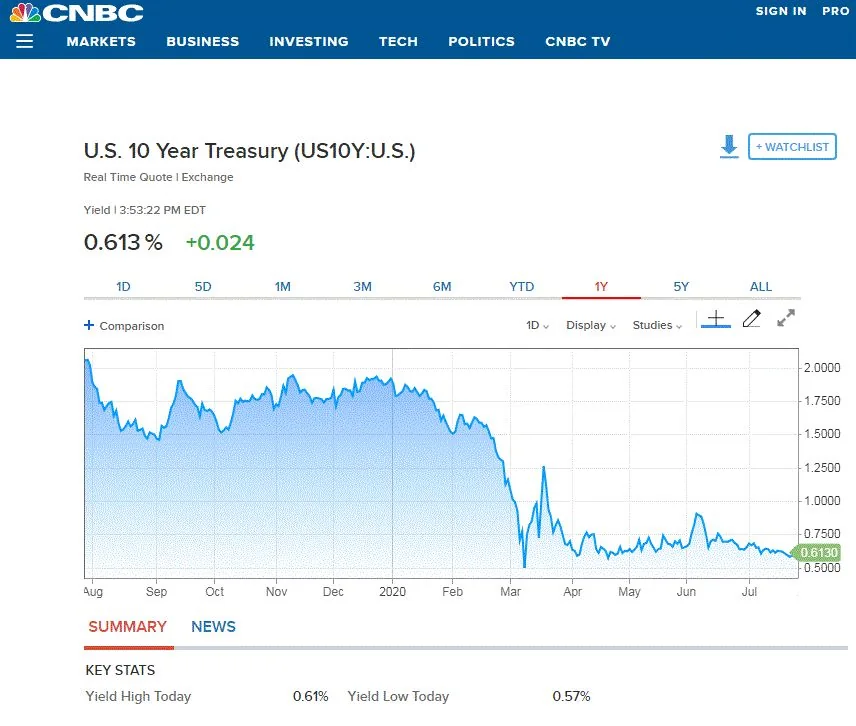
People who are currently in middle age and busy with personal investment for retirement have suddenly found that their investment returns have plummeted in the past 20 years. In 2000, the yield on U.S. Treasury bonds was 6%, in 2010 it was 4%, and in 2020 it was 0.6%, which has dropped 10 times in 20 years. In 2000, a 1 million bond investment would earn an annual income of 60,000, but now it has become 6,000. If you want to get a stable, capital-guaranteed 60,000 bond income, you need to buy 1000 Thousands of dollars in national debt. Low interest rates are good for borrowers and bad for depositors. The most serious disaster is for retired people. Corporate annuities are unreliable or impossible to obtain. The number of people in the United States who can receive corporate annuities is currently 17%. The Canadian data is unknown, but to the naked eye, it will not exceed 20%. Most people’s corporate annuities are 0; public pensions are 20,000 per year. If you want to grow old decently but do not want to take risks in the stock market, you must have tens of millions of assets to invest in national bonds. What will we do with our retirement in the future? In the era of low interest rates, the issue of retirement care has become a gray rhinoceros—high probability, high risk, visible from a distance, and approaching step by step.
01 The biggest gray rhino problem in life is the issue of old age care
Events that are highly likely to occur but have little harm are called white swan events;
Events that are unlikely to occur and cause great harm are called black swan events;
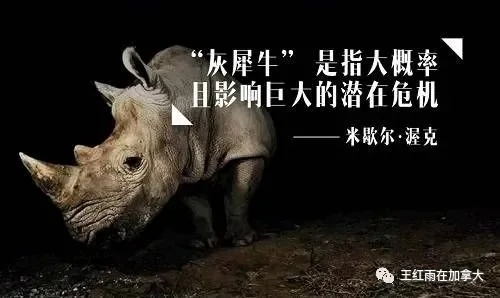
Events that are highly likely to occur and cause huge harm are called gray rhinoceros events.
We deal with white swan events every day. Although we saw the gray rhinoceros event, we had no time to pay attention to it. However, the black swan event is completely invisible and there is no way to prepare for it.
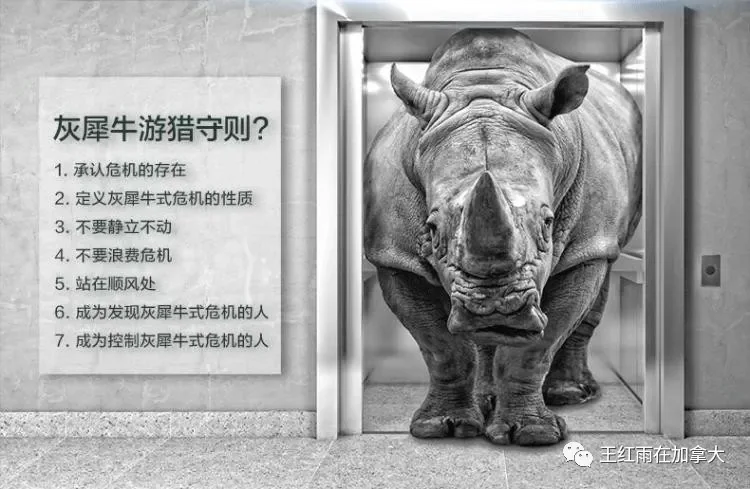
One of the characteristics of the gray rhinoceros incident is that it can be seen and sensed, but it is relatively distant, which is just in line with the appetite of procrastinators. The low interest rate environment has been for 10 years, and there is no sign of getting rid of low interest rates in the next 10 years. Most people are watching the gray rhinoceros approaching, but they are standing still and are at a loss. Another characteristic of the gray rhino incident is that once a gray rhinoceros approaches and attacks, the impact of its two-ton body is so strong that it is bound to overwhelm any improvised countermeasures, leaving people with no way to escape. In the book "Gray Rhino", Michelle Walker summarizes the five stages when people face gray rhino incidents:
1. Deny its existence;
2. Find reasons to muddle along;
3. Debate over what to do;
4. Fear;
5. Wrong actions leading to crash.
Why do the elderly always fall into financial scams? There is a news story in Canada that tells the story of two elderly people who participated in land speculation and lost all their pensions. Needless to say, in China, A-shares are in full swing and Xinwen Network is leading people across the country to speculate in stocks. The elderly people will not be content to lag behind others. The elderly people never miss any P2P thunderstorm, and the elderly people gave wonderful performances in the TV series "Trident". I am 63 years old, I am 73 years old, I am old before I get rich, I am anxious, I want to exchange small money for big money, I want to go crazy, I jump when I see a trap, I have lost all my small money, and I am safe at that time. We usually see the first gray rhino event 5 stage, i.e., the erroneous action leading to the crash, preceding 4 We can't see the foreshadowing of this stage, but people will not go crazy all at once. Any crazy behavior is caused by previous wrong actions or inactions. After old age, being defrauded out of all your pension money is like the corpse left after being run over by a gray rhinoceros. Is it really worthy of sympathy? Investing is not something you should do after retirement , but what you should do when you are able to bear market risks.
At the 2013 Global Wealth Forum, the organizers asked all dignitaries to take a questionnaire and write down what they thought were the biggest threats to mankind. The ranking results were as follows: the growing gap between the rich and the poor, unlimited expansion of government debt, global epidemic diseases, network security, excessive urban expansion, lack of fresh water resources, food shortages, and the aging population. The above-mentioned threats are all gray rhino incidents - extremely threatening, far away from us, and highly likely to occur. Seven years later, in 2020, we were attacked by a herd of gray rhinos. Three distant gray rhinos charged together: the first gray rhinoceros. Human life expectancy is getting longer and longer, the population is aging seriously, and many people live in nursing homes; There is a threat, but it is fatal to the poor. Some elderly people have sold their homes and moved into nursing homes. They have no other options. At this time, the third gray rhinoceros, COVID-19, arrived and sent a large number of elderly people living in nursing homes with no way to escape to the emergency room. Even though Canada is a wealthy, egalitarian, and fraternal country, it still suffers heavy losses in the face of the gray rhino herd. This situation is not due to the government's inability to provide assistance, nor can we blindly denounce the management of nursing homes. How much salary do nursing staff receive? How can we be so harsh on them and risk their lives to work in nursing homes? During the epidemic, I have not seen any high-profile organizations that usually go to nursing homes to work as social workers. They are all afraid of death. Today's middle-aged people, think about it, if we are lying in a nursing home during this epidemic with no way out, should we do something now?

A person only gets old once. Once the situation of getting old before getting rich is formed, any temporary first aid measures are wrong, and there is no chance to remedy the situation. Financial ability determines retirement options. In another 20 years, when today's middle-aged people grow old, who knows how many gray rhinos they will encounter at the same time.
Denial, muddling along, endless arguments, and panic are the first four stages of the gray rhinoceros incident. What stage are you at?
02 Is Canada a paradise for the elderly?
Canada is a welfare state, and its superiority is reflected in free medical care for all, not the pension insurance system. The problem with universal free medical care is that the waiting time is too long, and you cannot get fatal acute diseases in Canada. Many Canadians buy critical illness insurance with the purpose of immediately receiving compensation from the insurance company once they are confirmed to have suffered a critical illness. They can then use the money to go overseas for medical treatment, which they cannot afford to wait in Canada. The pension system has been introduced above. The public pension is about 20,000 dollars per person per year for the elderly. In the words of our Hong Kong compatriots, it is the level of "a pineapple bun a day."
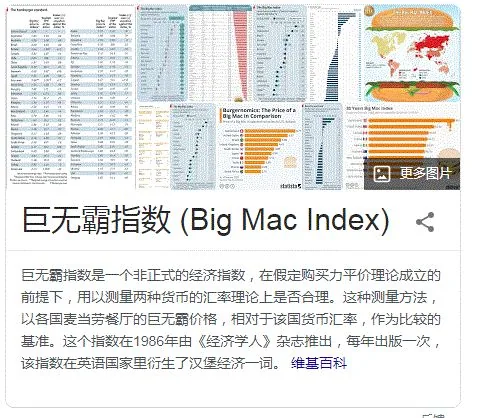
Compared with the current pension levels of Chinese urban residents, China is a paradise for urban elderly. Based on the principle of purchasing power parity, The Economist magazine publishes a McDonald's Big Mac Index every year. Its purpose is to reveal the true purchasing power of a country's currency in the country and compare it with other countries. There is a market exchange rate between currencies of various countries, which is used to settle the exchange of current accounts and capital accounts. Because there are many commodities in each country that do not participate in international exchanges, the market exchange rate cannot reflect a country's true currency purchasing power. Therefore, people have come up with a method to calculate the currency parity of various countries using purchasing power. Specifically, it is the same McDonald's Big Mac, and its selling price in different countries is used to compare the actual purchasing power of each country's currency. In 2019, a Big Mac sold for $5.74 in the United States, $5.16 in Canada, and $3.05 in China. The market exchange rate of the US dollar against the RMB was approximately 7:1 in 2019, but according to the Big Mac Index, the exchange rate of the US dollar against the RMB was 1.88 to 1; the market exchange rate of the Canadian dollar against the RMB was 5 to 1, and according to the Big Mac Index, it was 1.69 to 1. The market exchange rate seriously underestimated the purchasing power of the RMB. The monthly pension for retired employees of ordinary public institutions in China is about 5,000 dollars, which is equivalent to 1,000 Canadian dollars based on market exchange rates. However, according to the Big Mac Index of actual purchasing power, the purchasing power of 5,000 dollars is equivalent to 2,950 Canadian dollars in Canada. This is the "old affluence" caused by China's demographic dividend, but it is limited to urban residents. Currently, China has 900 million people supporting 500 million people. However, thanks to the family planning policy, in another 20 years, the number will be 500 million people supporting 900 million people. By then, the situation will be on par with Canada's - social security payments will only be enough to feed the family.
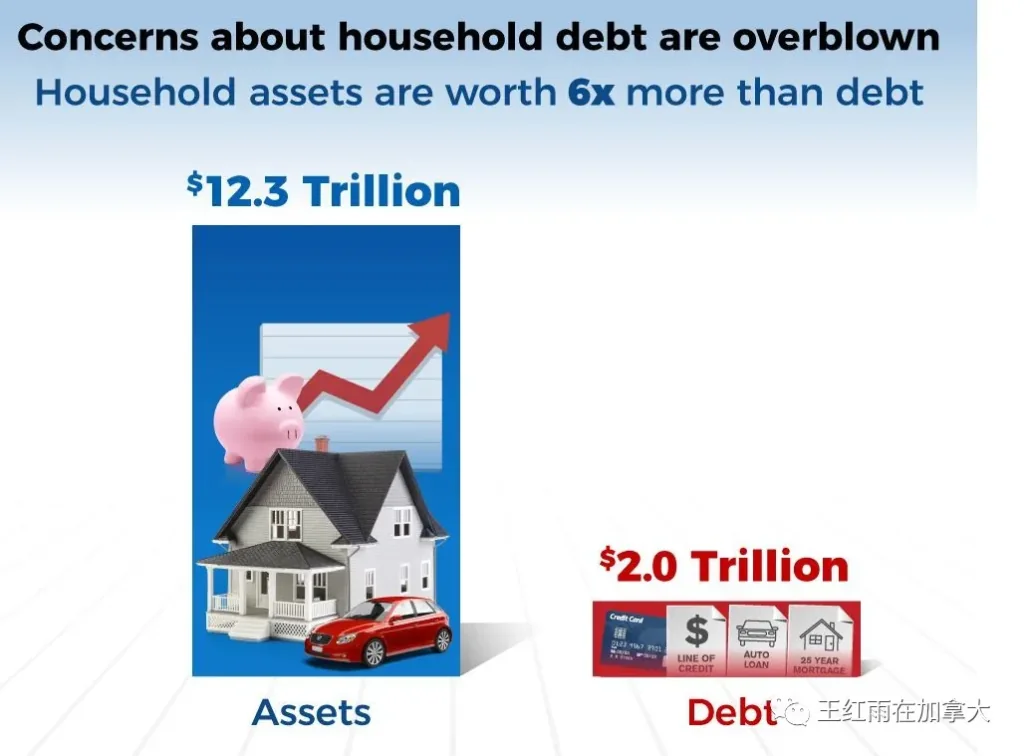
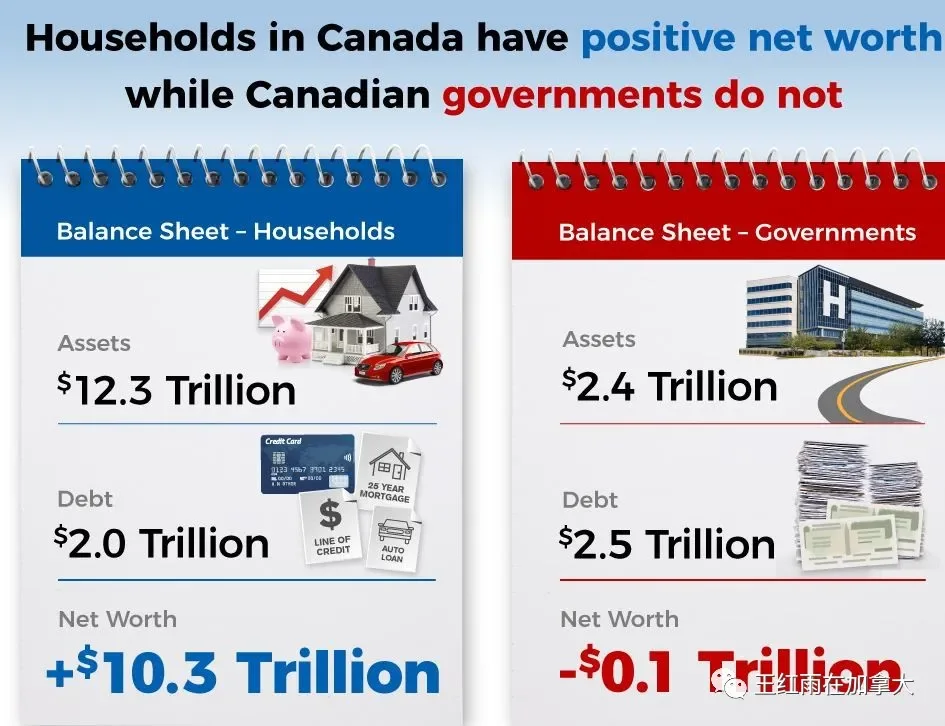
Canada is a country whose wealth lies with its people. There are no state-owned enterprises controlling resources in the upstream, and no state-owned commercial banks controlling the financial lifeline. The total wealth of residents is 12.3 trillion, liabilities are 2 trillion, and net assets are 10.3 trillion; government wealth is 2.4 trillion, liabilities are 2.5 trillion, and net assets are negative. After the epidemic, the government's negative assets will be even greater, and it will not be able to spend money to subsidize pensions. There is no demographic dividend in Canada, and the elderly are not well-off in Canada. For retirement, you have to rely on yourself.
03 The threat of low interest rates
The book "A Centenary Life" expresses concerns about the relationship between personal investment and savings and longevity. It also provides some very practical calculation methods to help us understand the savings rates corresponding to different life expectancies.
According to the author of "A Centenary Life", the risk-free (treasury bond) interest rate in the United States from 1900 to 2014 was 2%, and the risk premium (stock risk premium) was 4.4%. If the investment portfolio consists of 50% risk-free bonds and 50% stocks, the overall return rate of the investment portfolio is: 0.5X2+0.5X(2+4.4)=4.2%. Human life expectancy increases by 2 years every 10 years. From 1850 to 2050, human life expectancy will increase from 45 years to 85 years. Longevity, this slow variable, is affecting the retirement life of all mankind.

People usually use the concept of "pension replacement rate" to estimate their pension level. The pension replacement rate of 50% means that all pensions (including public pensions, corporate annuities and personal investment income) are equal to 50% of the annual income before retirement. In addition, when planning how much savings you need to prepare in addition to public pensions and corporate annuities, you also need to use the concept of "savings rate." Savings rate refers to the proportion of income used for retirement savings each year.
The book "100-Year-Old Life" lists the savings rates that three generations should have based on the investment return rate of 4.2%, the life expectancy of people of different birth ages, and the 50% pension replacement rate.
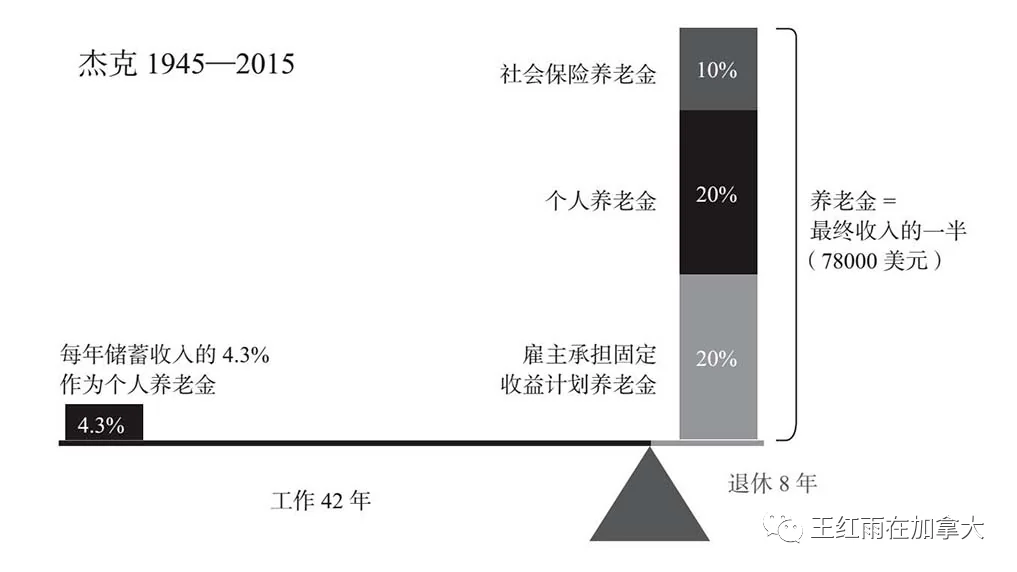
(1) Jack was born in 1945, has a life expectancy of 70 years, and died in 2015. He worked for 42 years and retired for 8 years. The public pension is 10% of the pre-retirement income, the corporate annuity is 20% of the pre-retirement income, and the personal investment income is 20% of the pre-retirement income. Then Jack’s savings rate during his working life is 4.3%, that is, he needs to use 4.3% of his salary income for retirement savings to spend his old age.
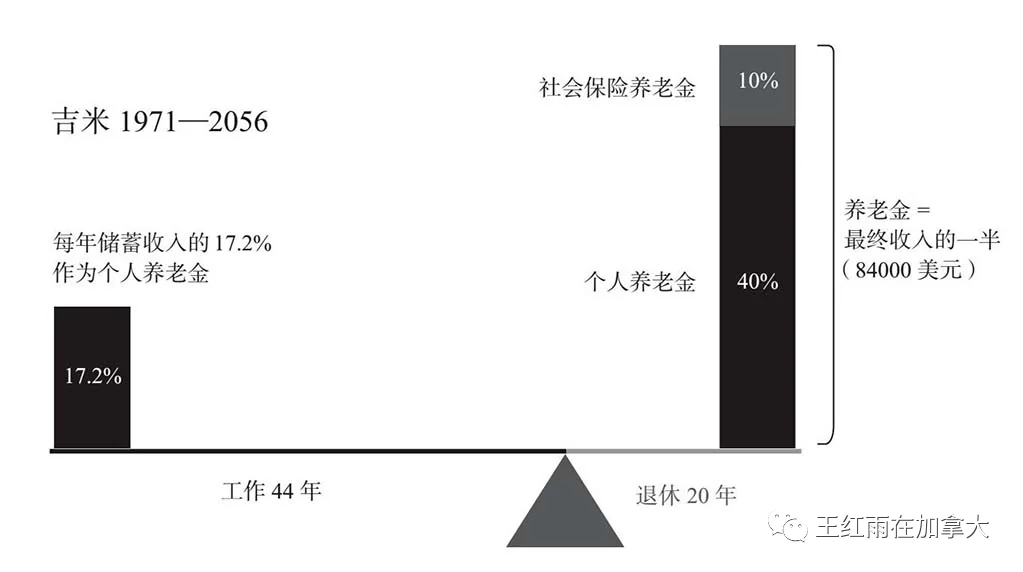
(2) Jimmy was born in 1971, has a life expectancy of 85 years, and died in 2056. He worked for 44 years and retired for 20 years. The public pension is 10% of his pre-retirement income. There is no corporate annuity. His personal investment income is 40% of his pre-retirement income. Then Jimmy’s savings rate during his working life is 17.2%, that is, he needs to use 17.2% of his salary income for retirement savings to live out his old age.
(3) Jane was born in 1998, has a life expectancy of 100 years, and died in 2098. She has worked for 44 years and retired for 35 years. The public pension is 10% of her pre-retirement income. There is no corporate annuity. Her personal investment income is 40% of her pre-retirement income. Then Jane’s savings rate during her working life is 25%, that is, she needs to use 25% of her salary income for retirement savings to spend her old age peacefully.
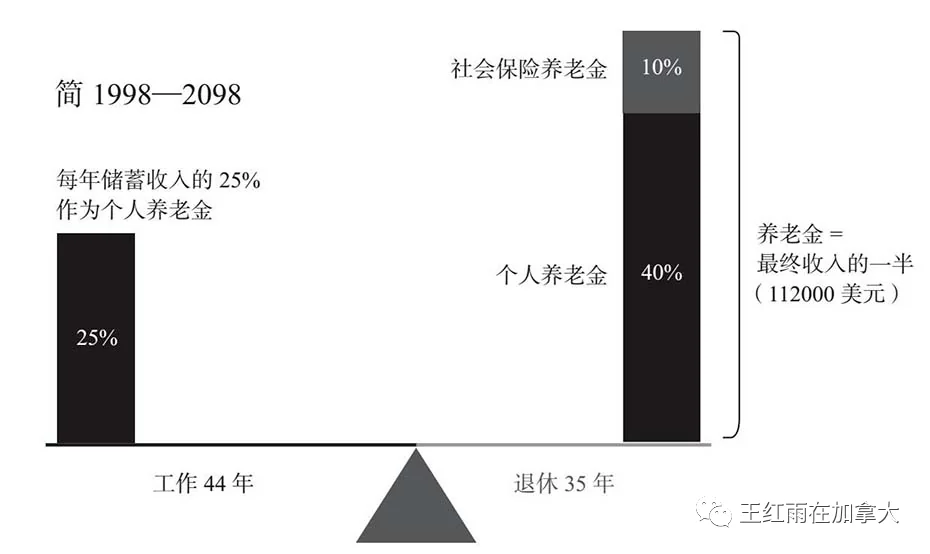
From the above example, it can be seen that if a person around 50 years old does not have a corporate annuity after retirement, the savings rate will reach 17.2% from the first year of work. Otherwise, the pension after retirement will not reach 50% of the pre-retirement income. Don’t forget one thing. In all the above examples, the return rate of risk-free bonds (treasury bonds) is 2%, and the return rate of the 50%/50% bond/stock investment portfolio is 4.2%. However, the current yield of treasury bonds is only 0.6%. Based on the 50%/50% bond/stock investment portfolio, the return rate is only 0.5X0.6%+0.5X(0.6+4.4)%=2.8%. Therefore, in a low interest rate environment, the savings rate must reach at least 20% of income to achieve a pension replacement rate of 50%. Canada's tax burden accounts for an average of 43% of income, and various living expenses account for 37%. This means that the remaining 20% must be saved. How many families can do this? The problem is very clear. For people born after 1970, it is simply not feasible to rely on savings and investment for retirement in Canada.

04 Deposit investment or loan investment
For retired people who cannot afford market risks, investing in stocks is quite dangerous. Malkiel's advice in "Wall Street" is a "life cycle investing approach", that is, the proportion of low-risk bonds in the investment portfolio should be consistent with age. When you are 30 years old, the bond ratio is 30% and the stock ratio is 70%; when you are 70 years old, the bond ratio is 70% and the stock ratio is 30%. If you have 2 million financial assets after retirement, and the investment portfolio bonds and stocks ratio is 70%:30%, for example, according to the investment return formula and data calculation given in "100-year-old Life", the annual investment income is: 1.4 million U.S. Treasury bonds, with a yield of 2%, and the annual bond income is 28,000 dollars. The other 600,000 is invested in stocks, and the stock yield is 2% + 4.4%. The annual stock income is 38,400 dollars, and the annual income of 2 million financial assets is 6.64 million dollars. In a low interest rate environment, the bond yield is 0.6%. If the bond ratio reaches 70%, the investment return will drop seriously: 1.4 million bonds 3.84 Ten thousand dollars. Yes 200 Elderly households with 10,000 dollars invested in financial assets have seen their investment income plummet in the low interest rate environment. 42% . That's the problem with low interest rates.
Robert Kiyosaki published "Rich Dad Poor Dad" in 1997, which for the first time popularized the concept of borrowing and investing on a large scale. The person who was 27 years old at the time is now 50 years old. In the past 23 years, many people around me have read this book, but too few people have actually learned and practiced loan investment. In the past 10 years, under the low interest rate environment, borrowing investors have taken advantage of the opportunity. The prices of all types of real estate in Toronto have doubled in the past 10 years. At the same time, borrowers have enjoyed stable 10-year low interest rates.Investment expands the circle of competence through trial and error. In a low interest rate environment, the cost of trial and error is low, but there are still few people trying real estate investment as a borrowed investment method. Now 50-year-olds can clearly see the gray rhino on the horizon, but there are still people who are in denial, muddle along, argue and panic, and refuse to try to borrow money to invest. Every time the central bank cuts interest rates, the circle of friends is full of joy, and almost no one is worried about it. However, for people who have not borrowed money to invest, interest rate cuts and low interest rates are bad news. Low interest rates are only good for those who borrow money to invest, because their margin of safety increases and their choice is proven right.
Borrowing money to invest is not real estate speculation. A house is a prop used to borrow money. Only by mortgaging a house can you get a loan with the lowest interest rate. Other borrowing and investment methods are more costly and risky. Borrowing investments are only suitable for families with stable incomes, and retired people should not participate in borrowing investments. Among those who are capable of borrowing money to invest, many still hold on to the belief of deposit investment, staring at the mirage in a market with high risks and high volatility and refusing to leave. After retirement, no one cares about whether the old people are living well or not except their family members. People living in big cities must have experienced the feeling of helplessness, anxiety, depression, and difficulty in walking during the epidemic after the city was closed. I think this feeling should be like getting old before getting rich, and seeing the retirement income drop.
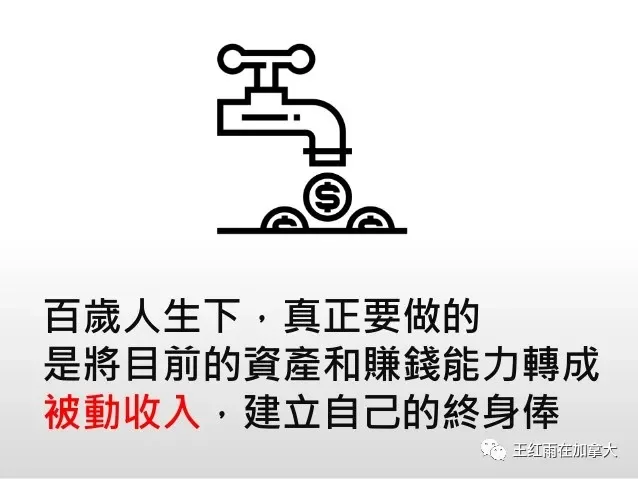
Conclusion: A good retirement life doesn’t just fall from the sky. Among the pensioners in Canada, most of the Chinese are compatriots from Hong Kong. Their experience is that Canada’s pension is the level of one pineapple bun a day. By the time you eat one loaf of bread a day, it’s too late to do anything else. Everyone has to deal with the gray rhinoceros in front of them, and cannot place their hopes on the government and the next generation. Loan investments are replacing deposit investments because interest rates are low and borrowing money is faster than making money. Those who dare to expand their investment competence circle through trial and error are reaping the benefits of low interest rates. People who are muddle along are watching helplessly as the gray rhino roars towards them. House prices in the United States are not rising, and China has restrictions on loans, purchases, and sales. Chinese Canadians have the unique advantage of being able to get loans to buy 10 investment houses in first-tier international cities. If you don’t cherish them, it’s a waste. For readers who are 65 years old this year, if you did not start loan investment 10 years ago when you were 55 years old, I can only regret to say that I wrote this article a bit late. Unfortunately, please reconsider your retirement time. In 2018, I also misjudged that interest rates would normalize, but unfortunately, an epidemic brought the world into Japan. The specific situation of Japanization is as follows: interest rates have been low for 20 years, inflation has been low for 20 years, the average life expectancy of the elderly is getting longer and longer, and the elderly are reluctant to eat or drink, guarding their assets for fear of losing their money while they are still alive. The average net worth of Japanese elderly people at the end of their lives is US$350,000, and young people have directly entered a low-desire society. Low interest rates will change the world, and those who remain unchanged in response to changes are waiting for the gray rhino to attack.
I hope friends who read this article will take action and become an old man riding the waves in 20 years. A video of the above content will be posted on YouTube later.