In the last article, I predicted that Canada would start a man-made disaster and call for an early election before the natural disaster of the epidemic was over. The results were as expected. I originally wanted to use Einstein's attitude towards McCarthyism, and adopt an attitude of non-cooperation, ignorance, and non-comment to watch this man-made disaster. However, the election campaign actually kicked off with housing policy, which made me unable to stay out of the matter and had to make a few comments.
What housing crisis is Canada facing now that has the political parties launching a wish-making arms race? The skyrocketing housing prices after the epidemic have led to insufficient down payments for first-time homebuyers, which is a crisis; in addition, the skyrocketing rents in the suburbs of big cities are another crisis. Focusing on these two crises, let’s look at the Liberal Party and the Conservative Party, whose proposition is better able to solve these two crises. I think the Conservative Party's policies at least hit the target, while the Liberal Party's ideas completely missed the target.
The Liberal Party and the Conservative Party share a hatred of foreigners. No matter who comes to power, they will prohibit non-residents from buying houses. This matter no longer needs to be discussed, but the consequences of implementing this policy need to be evaluated.
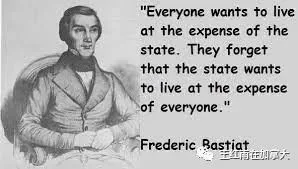
Whenever we wish to solve an economic problem through political means, we should not forget Bastiat's famous saying: People who want to live off the country forget that the country relies on people.
01 How did this housing crisis come about?
There are many factors that contribute to this housing crisis, and if we peel back and examine them, we can’t tell whether the treatments are effective if we can’t find the root causes.
The Trudeau government of the Liberal Party came to power in 2015. As of August 2021, house prices have increased by 69.7%. When the Liberals were in opposition, they sharply accused the Conservatives of controlling house prices and making the middle class disappear. Now the Conservatives are blaming the Liberals in exactly the same terms. So I think, No matter who is in power or in opposition, the federal government cannot curb the rise in housing prices. There is absolutely no need for people to judge who to vote based on their wishes on housing prices.
The determinants of house prices, Look at population in the long term, land in the medium term, and finance in the short term. . Both parties agree on the new immigration expansion plan. The long-term continuous rise in population has laid the foundation for long-term rise in housing prices. No party hopes to change this trend.. Land policy is determined by provincial and local policies. The federal government neither owns land nor has the power to approve construction permits. The speed of land supply and the simplicity and complexity of construction permit procedures are beyond the control of the federal government. As for financial policy, the cards lie in the hands of the central bank and financial regulatory authorities, and the central bank has a strong degree of relative independence. There has never been a precedent in Canadian history for the central bank to adjust interest rates due to fluctuations in second-hand housing prices. Theoretically, the federal government has no control over interest rates.
The solution to the crisis of rising house prices is simple: Adhering to the immigration policy, all provinces should cooperate with the federal immigration policy, simplify the land approval process, reduce excessive taxes and miscellaneous taxes in the construction process, and match the speed of population inflow with the speed of housing construction.

Rents are rising at about 4% per year, which is not as fast as housing prices. Since the outbreak of the epidemic, the rents of properties with large living areas have increased significantly, while the rents of properties with smaller living areas have fallen back. When it comes to renting, the crisis is with large families, not small families. This is a local problem, not a global problem. Apartment buildings dedicated to rentals are oversupplied; the rental market for non-apartment properties has seen rent increases due to greater demand and less supply. In Mongol, a townhouse sells for NT$1 million with an area of 1,500 square feet, and the rent has reached NT$3,200 per month. For a family of four, paying the tax and then paying the rent is indeed a heavy burden.
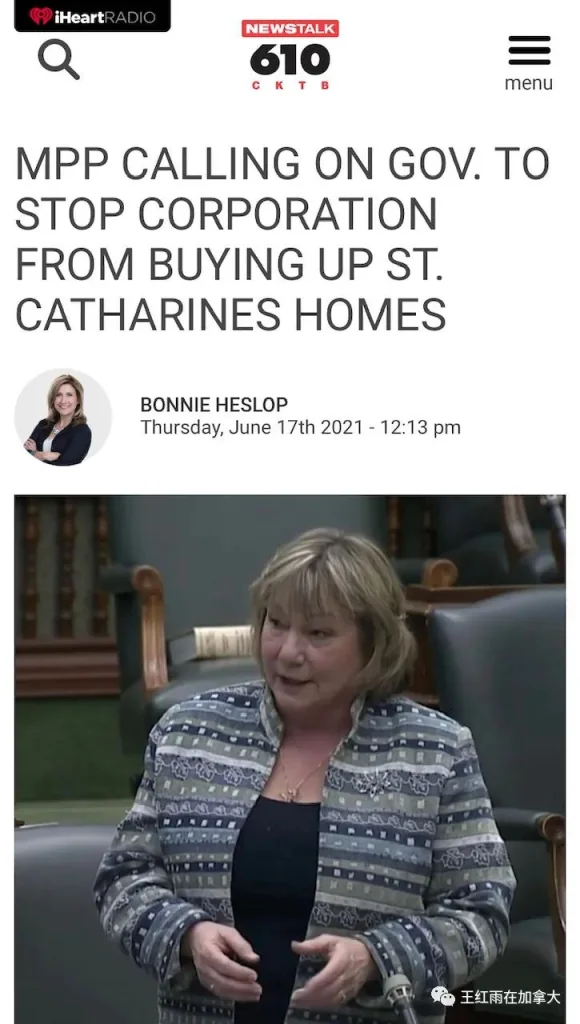
The solution to the rental crisis for large families is to encourage real estate investment. In Toronto apartment buildings, only 10% of the units in each building are 3 bedrooms. From the perspective of residential civilization, a family with two children of the opposite sex over 9 years old needs to live in a 3-bedroom property, and the supply of large apartments in apartment buildings is seriously insufficient. In addition, both Toronto and Vancouver currently implement rent control, which limits rent increases every year. Therefore, large capital and institutions are reluctant to enter this market, so there is a shortage of supply. It is rare for large capital to announce that it will acquire a piece of non-apartment real estate for rental. A while ago, a company in Toronto took the initiative and announced that it would do this. As a result, it was hot-faced and cold-hearted. The local councilor strongly opposed it, and nothing happened after that.
In short, The housing crisis is a supply crisis: the pace of housing construction cannot keep up with the influx of new immigrants; large-scale rental properties cannot meet market demand.The main reason for this crisis is that the market failed to play its role in encouraging housing construction. Instead, it always pinned its hopes on the government to spend money to solve the problem. Sowell has long said, "The first lesson of economics is scarcity: we do not have enough resources to satisfy everyone's wishes. The first lesson of political science is to ignore the first lesson of economics." We have been on the wrong path to solving the housing crisis for a long time, and we should no longer rely on the government to solve the problem.

02 Foreigners without voting rights are targeted
In order to reduce the contradiction between supply and demand, all political parties have targeted foreigners. The purpose is to please voters and vent their anger on residents who feel that they are short of housing. Statistics from Statistics Canada in December 2017 show that the proportion of non-residents owning real estate in Greater Vancouver is 4.8%, and the proportion of non-residents owning real estate in the Greater Toronto Area is 3.4%. Since the foreign buyers tax was implemented in Greater Vancouver in August 2016, and the non-resident real estate speculation tax was implemented in the Greater Toronto Area on April 20, 2017, the proportion of non-residents holding real estate should have declined. Even if 4% of Canadian real estate is held by foreigners, these foreigners are by no means the main culprits affecting Canadian housing prices. 96 of the 100 houses were bought by locals, and only 4 were bought by foreigners. Foreigners are not fools, so why should they pay high prices for houses? Traveling thousands of miles voluntarily to boost Canadian housing prices? I don't believe it. Missing this 3%-4% non-residents buying houses, Canadian housing prices will not be fundamentally affected.
The government's attitude towards foreigners buying houses has affirmed from one level that Canadian real estate is a good asset with the potential to maintain and increase its value. The more emphasis is placed on cracking down on foreigners buying houses, the more it strengthens the concept that "among Canadian souvenirs, houses are the most high-end, and even foreigners covet them." According to the point of view in Professor Robert Shiller's "Narrative Economics", whether a property is pursued is determined by the overall narrative of society.

Foreigners are prohibited from buying houses for two years. This statement has too many ambiguities. If a non-resident signed an off-plan contract three years ago and the house is handed over in 2023, he will still be a non-resident. Will the government transfer the property? Now I was a non-resident when I signed the contract for the pre-planned house, and I became a resident when I handed over the house 4 years later. Is it considered a non-resident buying a house, and will the title be transferred? In 2022, the property purchased by non-residents will be handed over. If the ownership is not transferred and transferred to a local, most or locals in Greater Vancouver, if they take over the property transferred by a foreigner, do they have to pay the non-resident real estate speculation tax? There are a lot of question marks and no one has answered them.
Using punitive taxes to force non-residents to rent out houses they do not live in can increase the supply of rental housing. This is a very good policy.
The policy of not allowing non-residents to buy houses has a 50% chance that pre-construction properties purchased by non-residents in previous years will not be settled at the time of settlement. The devil is in the details, and we don’t yet know how vicious the devil is. After April 20, 2017, the enthusiasm of non-residents to buy pre-construction properties in the Greater Toronto Area and Greater Vancouver dropped sharply, and non-residents with the spirit of death flocked to Montreal. As a result, Montreal entered a carnival of pre-construction property sales in 2018 and 2019. The delivery time for these pre-sold pre-construction properties happened to fall within the new policy that was about to be implemented. Buying a house for non-residents is a risky business, especially buying pre-construction properties. Australia's interests once allowed non-residents to buy a house with a 20% down payment loan. As a result, Sydney's sea-view houses skyrocketed. In order to appease voters, politicians announced that non-residents could only buy pre-construction properties and not second-hand houses. In the next general election, the government will again tyrannize non-residents and further announce that non-residents cannot get loans to buy houses. The story of Australia's courageous fight against non-residents has inspired Canada to abuse them more and more harshly. Why do these people have no votes?
I always remind my readers, Be careful when entering the pre-construction property market, you can’t see clearly what’s going on right now. 5 Are you sure about what will happen next year? If non-resident buyers are not allowed to deliver pre-construction properties, it will lead to competition in the transfer market to lower prices, and local speculators will not be able to reap the benefits.
03 There are few, but not none, ways to properly address the housing crisis
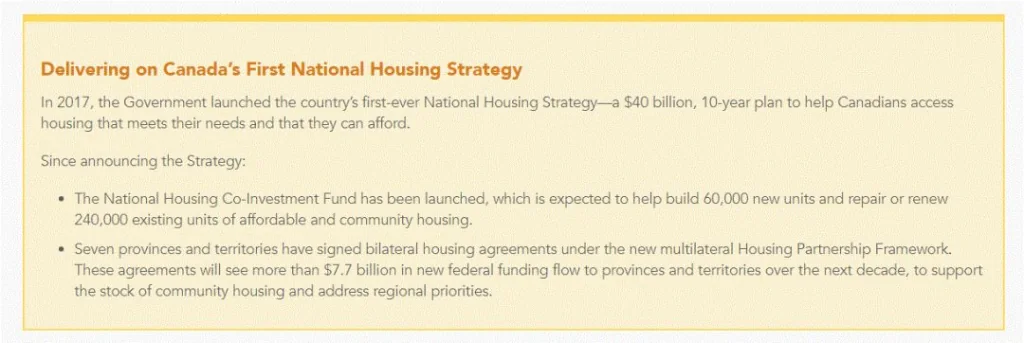
The Trudeau government's 2019 budget launched a 10-year, $40 billion housing plan. Two years later, we have seen nothing. Can the housing crisis be solved by now proposing to repair 1.4 million dilapidated houses? If so, why didn't we do it in the past 6 years and only do it in the next 4 years? First-time homebuyers are provided with 5% to 10% government financing. This kind of loan is extremely difficult. Since its launch in 2019, I have never taken out a single such loan. This project is in vain. Open auctions and covert auctions are both auctions, and they cannot solve the situation of twenty people robbing a house. Most of the money spent by the government to build low-rent housing is funded by CMHC. The new proposal says that CMHC premiums should be reduced to reduce the burden on home buyers. If CMHC’s income is less, should it issue national bonds to build low-rent housing? The proposal to allow additions to existing properties is ridiculous. If the traffic is already very congested, will it still be possible to drive if the house is added? If building additional houses works, then just build apartments and be done with it.
The Conservative Party seems to be very concerned about the housing purchase issue of the Millennial generation, but in fact it is more concerned about the votes in the hands of this group of people. First-time home buying is not an affordability issue at all, but a financial policy issue. If banks allow first-time homebuyers to have loan repayment periods of up to 60 years, families with very low incomes can borrow a lot of money to buy a house. If CMHC waives loan default insurance premiums for applicants with a 10% down payment and allows a repayment period of 70 years, a large number of millennials will be able to afford a house. If all the millennials can afford to buy a house, and the supply of housing is even less sufficient, rising housing prices will no longer be the current trend, but will be a rocket. Mortgage policies that favor certain people will only exacerbate the housing crisis and will not help solve the problem.
Canada’s housing crisis is not an affordability crisis at all, but a housing supply crisis.
When Trudeau announced the grand plan that he should have done but waited until the next term, he did not forget to criticize his opponent, the Conservative Party. CBC News said this: Trudeau said the Conservatives will “do what they always do, give the biggest breaks to the wealthiest few” — a reference toO’Toole’s platform commitment to create incentives for Canadians who invest inrental housing by making tweaks to the capital gains tax regime. This short paragraph in the news, which is the real best solution to this supply crisis, is unfortunately being used as a rebuke to attract attention. Trudeau accuses his opponents of always favoring the rich. Why does he say that? It turns out that when the Conservative Party proposed to solve the housing crisis, they mentioned the following plan: It's time to face the fact: We have ahousing crisis in Canada. Affording a home to rent, let alone to buy isslipping out of reach of Canadians across our country. The primary cause is that supply simply isn't keeping up with demand, Canadians build enough housing to keep up with our growing population,...... defer capital gains tax when selling a rental property and reinvestingin rental housing ”. The Conservatives clearly identified this as a housing supply crisis and proposed a A plan to defer capital gains taxes for real estate investors. That is, if an investor invests A After selling real estate at a profit, if you continue to invest B real estate, for sale A Capital gains taxes on the property are deferred. The United States has a 1031 clause, which stipulates this. Therefore, we see that Trump and Kiyosaki basically do not pay taxes because they have contributed to the insufficient housing supply and deserve tax benefits. If you use "Section 1031" to Google the specific content of this provision, you will find that this kind of policy that rewards the rich will fundamentally solve the supply problem. Trudeau seems to be unable to understand this approach. Really, I am very sure that he may never be able to turn around this bend in his life.
“Recognizing the extent of one’s ignorance requires a considerable degree of knowledge. ” - Sowell

04 Finding freedom in inequality
Hayek said, "Human beings are always faced with a choice: choose equality in poverty, or find freedom in inequality." When people put social justice and equality first, they will slowly slip into poverty. If the rich are not given the opportunity to become richer, many scarce goods will be in short supply; if inequality cannot be tolerated, poverty must be accepted calmly. Complaining that the house is not enough to live in while hating the rich for making money will not solve the problem.
Recently I watched an English video speech by Dr. Zhang Wenhong, which shocked me greatly and gave me new philosophical thinking on the issue of inequality. he mentioned a word Inequality , when infected by the new coronavirus, young people are like catching a cold, while older people may die directly. This virus causes inequality , has brought great moral challenges to mankind: Is it fair and reasonable to allow young people to be banned in order to protect the elderly? The virus harms the elderly unequally, so is it fair for us to control the movement of young people? What is fair to one generation may be unfair to another, and this intergenerational conflict is becoming increasingly clear. In order to allow millennials to afford a home, is it fair to others to give them a mortgage with a 60-year repayment period? The baby boomers not only live in nice and big houses, but also talk about their vacation homes. Will this be too irritating to the nerves of the millenials?

If we want to get serious about solving the housing crisis, we need to put aside our strong ideologies. Charlie Munger said that people with strong ideologies have their heads rolled up like cabbage, getting tighter and tighter, without any thinking ability at all. If we solve economic problems with the purpose of equalizing wealth and poverty, just look at the results of Wang Anshi's reform and you will know that it was a complete failure. When the conservative party put forward the idea of building a national house, they were imitating Guan Zhong's salt and iron franchise, which eventually starved Duke Huan of Qi to death; or they were imitating Sang Hongyang, which eventually led to Emperor Wu of the Han Dynasty issuing an imperial edict. The advantage of capitalism is that the state sets the stage and capital performs the show. Only patriarchal countries will solve problems in a short-term and immediate way. Under a democratic system, if you are not patient enough or give priority to ideology, you will also be on the road to slavery.
The gap between rich and poor, like intergenerational conflicts, cannot be eliminated, but can only be tolerated and coexisted with it.
The best solution to the housing crisis is for the government to provide preferential tax policies, mobilize all capital that can be mobilized, unite all forces that can be united, invest in real estate, and increase supply. Although it will widen the gap between the rich and the poor, and although the results are slow, this is the right path.Looking at how housing prices and rents in the United States benefit from Section 1031, Canada should know that real estate investors need to get rich first, otherwise this housing crisis will be protracted.
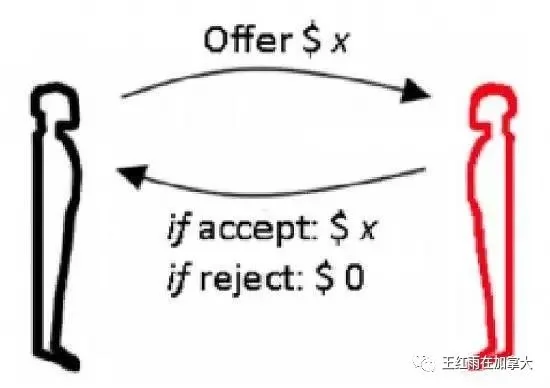
Conclusion:
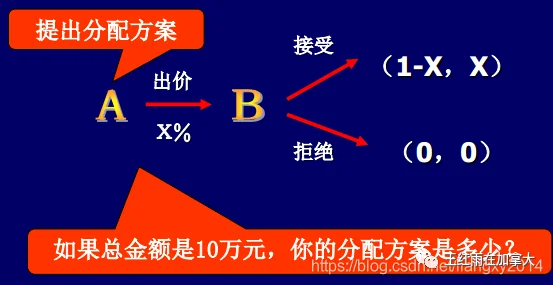
There are many important experiments in psychology to explain human psychological tendencies to misjudge, one of which is called the "Ultimatum Game". A and B are two subjects. A received 100 dollars and has the right to decide how to distribute it to B. B knows that A received 100 dollars and also knows that he has the right to accept or not accept the distribution plan proposed by A. The rule of the game is that if B rejects A's plan, A's 100 dollars will be withdrawn, and A and B will not get a penny. As B, as long as the distribution plan is higher than 1 cent, he should accept it because it is a rational decision. But the experimental results show that the vast majority of B do not accept the "unfair" distribution. Humans have a paranoid idea of fairness. I would rather not get a penny than tolerate injustice. When it comes to solving the housing crisis, not only ordinary people, but also politicians are happily embracing social justice and would rather not have enough housing than let the rich make money. Social justice is really just a cloak for jealousy.

This election was very rushed and all the proposals were crude. It’s not that there aren’t good solutions to the housing crisis, but advocacy and explanation are woefully inadequate. Only those who have lived and worked in the United States and are familiar with the "Rich Dad Poor Dad" series can understand what Section 1031 is and the importance of this real estate investment tax deferral policy to the supply of real estate. I personally believe that it will be difficult to solve the housing crisis through general elections. House prices and rents will continue to rise until people fully understand that the housing crisis can only be solved by treating investors well. To answer the question posed in the title, "Will Canadian housing prices fall after the election?", no.